

O P Sharma
starline.syndicate.service@gmail.com
First pre-launched at the International Book Fair in Delhi and later formally released recently at an impressive function organized by the J&K Cultural Academy, “Khad Khakhad” hit the market with a plea that Dogri fiction can go much forward. Sumit Khajuria, a young man with good pen and passion for Dogri language especially folk writes with the energy of a writer who wants to test the capacity of Dogri prose to hold satire, social observation, spirituality, suspense, modernity, and technological imagination.
This 147-page book contains ten stories: Bansri, Shakti, Dor, Karvachauth, Apaharan, Netaji, Matamdari, Swami, Chor Chor Mausere Bhra, and Digital Dhee. What immediately stands out is variety. These stories do not march in one emotional direction, each has a separate pulse, tone, and distinct colour. The wide range keeps the collection absorbing and also instructive.
Fresh Themes
The main quality of “Khad Khakhad” is originality as the major stories do not seem trapped inside familiar regional literary habits. Instead of returning again and again to predictable settings and inherited sentiment, the collection opens itself to contemporary tensions and new imaginative ground. Khajuria is willing to be witty, ironic, experimental, and direct. That balance gives the book a distinctive place. One feels it readable, thoughtful, informative, one of its own kind and simple style.
Among the ten impeccable stories, “Digital Dhee” is innovative in presentation of a young woman’s journey to choose Dogri as career and uses modern media tools to ultimately become a successful public personality. What makes the story memorable is its power of empowerment. It does not present freedom as rebellion alone, nor success as professional achievement alone but protagonist belongs to the modern world without neglecting the roots. In that sense, the story becomes a compelling statement on women, language, and way forward.
Deep Impact
The story “Neta” a collection of sharpest satire, is centred on an aspiring common politician; it captures the comic theatre of public ambition. The character enters society through gestures of service, despite multiple hindrances, yet never gives up. The humour is lively and has ample social relevance and lessons.
Another literary masterpiece story titled “Dor” is perhaps the most socially relevant story which focuses on the harmful effects of gattu thread used for kite flying, shows the writer’s attention to immediate realities. Literature remains meaningful when it can absorb the pressures of the present, and “Dor” demonstrates that awareness with clarity.
Yet another story “Matamdari” provides the emotional weight of the collection. It reminds the reader that Khajuria is not only a satirical voice; he can also deal with grief and seriousness.
Meaningful Narratives
The remaining stories broaden the collection’s range. “Bansri” carries a spiritual mood. Shakti engages an unusual idea involving the camera and the science behind it. “Karvachauth” turns toward the lives of modern housewives, touching on changing domestic identities while “Apaharan” brings thriller energy. “Swami” introduces a motivational current. “Chor Chor Mausere Bhra” examines property grabbers and the ugly greed that corrodes social trust. Together these stories prove that the collection refuses sameness.
Sumit Khajuria’s Dogri language is simple, direct, and easy to comprehend, yet the writing is not superficial. This is one of the book’s greatest merit. Many lines seem to invite re-reading because they hold meanings beyond their immediate surface. The style combines experimentation and satire with accessibility. This book caters to serious readers without closing its doors to general readership which is a rare feat.
Literary Merit
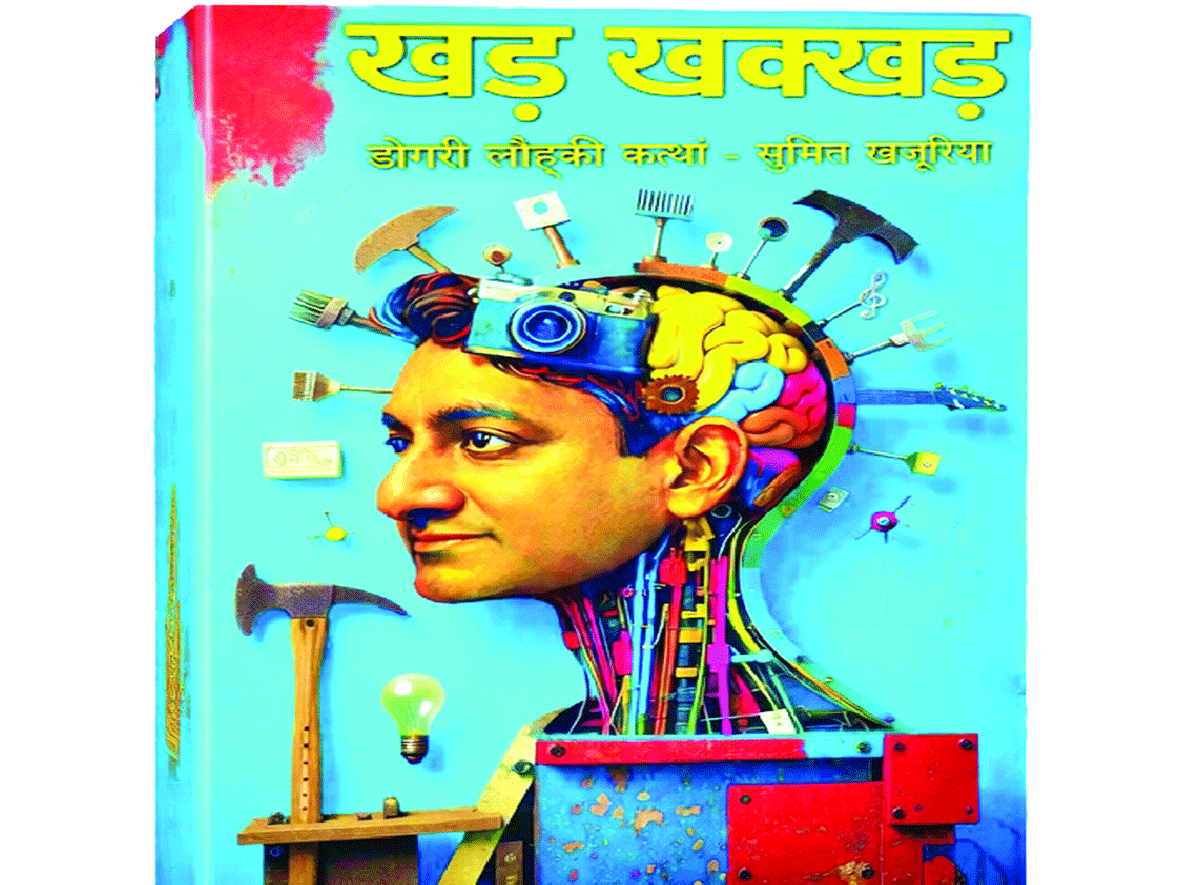
The appealing cover design deserves a special attention. It reportedly presents the author’s own face with the brain exposed, different forms of art attached to its openings. This is a striking visual concept and one that immediately separates the book from other literary packaging. The design is not decorative alone; it announces the restlessness of the imagination inside.
What makes the book important, not only for the quality of each stories, but the direction and language itself. “Khad Khakhad” argues, through practice rather than mere slogan, that Dogri fiction can be modern without becoming artificial, socially grounded without becoming dull, experimental without losing readers interest. It moves beyond the narrow belief that regional writing must circle endlessly around unique features of life or one familiar emotional world. Khajuria vividly explores the available vast field. He argues that Dogri must adopt new technology, growing public aspirations, media culture, social transformation, and inner reflection with equal confidence.
“Khad Khakhad” makes a mark because it points toward renewal, transformation and advancement. It moves away from narrow expectations that regional writing must remain limited to old molds. Sumit Khajuria offers a collection that is contemporary in concern, open in form, rich in tonal variation, and ambitious in literary intent. Published by Dogri Folk in 2025, this is a notable contribution to Dogri literature and this book is a must read by one and all. It needs to be kept in all the libraries for the academicians, scholars, particularly the youth.
(The reviewer is Jammu-based eminent journalist and writer)
 Follow our WhatsApp channel
