

Excelsior Correspondent
POONCH, June 28: Aditi Kantipuly, a Fulbright Scholar, from Johns Hopkins University (USA) studying rare genetic conditions in India, in collaboration with Organization of Rare Diseases India, a leading patient advocacy organization with the mission to eliminate the challenges of rare genetic conditions, are inviting industry partners, patients, care givers, family and friends of millions of people who suffer from rare diseases to join in support of the first ever Indian national rare disease awareness campaign in India.
This campaign aims to raise awareness amongst the general public and decision-makers about rare diseases and their impact on patients’ lives as well as provide a platform for patients to connect with each other and seek out healthcare service providers. Although rare genetic conditions are individually rare, collectively they are common- affecting 350 million individuals worldwide. India is disproportionately affected, because it is home to 70 million rare disease patients and these patients have no recognition at the Government level.
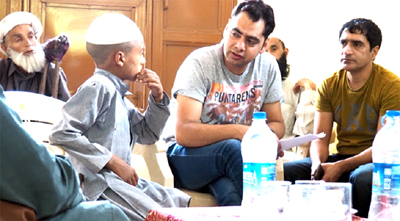
Aditi’s first State visit was Jammu & Kashmir, and along with Dr Rayaz Jan, Dr Anuj Kapoor, Dr Kamna Singh from Department of Community Medicine Government Medical College & Hospital Jammu visited Arai village of Tehsil Mandi, district Poonch. Located about 260 kilometers from Jammu, in a mountainous terrain, this village has several children suffering from a rare genetic condition known as “Progressive Pseudorheumatoid Arthropathy of Childhood” (PPAC) also known as “Spondyloepiphyseal Dysplasia Tarda with Progressive Arthropathy” (SEDTPA). This condition is characterized by breakdown (degeneration) of the cartilage between bones and its degeneration leads to pain and stiffness in the joints. Often, starting at the ages between 3-8 years, the only known treatments are physiotherapy in young ones and surgical corrections involving hip and knee replacements in older patients.
Dr. Dinesh Kumar, Head of Department of Community Medicine Government Medical College & Hospital Jammu helped Aditi facilitating the visit.
 Follow our WhatsApp channel
