

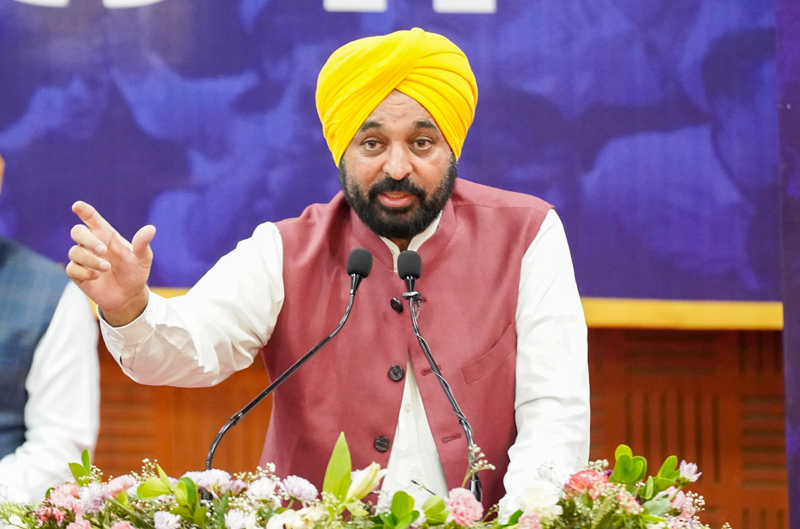
CHANDIGARH, April 11 : In a landmark decision aimed at safeguarding religious sanctity and maintaining communal harmony, the Punjab Cabinet, chaired by Chief Minister Bhagwant Singh Mann, on Saturday approved significant amendments to the existing laws concerning the sacrilege of Sri Guru Granth Sahib.
The proposed ‘Jagat Jyoti Sri Guru Granth Sahib Satkar (Amendment) Bill-2026’ introduces rigorous punitive measures, including life imprisonment, for those found guilty of desecration. The state government is set to introduce this crucial amendment bill during a special session of the Punjab Vidhan Sabha scheduled for Monday.
The decision follows a high-level cabinet meeting where the government expressed grave concern over past incidents of sacrilege that have deeply hurt religious sentiments and threatened social stability.
According to the Chief Minister’s Office, while Sections 298, 299, and 300 of the Bharatiya Nyaya Sanhita address such offenses, the existing provisions were deemed insufficient to act as a formidable deterrent against such heinous crimes. After extensive deliberations and consultations, the administration concluded that stricter legal frameworks are essential to protect the holiness of the sacred text.
The proposed legislation aims to provide the state with a robust mechanism to deal strictly with malicious elements seeking to disrupt the peace and brotherhood of Punjab.
By amending the ‘Jagat Jyoti Sri Guru Granth Sahib Satkar Act-2008,’ the government intends to ensure that the punishment reflects the gravity of the offense. Officials stated that these measures are vital for upholding the dignity of the holy scripture and ensuring that the perpetrators of sacrilege face the highest degree of legal accountability.
The Bhagwant Singh Mann-led government reiterated its commitment to preserving the state’s socio-religious fabric and preventing any attempts to incite communal discord. By strengthening the legal consequences for sacrilege, the administration hopes to reinforce the rule of law and foster an environment of mutual respect and communal harmony. The bill is expected to play a transformative role in ensuring long-term peace and security across the state.
(UNI)
 Follow our WhatsApp channel
