

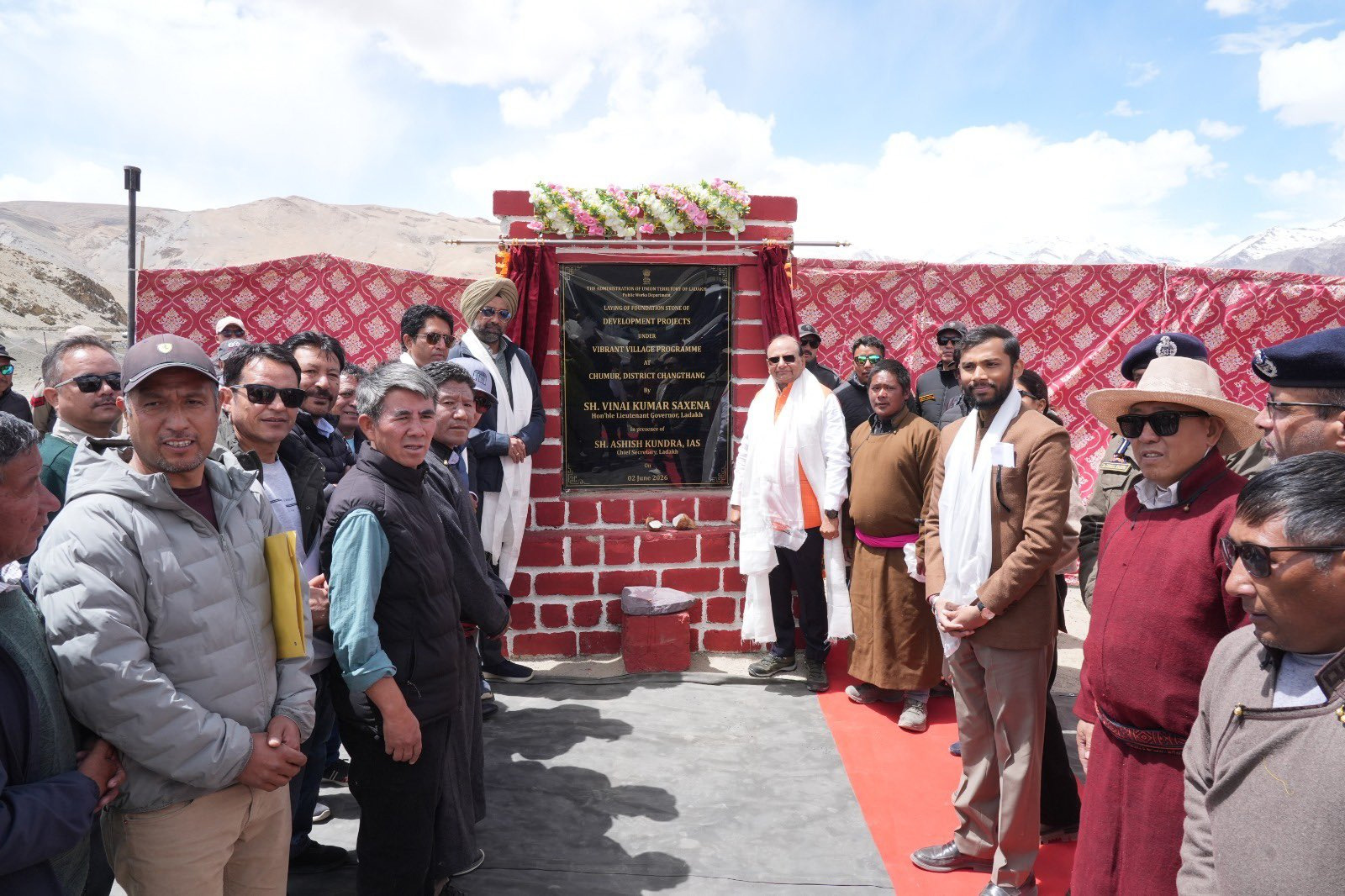
Leh, Jun 3: In a landmark development, aimed at strengthening border habitation and improving the quality of life of residents living in remote frontier regions, Ladakh LG, Vinai Kumar Saxena, yesterday laid the foundation stone for the first Model Border Village at Chumur under the Government of India’s ambitious Vibrant Village Programme (VVP). Perched at an altitude of 16,700 feet along the Indo-China Border, Chumur houses 24 households with a population of 91 people, who are all engaged with Pashmina rearing and production.
This project will script a new chapter in the development journey of Ladakh, aligned with Prime Minister, Narendra Modi’s dream of strong, self-reliant border villages. Beginning with Chumur, 10 such border villagers will be developed as Model Border Villages in the first phase of VVP.
This Project, which is also the first of its kind in Ladakh and among the pioneering model border villages in India, will focus on four key pillars of development – Infrastructure, Employment and Livelihood Creation, All-Weather Functionality, and Civilian–Defence Integration. The project has been conceived to develop Chumur as a self-reliant, climate-resilient, tourism-enabled and economically vibrant border settlement.
The foundation-laying event witnessed jubilant celebrations from hundreds of locals, including youth and senior citizens, that reflected the spirit, aspirations and whole-hearted support for this new initiative. A large number of school children from nearby villages were specially brought in by the district administration to witness and experience the concept of Vibrant Village, which essentially aims at fostering inclusivity and connecting the people with the mainstream of development.
Under the programme, families in these villages will be provided with climate-resilient, south-facing passive solar houses, designed to maximise solar heat gain and protect them from harsh winters, when the temperatures drop to -35 degrees, during the peak winter months. Each household will receive a residential unit with an attached bathroom, an additional room suitable for homestay activities, a kitchen garden space, livestock sheds and dedicated fodder storage facilities. These houses are expected to be completed by September this year, subject to weather conditions.
The project is aimed at significantly boosting local economic activities by developing Chumur as a tourism destination on the Korzok – Hanle circuit. As part of it, tourism infrastructure, including a community-run café, promotion of handicrafts, Pashmina-based livelihoods and value-added Pashmina products, will be facilitated to create new income-generation opportunities for local residents. This primarily aims at infusing self-reliance among the villagers and reversing migration from the border regions.
Addressing the gathering on the occasion, L-G Saxena described the project as a transformative initiative that goes beyond conventional development, and seeks to enhance the security, stability and resilience of the nation by strengthening border settlements. He stated that Chumur, owing to its strategic location along the India–China border, has been selected as Ladakh’s first Model Border Village, under the Vibrant Village Programme, a dream project of Prime Minister, Narendra Modi, who has consistently emphasised that border villages are not the “last villages” but the “first villages” of India. He noted that the initiative aims to improve living standards, create sustainable livelihood opportunities and ensure long-term prosperity for residents of remote border areas.
To strengthen food security and livelihoods, a 90 x 27 feet commercial greenhouse will be established with the support of the Defence Institute of High-Altitude Research (DIHAR), for year-round vegetable cultivation. The produce will cater to local needs and supply nearby defence establishments, including the Army and ITBP, creating a sustainable market for the villagers, while promoting stronger civil-defence cooperation.
The village has been planned as an all-weather settlement with a reliable water supply, improved sanitation and wastewater mana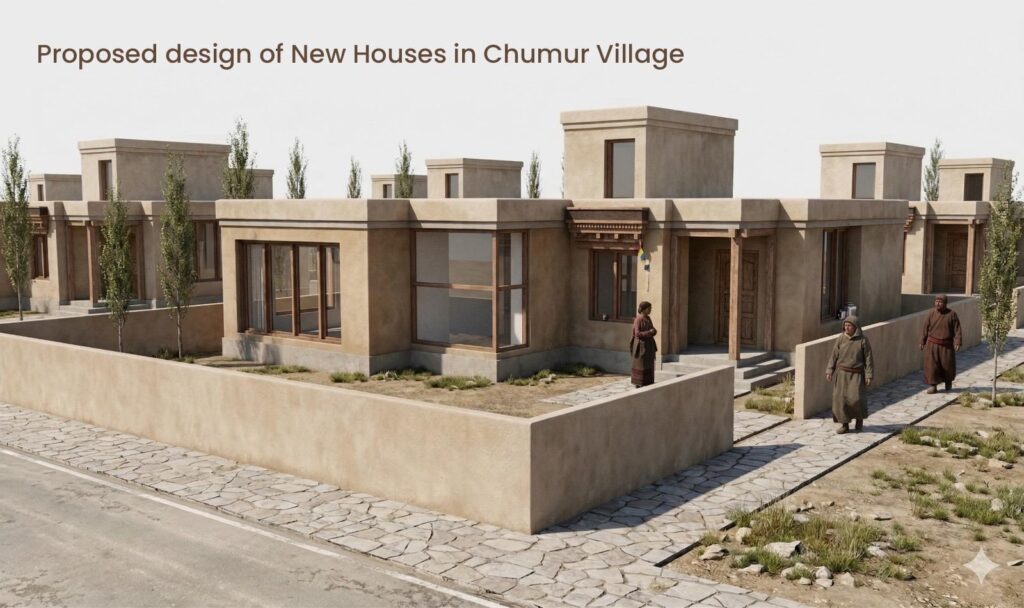 gement systems, renewable energy-based power infrastructure, modern digital connectivity and enhanced habitability during harsh winters. A central service core comprising a school, Primary Health Centre (PHC), community hall, parks, community café and Tourist Interpretation Centre (TIC) will provide essential services and strengthen social and economic life in the village.
L-G Saxena highlighted the crucial role of the Indian Army, ITBP, local residents, and youth in ensuring the initiative’s success and thanked the security forces for their unwavering service in the region.
Envisioned as a self-reliant, climate-resilient, tourism-enabled and economically vibrant border settlement, the Chumur Model Border Village is expected to emerge as a benchmark for sustainable development in high-altitude frontier regions and a model for border villages across the country.
The Key Highlights of Chumur Model Border Village include the following:
Chumur – Ladakh’s First Model Border Village
* First village of its kind in Ladakh and among the pioneering model border villages in India.
* Developed under the Vibrant Villages Programme as a sustainable and resilient border settlement.
* Aims at improving the quality of life while strengthening border habitation.
Settlement Stabilisation
* Transition from a purely nomadic lifestyle to a secure and permanent settlement.
* South-facing passive solar houses designed for maximum sunlight and protection from cold wind during harsh winters.
Each family is to receive
* Residential house with attached bathroom.
* Additional room suitable for homestay/tourism activities.
* Kitchen garden space for household cultivation.
* Individual goat/sheep shed.
* Dedicated fodder storage for year-round livestock support.
Local Economy Activation
* Chumur to be developed as a tourism destination on the Korzok–Hanle circuit.
* Plans for a community-run café to promote local entrepreneurship.
* Capacity building and skill development in Pashmina production and value addition.
* Promotion of locally made value-added Pashmina products.
* Establishment of a 90 × 27 ft commercial greenhouse with support from DIHAR.
* Fresh vegetable production to generate income and meet local and defence requirements.
All-Weather Functionality
* Reliable year-round water supply system.
* Resilient and sustainable power supply through maximum solar energy utilisation.
* Improved sanitation and wastewater management infrastructure.
* Enhanced habitability during harsh winters.
Civil–Defence Integration
* Vegetable production from greenhouses to supply nearby defence establishments.
* Creation of a sustainable local market for villagers.
* Greater civil-defence cooperation and mutual support.
* Opportunities for local employment through engagement with the defence forces.
Settlement Structure
* Cluster-based neighbourhoods with 8–10 housing units per cluster.
* Houses oriented southward for solar gain and wind protection.
* Dedicated greenhouse belt integrated into village planning.
* Livestock infrastructure designed according to Changthang’s geography and climatic conditions.
Central Service Core comprising:
* School
* Primary Health Centre
* Community Hall
* Parks
* Community Café
* Tourist Interpretation Centre (TIC)
 Follow our WhatsApp channel
