

Prof (Dr) Vikas Sharma, Komal Sudan
vikas.skuast@gmail.com
Kimb is more than just a citrus fruit, it is a medicinal treasure and a culinary delight deeply woven into the traditional lifestyle of the people of Jammu. Its wide range of health-promoting properties, coupled with its unique taste and aroma, make it a fruit of immense local and global relevance.
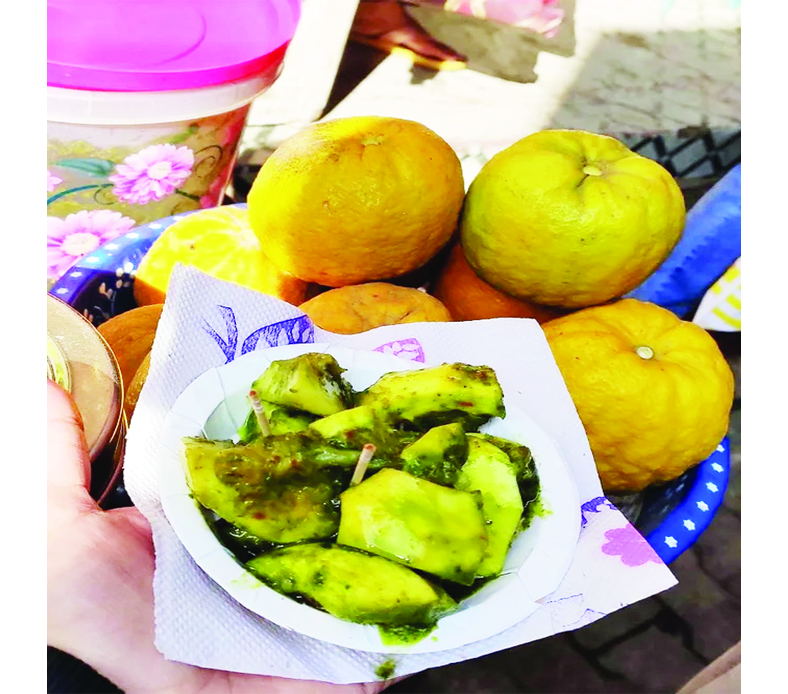
Citrus medica, also known as citron, is one of the oldest citrus fruits in the world. It is commonly referred to as kimb in the Jammu region of India, is one of the most ancient and traditionally valued citrus fruits known for its distinctive fragrance, thick rind and a variety of traditional medicinal uses. It belongs to the Rutaceae family and is believed to be among the original citrus species from which many modern-day citrus varieties have evolved. Native to the foothills of the Himalayas and widely cultivated in Asia and the Mediterranean since antiquity, citrons have played a crucial role in culinary traditions, religious rituals, herbal medicine and perfumery and has remained particularly strong in regions like Jammu, where it continues to be revered for its health benefits and local culinary applications. Kimb is a straggly, evergreen shrub or small tree growing up to 5-10 metres tall. The plant yields an edible fruit, though it is very acidic and is more commonly used as flavouring. Unlike other citrus fruits that are consumed mainly for their juice, Kimb is valued primarily for its aromatic rind, which carries potent essential oils and medicinal compounds. The tree grows well in sub-tropical and tropical climates and can bear fruit almost year-round in the warm climates. The fragrance of the fruit is strong and the outer peel is often irregular in shape, contributing to its unique appearance. In Jammu households, Kimb has held a longstanding place in traditional healing practices. The fruit is most commonly used in the preparation of digestive pickles and chutneys. These homemade preparations are believed to stimulate digestion, relieve gas and reduce bloating. Elderly members of the family often recommend consuming Kimb-based chutney after meals, especially during the winter months when digestion tends to slow down. The fruits are made into marmalade or jams which supports the liver, stomach and heart in addition to helping to cure diabetes, Alzheimer’s disease and diarrhea. The thick rind of the fruit can be sliced and added to salads, or candied and used as flavouring in cakes, puddings, confectionery etc.
Citrus medica is low in calories and packed with health boosting compounds. Its thick white rind is rich in pectin-based dietary fiber, small amounts of vitamin C and may help with appetite control when infused in tea or water helping in management of weight. It has numerous phytochemical and pharmacological properties. The fruit is rich in bioactive compounds including flavonoids, limonoids, alkaloids, coumarins and volatile essential oils such as limonene, citral and linalool. Citrus juice lowers cholesterol levels, which is beneficial for diabetics and it also offers potential health advantages including antibacterial, anti-inflammatory, antiviral and anticancer properties. The essential oil extracted from the peel is especially rich in limonene, which is used commercially in perfumes, soaps and natural insect repellents. Additionally, the high concentration of vitamin C makes Kimb an effective immune booster and a preventive agent against scurvy and other vitamin C deficiency disorders. In Ayurvedic medicine, Citrus medica is referred to as ‘Matulunga’ and is considered beneficial in balancing the body’s doshas Vata, Pitta and Kapha. It is often prescribed in formulations aimed at treating digestive disorders, respiratory conditions, and even cardiac ailments. In Unani medicine as well, Kimb is recognized for its stomach-strengthening and mood-lifting qualities. Some traditional healers in Jammu have been known to use dried Kimb peel, powdered and mixed with honey, as a tonic for children suffering from appetite loss or weak digestion. In Jammu, one of the most popular forms of Kimb consumption is its pickled version. The rind after being thoroughly cleaned, is sliced and sun-dried, then mixed with mustard oil, salt, fenugreek, turmeric, red chilito create a flavourful and digestive pickle that is often eaten with rice or chapati. Another common preparation is Kimb chutney, made by grinding the peel with mint, green chilies, garlic and salt to produce a tangy, aromatic condiment that enhances the taste of any traditional meal. In some households, the rind is candied or boiled in sugar syrup to make a sweet preserve. The candied version not only serves as a dessert item, but also acts as a digestive aid when consumed in small quantities after meals.
With the rising popularity of natural and organic foods, Kimb has also started to attract interest beyond its traditional geographic boundaries. There is increasing recognition of the potential for Citrus medica to be used in herbal tea, organic skincare products and health supplements. Its peel extract is being explored for its antioxidant properties in nutraceutical formulations aimed at reducing oxidative stress and preventing lifestyle-related disorders. Despite its many benefits, Kimb remains underutilized in mainstream agriculture and food industries. The commercialization of Citrus medica products is still limited and many of its uses remain confined to local households and traditional medicine systems. With proper cultivation techniques, value addition and awareness campaigns, this indigenous fruit of Jammu could be promoted as a regional specialty with significant economic potential. Local entrepreneurs, small-scale food processors and herbal product manufacturers could explore its uses in wellness products, essential oil extraction, herbal digestives and pickled goods. Agricultural universities and research institutions in Jammu and Kashmir could play a vital role in studying the agronomic characteristics of Kimb, improving its yield and standardizing processing methods to ensure quality and safety.
Further, with research, conservation and development, Kimb has the potential to be positioned as a heritage fruit of Jammu with applications in both traditional medicine and modern wellness markets. As interest in holistic health and regional biodiversity grows, Kimb stands out as a natural gift that deserves greater recognition and utilization.
(The authors are from the Division of Biochemistry, FBSc., SKUAST-Jammu)
 Follow our WhatsApp channel
