

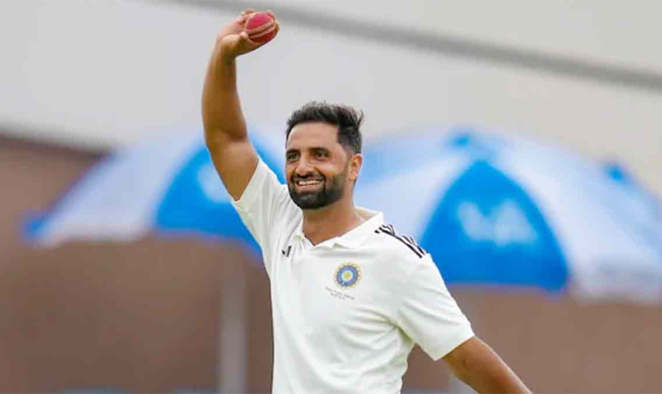
The Indian Premier League auction that saw Auqib Nabi Dar clinch a staggering Rs 8.40 crore deal with Delhi Capitals will be remembered as a watershed moment for Jammu and Kashmir cricket. Alongside Udhampur’s Brijesh Sharma earning an IPL call-up with Rajasthan Royals, it underlined a larger, more profound shift: J&K cricketers are no longer peripheral figures in Indian cricket but increasingly central to its most glamorous and competitive platform. It is important to underline that this rise is not sudden. Jammu and Kashmir has long produced cricketers of quality and character, but for decades their ambitions were largely confined to Ranji Trophy cricket and, at best, the slim hope of national selection, where opportunities were limited to a squad of 16 players. The IPL has fundamentally altered this landscape.
Every team is perpetually scouting for extraordinary talent, regardless of geography, background, or reputation. Performance, potential, and impact matter more than pedigree. In this context, Auqib Nabi’s rise is especially significant. He has not played international cricket; his credentials are built entirely on domestic performances. Yet his consistency, wicket-taking ability, and temperament were compelling enough to ignite a fierce bidding war, culminating in the highest bid for any domestic player at this year’s auction. His success sends a clear message to young cricketers in the Valley: excellence at the domestic level is no longer a ceiling but a launchpad. The IPL has created a parallel route to recognition-one where sustained performance can translate directly into opportunity, reward, and national attention.
Equally inspiring is the story of Brijesh Sharma from Udhampur. Coming from a humble background, with a father who works as a labourer and a mother who served as a Class-IV employee, Brijesh’s journey reflects grit and belief. He took the difficult decision to leave Jammu and Kashmir to pursue better cricketing exposure-first in Delhi, then in Bengal’s competitive club circuit. His IPL selection is a testament to perseverance and a reminder that talent, when matched with sacrifice and self-belief, can transcend economic and regional barriers. For countless youngsters across Jammu province, Brijesh’s story resonates deeply.
The presence of other J&K players in the IPL ecosystem further strengthens this narrative. Umran Malik, retained for his raw pace, and Yudhvir Charak, continuing with the Rajasthan Royals, highlight continuity rather than novelty. Earlier, Parvez Rasool and Abdul Samad showcased their skills on the IPL stage, laying the groundwork for today’s success. Collectively, they represent a growing pipeline rather than isolated breakthroughs.
This rise is especially meaningful when viewed against the backdrop of what youth in Jammu and Kashmir have endured over the years. For large parts of the last decade, particularly in the Kashmir region, hartals, stone-pelting incidents, cross-firing, and an atmosphere of fear disrupted normal life. To choose a sport-and to focus on it with discipline-in such conditions required extraordinary resilience. There is also due credit to the government for stabilising the situation and investing in sports infrastructure, even at the village level. Improved facilities, increased tournaments, and structured coaching have expanded access and aspiration. The economic dividends of IPL success-contracts, endorsements, and professional security-will further encourage young people to see sports as a viable career path. The appeal made by Auqib Nabi’s uncle for young people to take up sports reflects a changing mindset, where sports are no longer seen as a gamble but as a legitimate profession.
The involvement of national players and coaches, such as Mithun Manhas, Suresh Raina, and Yusuf Pathan, among others, has helped bridge the credibility gap. Their endorsement and word-of-mouth within higher cricketing circles have amplified J&K talent. The J&K Cricket Association, dedicated coaches, and supportive families have together created an ecosystem that now yields results. As the next IPL season begins, every six hit or wicket taken by a J&K cricketer will echo far beyond the stadiums-into villages, mohallas, and playgrounds across the UT. For the youth of J&K, these players are no longer distant stars but local heroes. Their rise marks not just sporting success but a broader story of opportunity, resilience, and a region steadily claiming its rightful place on India’s cricketing map.
 Follow our WhatsApp channel
