

Manufacturing activities in Industrial Estates permitted
*Strict guidelines for social distancing, sanitization, minimum workforce
Sanjeev Pargal
JAMMU, Apr 19: With a view to resume economic activity during lockdown from April 20 gradually as announced by Prime Minister Narendra Modi and subsequent guidelines issued by the Union Ministry of Home Affairs, the Jammu and Kashmir Government today allowed manufacturing of number of essential commodities and issued detailed guidelines on procedure to be adopted by the industrial units.
An order to this effect was issued by Chief Secretary BVR Subrahmanyam, who also happens to be the Chairman, State Executive Committee (SEC).
The essential commodities which have been allowed to be manufactured included basic food processing activities like flour, dal, rice, oil processing, iodized salt, spices, bread, milk processing, raw material and intermediates. Manufacturing of packed processed food items like biscuits, sauces, juices, jams, Soya Nuggets, flavours and fragrances for groceries, cocoa butter for food supplements, dairy products and baby food products has also been allowed.
In Pharmaceuticals sector, the UT Government has permitted manufacturing of active ingredients, lifesaving drugs, medicines, hand sanitizers, surgical bandage, masks, oxygen gas, raw material and intermediates. Soaps, disinfectants and detergents and ingredients like Turpentine oil are also allowed for manufacturing.
Other essential commodities which have been allowed permission for manufacturing included Agro products (agrochemicals and pesticides, cattle feed, animal and poultry feed).
The units of packaging material, cold storages, packaged drinking water and cotton masks have been allowed to operate, as per the Government order.
However, some manufacturing activities have been allowed on case to case basis based on requirement which included units repairing transformers and parts thereof like HT, LT, Bush Rod, DPC Copper and DPC Aluminum wire for power supply and distribution, units producing cardboard/wooden boxes for apple/fruit packing and industries operating in rural areas i.e. outside the limits of Municipal Corporation and Municipalities producing items other than essential commodities as mentioned in the order.
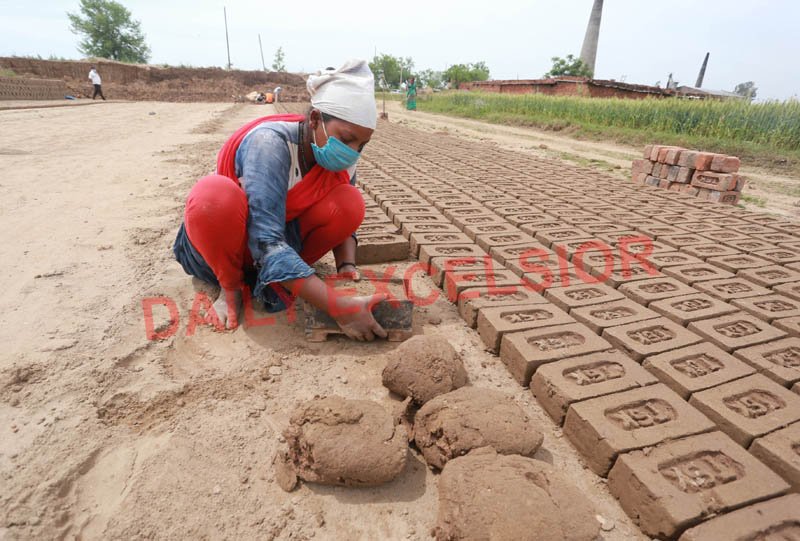
Other manufacturing activities allowed on case to case basis included brick kilns in rural areas i.e. outside the limits of Municipal Corporations and Municipalities and production units which require continuous process and their supply chain.
“The Jammu and Kashmir Government has also permitted a number of manufacturing activities within Industrial Estates that will be allowed on case to case basis, also based on the requirement,” the Government order said.
These included units where arrangements for stay of workers within the premises or adjacent building is made, manufacturing of Medical/Health infrastructure items including raw material and intermediates, fabrication units for sanitization/fumigation tunnels, any other such specific manufacturing activity if it is essential for meeting requirement of the Government and projects like development/construction and other works of Industrial Estates.
Other services which have been allowed to operate during the lockdown included Print and Electronic Media with broadcasting DTH and Cable Services, IT & IT enabled services with strength up to 50 percent, Data and Call Centres for Government activities only, Government approved Common Service Centre, e-commerce companies, courier services, Cold Storage and Warehousing services including at Airports, Railway Stations, individual units and other links in the logistics chain, Private Security Services and Facilities Management Services for maintenance and upkeep of office and residential complexes, Hotels, Home Stays, Lodges and Motels which are accommodating persons stranded due to lockdown, medical and emergency staff and air crew and establishments used/earmarked for quarantine facilities. Services other than these provided by self-employed persons will not be allowed, according to the Government order.
The Government has also issued Standard Operating Procedure (SOP) to be followed by the Industrial Units during their operations.
“As far as possible, all workers are to be accommodated within the premises or in adjacent buildings. Boarding, lodging arrangement in and around premises of the units shall be made. However, wherever, it is not possible to accommodate the staff/workers in the unit premises, separate dedicated transport arrangement will be made for ferrying workers without any dependence on the public transport system. These vehicles should be allowed to ply with only 30-40 percent passenger capacity,” the Government order said, adding small unit holders may organize pooled buses through association for ferrying work force.
The industrial units would be required to ensure that all areas in the premises including entrance gates, cafeteria and canteens, meeting rooms, halls, corridors, common areas, equipments, lifts, washrooms, toilets, sinks, water points, walls and other surfaces shall be disinfected completely.
“All vehicles and machinery entering the premises should be disinfected by spray mandatorily and all units shall sanitize their work places, between shifts, frequent cleaning of common surface and mandatory hand washing shall be ensured,” the SOP released by the Government said.
It has also asked the industrial units to ensure health and hygiene of high standard.
The industrial units will provide face masks to all workers and maintain hygienic environment. They will also make temperature screening mandatory for everyone entering and exiting the workplace. Units will ensure single entry point for workers. Chewing Gutka, tobacco etc and spitting should be strictly prohibited in the units.
The Government has also issued social distancing guidelines to be observed by the Industrial Units during their operations.
The units will discourage large gathering or meeting of 10 or more people and ensure 6-feet gap in sitting.
“No more than 2/4 persons (depending on size) will be allowed to travel in lifts. Shits may be so operated that it doesn’t lead to crowding during beginning/end of the shifts. Work place shall have a gap of one hour between shifts and the industrial units will stagger lunch breaks of staff to ensure social distance. There will be total ban on non-essential visitors at sites,” the order said.
It added that work from home for persons above 65 years of age and persons with co-morbidities and parents of children below the age of 5 years may be encouraged. Use of Arogyasetu will also be encouraged for all employees, both private and public. The Government has also made Medical Insurance for the workers mandatory.
“Intensive communication and training on good hygiene practices will be taken up, Hospitals/Clinics in the nearby areas, which are authorized to treat COVID-19 patients should be identified and list should be available at work place for all the times,” as per the official communication.
It said the units will operate with not more than one third of the staff and management will ensure maintenance of social distancing at work place. However, this will not apply to very small units with overall staff strength of less than 20 persons. However, the condition of one third staff will be relaxed to the extent of 60 percent in case of pharmaceutical manufacturing units on case to case depending on requirement of the units.
“The said stipulation will not apply in the cases where the labour is residing inside the unit premises,” as per the order.
Workers hailing from Red Zones, colonies and basties where COVID-19 cases are suspected will not be allowed in the Industrial units.
For strict implementation of the guidelines, the Government has ordered that the teams of Functional Managers and Industry Promotion Managers will be constituted by the General Manager DICs. Directors of Industry and Commerce (Kashmir/Jammu) will supervise and ensure complete compliance of the orders.
According to the Government order, the Units falling in the category of essential supplies production/services as permitted category will apply to the General Manager DICs with details of workers and production line to be started. They will also indicate requirement of vehicle and manpower movement passes required for raw material/finished products as well as work forces.
“After verification of details, GM DICs will forward request to the Director of Industries and Commerce. The Directors will examine the request in light of the instructions of the Government issued in this regard and issue orders for permission to operate the units stating details of the unit, line of activity allowed and also minimum manpower allowed for the unit. Besides also, the requirement of vehicle and manpower passes will also be stated,” the Government order said.
It added that the unit holders will not approach the DC office directly. Instead, they will approach GM DICs of respective districts to get passes for vehicles and individuals who have to essentially commute for running the units.
“The GM DICs will take up the request with DC office for ensuring that essential requirement if met for smooth movement of vehicles for ferrying manpower, bringing raw material and transporting finished goods. The GM DICs will liaison with the DC office to seek requirement movement passes and facilitate the units accordingly,” the order said.
It further said that the GM DICs will ensure that all instructions and mandatory requirements are complied by the unit holders in letter and spirit. They will carry out weekly inspections to ensure that the instructions are being followed.
“Wherever inter-district movement is essentially required, the passes will be issued by the district administration specifically allowing validity for inter-district movement. Any unit if found violating the requirements/compliances will be liable for strict action and permission to operate the unit will be withdrawn,” the Government order said.
 Follow our WhatsApp channel
