

Bageshree Charak Jamwal
Farijamwal@gmail.com
Jammu and Kashmir today stands at a defining moment in its journey. A moment where shared aspirations are shaping a renewed identity rooted in unity, opportunity, and collective progress. As the Union Territory advances through a period of transformation, a growing consensus is emerging across regions and communities: the future of Jammu and Kashmir lies not in differences, but in the strength of its shared destiny.
This emerging confidence is not merely a reflection of developmental progress; it is rooted in the region’s enduring ability to bring together diverse cultures, traditions, languages, and faiths under a common vision. At a time when societies across the world are searching for ways to strengthen social cohesion, Jammu and Kashmir offers a compelling example of how diversity can become a source of collective strength rather than division.
The region’s story has always been larger than geography. For centuries, it has served as a meeting ground of civilisations, ideas, and cultural traditions, creating a unique mosaic that continues to enrich India’s national identity. Today, as aspirations for development, innovation, education, and entrepreneurship gain momentum, there is growing recognition that sustainable progress can only be achieved when communities move forward together.
This spirit of unity finds expression in the region’s rich cultural and literary heritage. The timeless poetry of Habba Khatoon continues to symbolise resilience, grace, and artistic excellence, while Padma Sachdev gave Dogri literature a powerful national voice and inspired generations to take pride in their linguistic and cultural roots. Their contributions remind us that literature and art have long served as bridges between communities, preserving identity while nurturing mutual understanding.
Across decades, writers, educators, artists, and intellectuals have fostered a consciousness that celebrates diversity as a strength rather than a divide. Their legacy continues to inspire younger generations to embrace inclusivity, creativity, and social harmony as the foundations of a progressive society.
The same spirit is increasingly visible on the sporting field. Sport, particularly cricket, has emerged as a powerful force of social integration, bringing together young people from different regions and backgrounds under a common banner of ambition and achievement. Cricketers such as Mithun Manhas, Yudhvir Singh Charak, Shubham Khajuria, Auqib Nabi, and Sayim Mustafa have inspired aspiring athletes through their dedication, perseverance, and contributions to the game. Their journeys demonstrate how talent, discipline, and determination can transcend boundaries, foster a shared sense of pride, and encourage young people across Jammu and Kashmir to pursue excellence.
Yet the story of Jammu and Kashmir’s progress extends far beyond culture and sport. It is equally reflected in the efforts of entrepreneurs creating opportunities, educators shaping future generations, innovators introducing new ideas, and artisans preserving centuries-old traditions while adapting to modern markets. From tourism and handicrafts to agriculture, technology, and small scale enterprise, local initiative is steadily contributing to a more confident and self reliant economy.
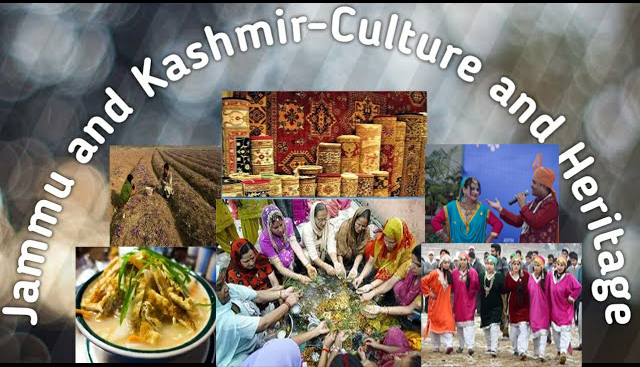
The globally acclaimed Pashmina industry remains one of the finest examples of this blend of heritage and enterprise. Alongside it, the intricate traditions of tilla embroidery, Basohli art, and zari craftsmanship continue to preserve cultural identity while generating livelihoods for thousands of families. These are not merely crafts; they are living expressions of Jammu and Kashmir’s creativity, resilience, and economic potential.
Food, too, tells a story of shared belonging. The celebrated Kashmiri Wazwan and the traditional Dogri Taam are more than culinary traditions, they are reflections of hospitality, community, and cultural continuity. In every gathering and every shared meal lies a reminder that diversity enriches rather than diminishes the collective identity of Jammu and Kashmir.
Few regions in India possess a spiritual legacy as profound as that of Jammu and Kashmir. The revered Shri Mata Vaishno Devi shrine in Jammu, the sacred Amarnath Yatra in Kashmir, the historic Shankaracharya Temple, Hazratbal Shrine, Charar-e-Sharif, Raghunath Temple, and the ancient Buddhist monasteries of Ladakh collectively represent centuries of faith, coexistence, and spiritual devotion. These sacred spaces continue to attract millions of pilgrims and visitors, reinforcing Jammu and Kashmir’s place as a meeting point of cultures, beliefs, and human aspirations.
Equally significant is the region’s intellectual and linguistic heritage. Scholars such as Prof. Shafi Shauq, along with literary stalwarts like Moti Lal Saqi and Ved Rahi, have played a vital role in preserving, promoting, and enriching Kashmiri and Dogri languages. Their contributions remind us that cultural confidence is strengthened when communities safeguard their linguistic heritage while embracing modernity and change. By nurturing literature, scholarship, and creative expression, they have helped ensure that the voices, traditions, and collective memory of Jammu and Kashmir continue to inspire future generations.
As Jammu and Kashmir continues its developmental journey, one truth becomes increasingly clear: its future will not be determined solely by infrastructure, economic indicators, or policy interventions. It will be shaped by the strength of its social fabric and by the willingness of its people to move forward together. This vision echoes the enduring philosophy articulated by former Prime Minister Atal Bihari Vajpayee through the principles of “Insaniyat, Kashmiriyat and Jamhooriyat”-humanity, cultural identity, and democracy. These ideals remain as relevant today as ever, providing a framework for peace, inclusion, and sustainable progress.
Above all, the future belongs to the youth. They are the innovators, entrepreneurs, artists, athletes, scholars, and leaders who will define the next chapter of Jammu and Kashmir’s story. Their ambitions, creativity, and resilience represent the region’s greatest resource and its strongest reason for optimism.
The responsibility before this generation is clear. It is to build bridges instead of barriers, opportunities instead of obstacles, and partnerships instead of prejudices. Progress cannot be sustained by governments alone; it is achieved when citizens embrace a common purpose and work collectively towards shared goals.
The true glory of Jammu and Kashmir lies not only in its snow-capped mountains, verdant valleys, sacred shrines, and rich cultural heritage. It lies in the character, compassion, and aspirations of its people. Every young dreamer pursuing excellence, every entrepreneur creating opportunity, every artist preserving heritage, every sportsperson inspiring achievement, and every citizen contributing positively to society becomes a stakeholder in the region’s future.
The moment calls for confidence, ambition, and a renewed commitment to a shared future. As Jammu and Kashmir moves forward, the responsibility rests with every citizen to strengthen the bonds that unite rather than the differences that divide. The challenges of the future can only be overcome through cooperation, mutual respect, and a shared commitment to progress. The opportunities before the region are immense, but so too is the responsibility to ensure that growth remains inclusive and benefits all sections of society.
Let this be a generation that builds bridges instead of barriers, nurtures possibilities instead of prejudices, and transforms potential into achievement. United by shared aspirations, shared pride, and a shared future, the people of Jammu and Kashmir have the opportunity to create a legacy that future generations will inherit with pride. A Jammu and Kashmir that is not only breathtaking in its natural beauty but equally inspiring in its unity, humanity, and spirit.
 Follow our WhatsApp channel
