

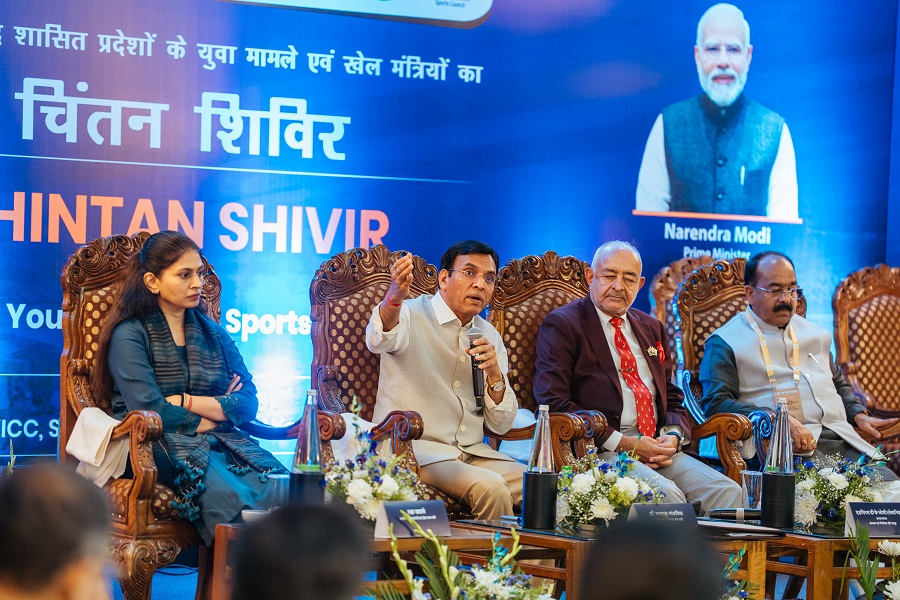
There is something deeply symbolic about hosting a Chintan Shivir of Sports Ministers in Srinagar – a city that has known turbulence and yet has always harboured an indomitable spirit. That same spirit must now animate India’s most ambitious sporting vision yet. The Cabinet’s approval of the Khelo Bharat Niti 2025, coupled with the deliberations at this week’s gathering of state sports ministers in the Valley, signals that India is finally serious about transforming its relationship with sport-not merely as spectacle, but as a national mission. The inconvenient truth must be stated plainly: India, a nation of 1.5 billion people, has for decades punched well below its demographic weight on the international sporting stage. At the Olympics and other global competitions, far smaller nations – Jamaica in athletics, New Zealand across disciplines – routinely outperform us in medal tallies. Barring cricket, where Indian dominance is both historic and handsomely commercialised, and the periodic brilliance of individual champions, India has struggled to establish consistent, broad-based excellence in international sport. This is not a reflection of a lack of talent – it is a reflection of a lack of systems.
Khelo Bharat Niti 2025 is the most determined attempt yet to build those systems. It is not merely a policy document; as Union Sports Minister Dr Mansukh Mandaviya rightly declared in Srinagar, it is a roadmap that “must come alive in every playground, every district, and every young dream”. The target – a top-five sporting nation by 2047 and a credible bid for the 2036 Olympics – is bold. But ambition, without execution, is merely aspiration. The Chintan Shivir was a welcome acknowledgement that execution is precisely where past efforts have faltered and where future success must be secured.
The cornerstone of any meaningful sporting revolution is early talent identification. India is a vast country with exceptional athletic potential buried in its villages, its tribal belts, and its remote highlands. The challenge has always been to find these children before their talent withers from neglect. The success of Indian wrestlers – both men and women – on the world stage demonstrates what is possible when raw ability meets structured training and sustained institutional support. Consistency, however, remains the elusive ingredient. Individual champions emerge; systems to continuously produce them have been slower to develop.
The new policy directly addresses this gap. By institutionalising sports pathways from the school level, mandating physical activity, and constructing badminton courts, basketball facilities, and playing grounds in even the most remote communities, the Government is attempting to democratise sporting opportunity. States have been furnished with substantial funds under various central schemes to build sporting infrastructure, and there is growing recognition that these resources must translate into tangible outcomes – not merely into sanctioned budgets and unopened sports halls. Dr Mandaviya was absolutely right to press local Governments to move from policy adoption to active implementation. The Centre can legislate intent; it is the states, the districts, and the panchayats that determine whether intent becomes achievement.
One particularly heartening example of what determined local effort can accomplish is the Shri Mata Vaishno Devi Shrine Board’s sports academy, which has produced international medal-winners in archery among specially abled athletes. This is precisely the spirit the Chintan Shivir sought to encourage – innovative, community-rooted initiatives that find talent where no one thought to look. Every such effort, however modest in scale, represents a significant leap in the right direction. The launch of the YES-PE programme at the Shivir – designed to bring sports participation and leadership skills to secondary school students – further reflects an understanding that sporting culture must be cultivated early. Physical education teachers, as Dr Mandaviya observed, are the backbone of the grassroots ecosystem. Investing in their training and certification is as important as building elite academies.
India’s youth energy is extraordinary. Sport is among the finest channels for that energy – building discipline, fostering national pride, and increasingly offering a genuine professional livelihood. The Government has demonstrated both intent and financial commitment. The question now rests squarely with state Governments, local administrators, and sporting federations. Srinagar has set the tone. The work begins the moment the ministers return home. The podiums are waiting. India must earn its place upon them – one trained child, one funded coach, one built court at a time.
 Follow our WhatsApp channel
