

Anvi Jain
Everybody knows the well-recognised GI tagged products – from Pashmina to saffron, but who made them globally recognised? In the quiet and narrow lanes of the region, there are artisans working days and nights to preserve the heritage and culture of the region, alongside the small organisations are working to help them seek global recognition. Together they have achieved a global recognition of total 16 GI tagged products of J&K.
What is GI Tag?
A Geographical Indication (GI) tag is a label used on products that have a specific geographical origin which is given to provide legal protection against unauthorized use to prevent imitation of our heritage and cultural identities which builds a brand value of the products.
As of March 31, 2024, India has 635 registered GI products, according to the Controller General of Patents, Designs and Trademarks and Jammu and Kashmir has 16 registered GI products.
The GI revolution In Jammu and Kashmir is not driven by any big organisations but the grassroot organisations, local societies, universities, and government departments, who aimed at preserving the products and heritage.
Figure 1: GI Applications by type of Organisation (J&K)
A clear pattern emerges from the data that the artisans’ societies account for the recognition of the majority of the products, followed by government departments. At the centre of this effort stands one such organisation- TAHAFUZ.
Power of One Society – TAHAFUZ
One society has quietly played a crucial role in shaping Kashmir’s GI landscape. TAHAFUZ has filed GI applications for multiple major crafts, directly representing artisans at the grassroots level. Unlike larger institutions, its strength lies in its proximity to the communities – understanding the craft, the process, and the people behind it. This direct engagement has enabled the recognition of several traditional products that may otherwise have remained undocumented or unprotected.
Universities as Protectors of Crops
While artisan societies have focused on preserving crafts, agricultural universities have taken on the responsibility of safeguarding Kashmir’s unique crops. Institutions like SKUAST-K and SKUAST-J have been instrumental in this shift from craft to agriculture.
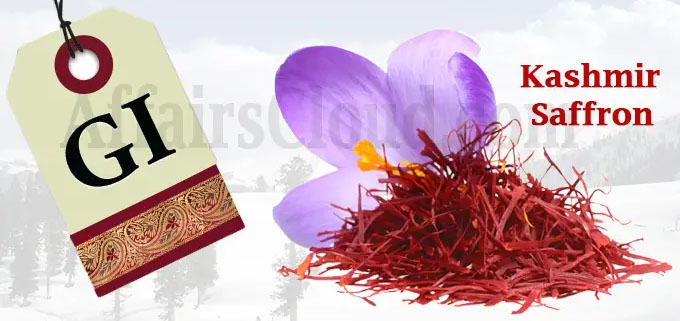
Products such as saffron, Mushqbudji rice, and rajmash have gained GI recognition through their efforts. Here, science and tradition work together -scientific validation strengthens traditional knowledge, ensuring both biodiversity conservation and better income opportunities for farmers.
Government as an Enabler
Government departments have acted as enablers in this ecosystem, stepping in to formalise and scale the process of GI recognition. Departments such as Handicrafts & Handloom, Agriculture, and Animal Husbandry have contributed by providing institutional support and wider reach.
Products like Kaladi (traditional cheese), Anardana, and Basohli painting reflect this involvement. The role of the government, therefore, becomes one of legitimacy-ensuring that these products not only get recognition but also visibility in larger markets.
What Makes This a “Revolution”?
The GI movement in Jammu and Kashmir is not just about labelling products – it is about transformation.
Firstly, it provides protection from fake products. In regions like Kashmir, where imitation pashmina and saffron have flooded markets, GI tags act as a legal shield ensuring authenticity.
Secondly, it creates economic impact. GI recognition allows artisans and farmers to command better prices by building trust and a premium identity in the market.
It also strengthens rural economies. Many of these products originate in rural clusters – from craft hubs in Srinagar and Budgam to agricultural regions like Pampore and Bhaderwah – creating employment and stable livelihoods.
At the same time, it preserves traditional knowledge. Skills like Sozani embroidery, Kani weaving, and walnut wood carving, which have been passed down through generations, find renewed relevance.
Finally, it contributes to building a global brand. Individually distinct products together create the identity of “Kashmir”- known for its heritage, craftsmanship, and premium produce. This has also led to the emerging idea of GI tourism, where people visit the very origins of these products.
In Jammu and Kashmir, GI tagging has gone beyond legal recognition to create tangible economic and cultural impact. It protects products like pashmina and saffron from imitation, enhances incomes of artisans and farmers, and strengthens rural livelihoods. At the same time, it preserves traditional knowledge and contributes to building a global brand identity for the region, while also opening up new avenues like GI tourism.
The Pattern Behind the Movement
Looking closely, a clear structure defines this revolution. Most handicrafts have been filed by artisan-led societies like TAHAFUZ. Agricultural products are largely driven by universities, while government departments fill in the remaining gaps.
A clear pattern emerges-small, specialised institutions are driving GI registrations across sectors.
Challenges Ahead
Despite this progress, challenges remain. Awareness about GI tags is still limited among producers and consumers alike. Fake GI products continue to exist in markets, reducing the value of authentic goods. Market access is uneven, and not all artisans benefit equally from GI recognition.
Conclusion
Behind every GI tag in Kashmir lies not just a product, but a network of small organisations working quietly to preserve identity, protect livelihoods, and connect local traditions to global markets.
In Kashmir’s GI story, it is the smallest institutions that are making the biggest impact.
(The writer is a student of MA in New Media Communication at IIMC Jammu)
 Follow our WhatsApp channel
