

Parents asked to avoid unnecessary hospital visits
Irfan Tramboo
Srinagar, May 6: Doctors in Kashmir have reported a surge in cases of Hand, Foot and Mouth Disease (HFMD), a highly contagious viral infection affecting mainly children, prompting health experts to advise parents to keep symptomatic children at home and avoid unnecessary hospital visits.
Medical experts said the infection spreads rapidly in schools and daycare centres through close contact, leading to clusters of cases and disruptions in some schools in recent weeks.
Doctors said HFMD is generally a mild and self-limiting illness, with no severe complications or deaths reported so far. They stressed that most cases can be managed at home with rest, hydration and paracetamol.
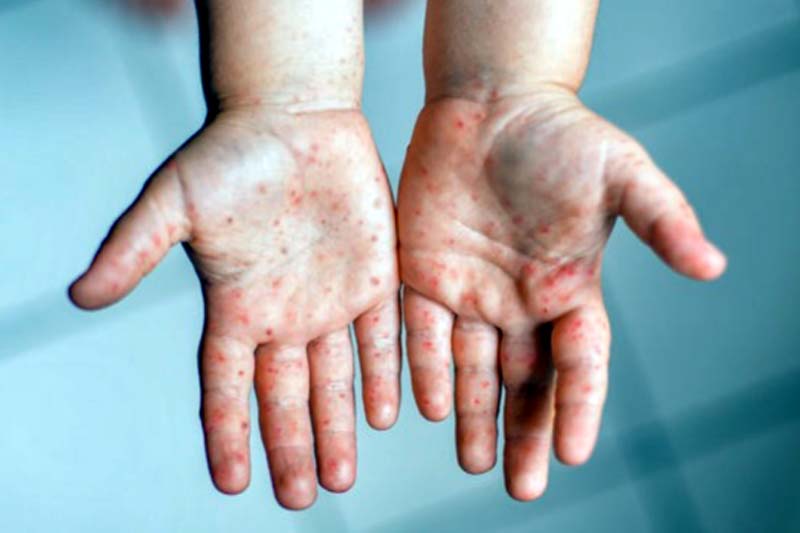
Dr Suhail Naik from GMC Srinagar’s Department of Paediatrics said HFMD usually begins with fever, followed by painful vesicular eruptions in the mouth, hands, feet and buttocks.
“There is a recommended isolation period of five days. It is generally a five-day disease and can affect nutrition because children develop painful mouth ulcers,” he said.
Dr Naik urged parents not to send infected children to school and advised schools to immediately isolate symptomatic students and send them home to prevent further transmission.
Another paediatrician, Dr Yasir Wani, said the viral infection spreads through cough, mucus, saliva and close physical contact, with symptoms usually appearing within three to seven days after exposure.
“The illness starts with high-grade fever, followed by rashes and ulcers around the mouth, hands, palms and feet. In some cases, lesions may also appear on the genitals,” he said.
According to Dr Wani, mouth ulcers generally subside within three days, while rashes on the hands and feet may take up to 8-10 days to heal.
He advised parents to avoid giving children spicy, hot or acidic foods during illness and instead provide cold foods and fluids to soothe mouth ulcers and prevent dehydration.
Warning that even a single infected child can rapidly spread the disease in classrooms, Dr Wani said schools should have clear policies to isolate symptomatic children and send them home immediately.
Dr Waseem Iqbal, a paediatrician from GMC Baramulla, said HFMD is caused by multiple viruses and mainly affects children aged between six months and five years, although older children may also contract the infection.
“No antibiotics are needed. Parents should focus on hydration, fever control with paracetamol and hygiene measures. Doctors should only be consulted if symptoms worsen,” he said.
All three doctors stressed frequent handwashing, hygiene practices and temporary school absence for infected children to help curb transmission.
 Follow our WhatsApp channel
