

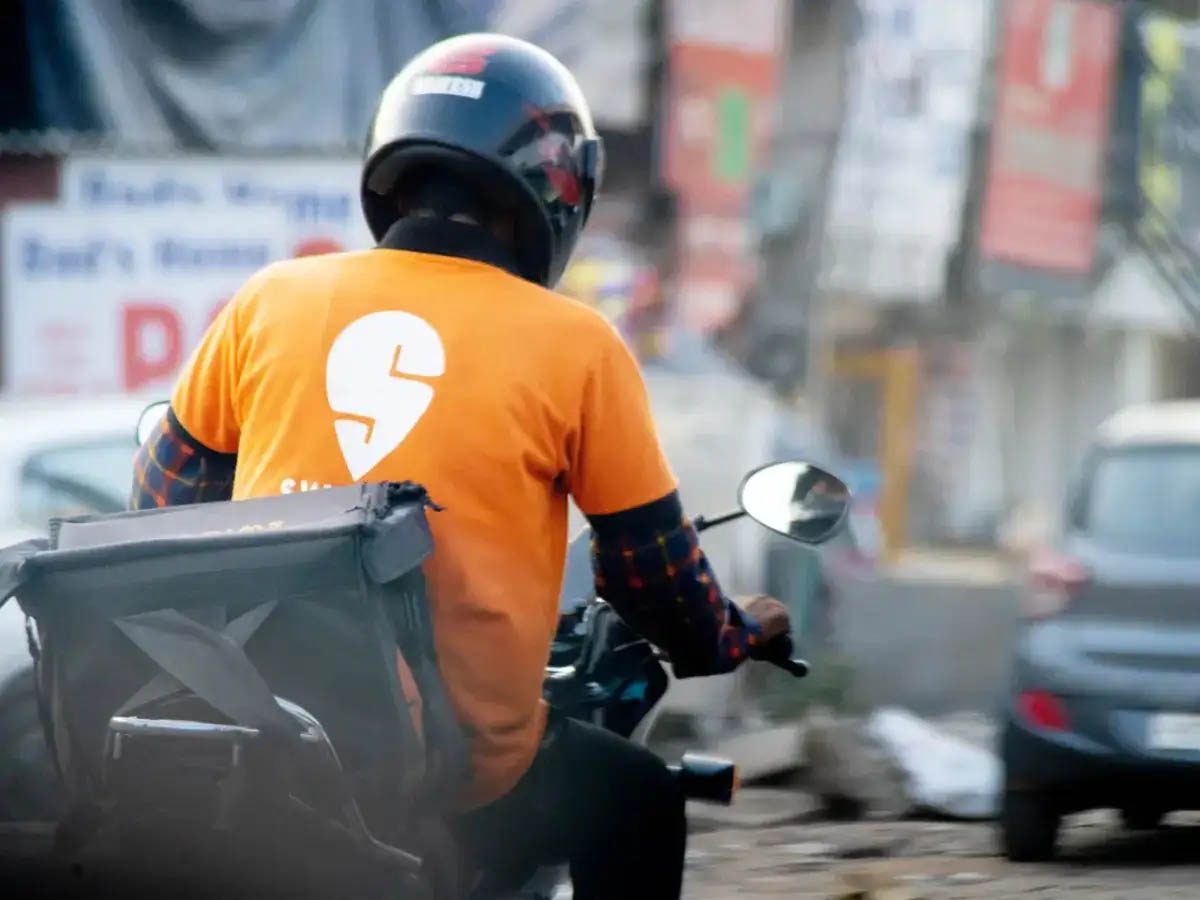
NEW DELHI, May 29: The number of gig workers in India could reach 2.5 crore by the end of the decade, and the Government is in consultation with fund managers to bring social security schemes for them, a labour ministry official said on Friday.
At present, the country has around 1 crore gig workers, including those engaged with app-based food delivery and ride-hailing platforms.
The Government is collecting the workforce data, and all these platforms have to update their workers’ details on the labour ministry’s e-Shram portal by June 22, said Ashutosh A T Pednekar, Joint Secretary and Director General (Labour Welfare).
“A huge part of our workforce is now getting absorbed in the gig and platform economy, and the potential is immense. Today, around 1 crore workers are employed in this sector, and the potential is to reach around 2.5 crore workers by the end of the decade. The government is focusing more towards this sector,” he said, speaking at the ‘Stakeholders Consultation on Opportunities and Challenges of Gig and Platform Workers in India’.
The event was organised by FICCI-AIOE (All India Organisation of Employers), jointly with the International Labour Organization (ILO).
Pednekar, while highlighting steps taken by the Government, said that the Code on Social Security under the new labour code has already been notified on May 8.
“We are in the process of operationalising the Code, based on the rules through various mechanisms like the National Social Security Board for gig and platform workers, which is being operationalised. The board will look at unorganised workers,” he added.
He further said that the Government is in the process of operationalising various social security schemes related to accident and maternity for platform workers.
“We are in the process of creating various schemes and engaging with a number of fund managers to ensure the schemes are operationalised,” he added.
About the e-Shram portal, Pednekar said that the portal already has the database of aggregators and “we can understand, on a real-time basis, the benefits which the worker can or has availed”.
“Just like the UPI and Aadhaar changed the digital landscape in India, the e-Shram has the potential of changing the way the benefits are given to workers, along with the portability of benefits, which is a challenge worldwide, including India,” he said.
Michiko Miyamoto, Director, ILO DWT for South Asia and Country Office for India, said that India’s platform economy has moved rapidly from the margins to the mainstream of economic activity.
“Platform work has created new opportunities for income generation, flexibility, entrepreneurship and labour-market participation. The platform economy can contribute meaningfully to India’s growth and to the broader vision of a Viksit Bharat,” she added.
She further stated that India has led the way in South Asia by extending social security to platform workers.
“India has acknowledged that workers in new forms of work must be visible within systems of protection. The challenge now is implementation. Social protection must be practical, portable and accessible. Registration systems must be simple, and contributions must be fair,” said Miyamoto.
Jasbir Singh, President, AIOE, and Executive Chairman, CEO and Whole Time Director, Amber Enterprises India Ltd, said that as India moves towards the vision of Viksit Bharat 2047, it is important for governments, employers, digital platforms, workers’ representatives, and international organisations to work together in developing practical and balanced approaches that support both enterprise growth and worker welfare. (PTI)
 Follow our WhatsApp channel
