

Excelsior Correspondent
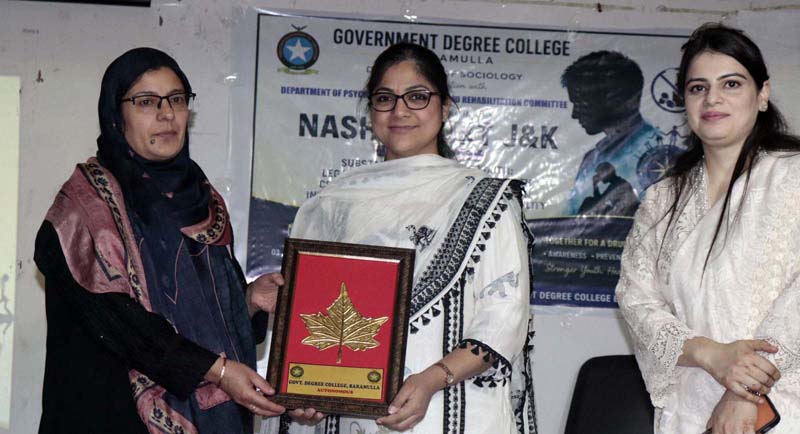
BARAMULLA, June 4: Government Degree College (Autonomous) Baramulla today organized a seminar on “Nasha Mukt J&K: Substance Abuse Among Youth – Legal Implications and Mental Health Consequences” as part of the ongoing 100-day Nasha Mukt Jammu and Kashmir campaign.
The programme was organized by the Departments of Sociology and Psychology to raise awareness about the dangers of drug abuse and promote preventive measures among youth.
Principal of the college, Dr Tasleema Bano, welcomed the participants and highlighted the growing challenge of substance abuse among young people.
She stressed the need for educational institutions to play an active role in spreading awareness and building resilience against addiction.
Introducing the theme of the seminar, Prof Tehmina emphasized the importance of a coordinated approach involving law enforcement agencies, healthcare professionals, educators and the community to tackle the drug menace effectively.
Senior Superintendent of Police, Baramulla, Dr Gurinder Pal Singh, delivered the keynote address and spoke about changing trends in drug abuse, the role of law enforcement agencies and the importance of community vigilance in preventing narcotics-related crimes.
Deputy Advocate General Meenakshi Slathia, who was the Chief Guest, highlighted the legal provisions of the NDPS Act and explained the social and legal consequences of drug abuse.
She urged students to remain aware of the law and actively contribute towards building a drug-free society.
The seminar was attended by officials from the Narcotics Control Bureau, including Inspector Koushal Kumar and Public Prosecutor Aftab Jeelani, who shared insights into narcotics enforcement, emerging trafficking trends and the importance of public cooperation in curbing drug abuse.
Dr Nitan Sharma from the University of Jammu discussed the social and psychological impact of substance abuse, while noted psychiatrist Dr Tajamul Hussain spoke on mental health issues linked to addiction and the need for rehabilitation and counselling.
The programme concluded with a vote of thanks by Dr Hilal, Head of the Department of Sociology.
 Follow our WhatsApp channel
