

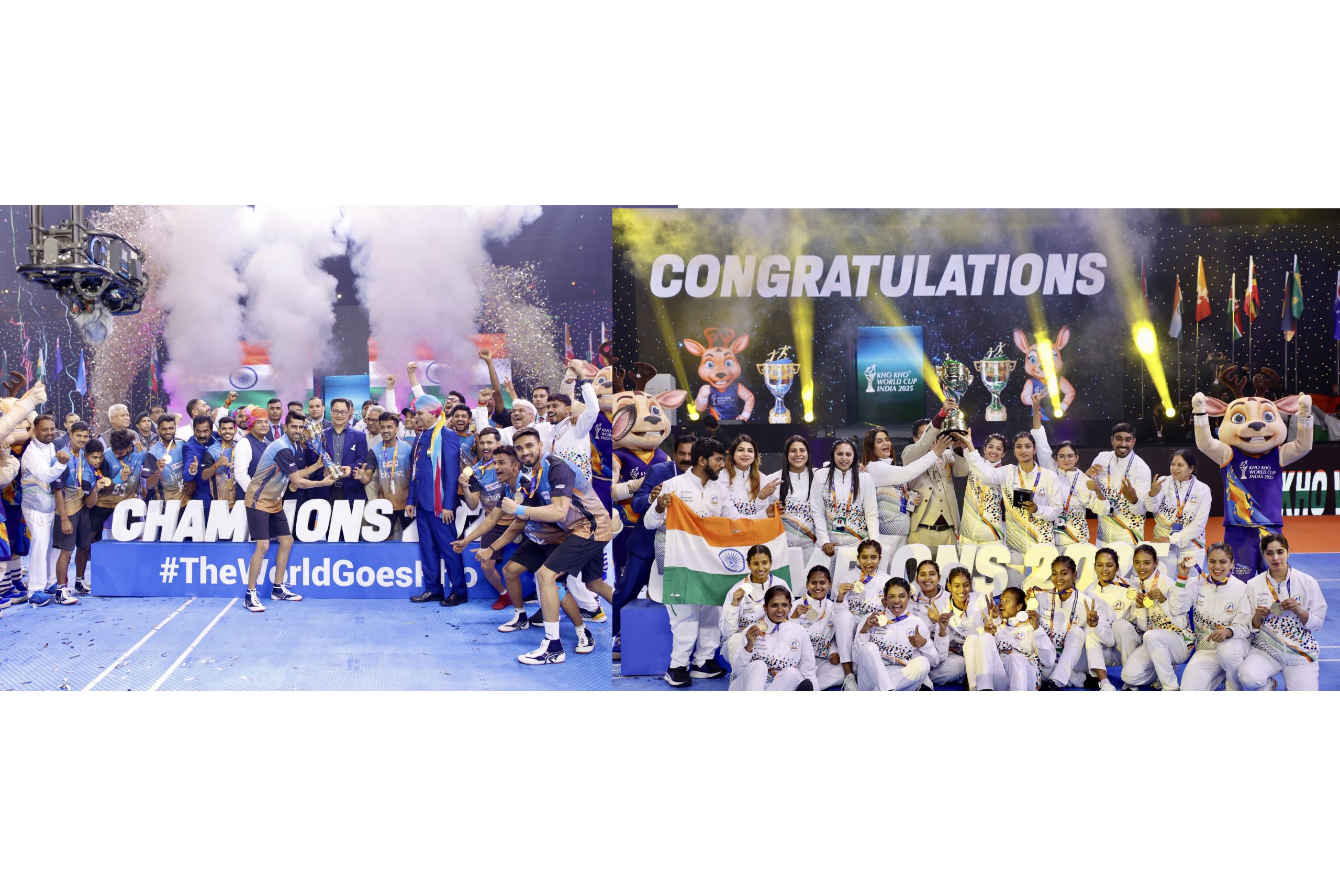
The inaugural Kho Kho World Cup 2025 will forever be etched in the annals of sports history as a defining moment for this traditional Indian sport. Team India’s resounding triumph in both the men’s and women’s finals against Nepal not only showcased their dominance but also marked the global arrival of Kho Kho as a thrilling and strategic sport. India’s dual victories at the Indira Gandhi Indoor Stadium testify to the nation’s rich legacy in Kho Kho. The men’s team delivered a masterclass in strategy, athleticism, and teamwork. Their 54-36 victory was built on a foundation of early dominance. Meanwhile, the women’s team’s emphatic 78-40 win earlier in the evening showcased sheer skill and determination, cementing India’s position as the sport’s torchbearers.
This historic double triumph holds immense significance beyond the scorelines. It underscores the potential of indigenous sports to thrive on the global stage. India’s path to glory was marked by excellence at every stage. From commanding group-stage victories over Brazil, Peru, and Bhutan to overcoming formidable opponents like South Africa in the semifinals, the team demonstrated unmatched consistency and skill. The individual brilliance of key players was the turning point. Kho Kho, a game rooted in rural India, has now captured international attention, thanks to the efforts of players, coaches, and organisers who have worked tirelessly to professionalise and globalise the sport. The World Cup’s success is a practical call for greater investment in traditional games that resonate deeply with cultural identity. The inaugural World Cup’s success signals the beginning of a new chapter for Kho Kho. It’s a moment of pride and an opportunity to build on this momentum. Governments, sports bodies, and private stakeholders must now come together to nurture and expand the reach of Kho Kho, ensuring that it thrives as a global sport. As the tricolour flew high and celebrations erupted across the nation, the message was clear: Kho Kho has arrived on the world stage, and India is leading the charge.
 Follow our WhatsApp channel
