

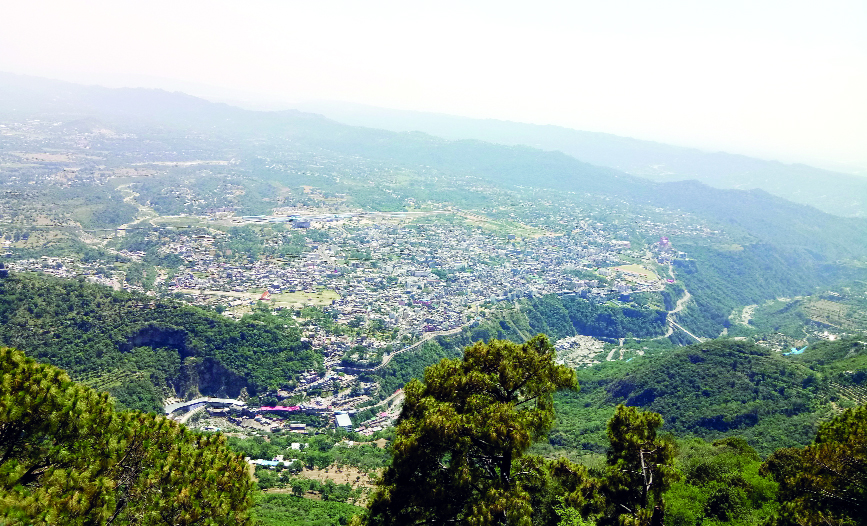
Katra, the base camp town for the revered Vaishno Devi temple, has witnessed a significant transformation over the years. Historically, Katra was a quiet, peaceful settlement, with mud houses and simple residents living in harmony with their environment. For a present local population of 12,900 only, the concrete transformation of the town is beyond imagination. Ever since the takeover of the management of the Vaishno Devi shrine by the Shri Mata Vaishno Devi Shrine Board, a new era has dawned. The Shrine Board implemented numerous measures to improve the facilities for pilgrims, leading to an exponential increase in the number of devotees visiting the shrine. This surge in visitors sparked an unprecedented demand for infrastructure-guest houses, hotels, shopping establishments, and transportation options began to flourish. The town was gradually converted into a modern city with multi-storey concrete buildings replacing the old, simple structures. It became a lively business hub, with roads teeming with cars, auto rickshaws, and commercial vehicles. While this growth brings economic vitality, it also raises critical questions about the sustainability and liveability of Katra in the face of unplanned urbanisation.
As Katra expands in length and width, it is evident that the town’s growth has been chaotic and unregulated. Concrete structures are springing up haphazardly, with little regard for essential planning parameters such as space, greenery, and environmental sustainability. Roads have become overcrowded, with no dedicated parking spaces, narrow lanes choked with traffic, and little to no thought given to the environmental impact of such rapid urbanisation. A major concern is the lack of adequate infrastructure to support the town’s influx of tourists. While Katra has seen improvements in basic amenities, issues like traffic congestion, water scarcity, and waste management remain unresolved.
The town’s current urbanisation poses serious risks to its residents and visitors. Many buildings are constructed without regard for safety standards, particularly in a seismic zone like Katra. The problem is further exacerbated by the encroachment of public spaces and the lack of designated areas for green spaces and parks. The absence of adequate emergency evacuation plans or routes in case of disasters like earthquakes or fire is a critical concern. In the event of a calamity, the overcrowded streets and narrow lanes would make it nearly impossible to evacuate residents and pilgrims in time.
Another casualty is the change in local weather and environment. In the summer, the heat is unbearable, and the lack of trees or open spaces makes the town feel suffocating. Air quality is also a growing concern, as pollution levels increase with the rise in traffic and industrial activity.
Things get further complicated due to the non-existent implementation of the Katra Master Plan. It stands as a glaring example of mismanagement and inadequate planning. The Master Plan, designed to regulate and guide the development of the town of Katra and its surrounding areas, has become a prime case study in bureaucratic inertia and neglect. The authorities have allocated an insufficient number of officers-only five-without any Khilafwarzi Officers for enforcement. This under-resourcing has severely compromised the ability of the Katra Development Authority to carry out its duties effectively, leading to unchecked violations of the Master Plan and stunted progress in the town’s development. Practically, SMVDSB has no mandate to see the town’s planning, and KDA has virtually no staff to check violations.
While development is essential to accommodate the growing number of pilgrims, this growth must be managed in a sustainable way. The town cannot afford to continue down this path of unplanned urbanisation, as it risks becoming an uninhabitable concrete jungle. To ensure the future liveability of Katra, authorities must focus on creating a balance between development and environmental preservation. For Katra to remain a liveable and sustainable town for future generations, it is crucial that authorities prioritise smart urban planning, environmental conservation, and the creation of a balanced infrastructure that can support both the growing population and the increasing number of pilgrims.
 Follow our WhatsApp channel
