

By Dhurjati Mukherjee
India is likely to see below-average monsoon rains for the first time in three years in 2026, the government stated recently, stoking concerns over farm output and growth in Asia’s third largest economy as it battles inflation due to the West Asian conflict. It is well-known that the monsoon is the lifeblood of the country’s nearly $4 trillion economy, delivering almost 70% of the rainfall needed to water farms and replenish aquifers and reservoirs.
As per Indian Meteorological Department (IMD) report, the monsoon is expected to reach 92% of the long-period average (LPA) this year, stated M. Ravichandran, Secretary of Earth Sciences. This happens to be the lowest in nearly three decades though an updated outlook is expected in the last week of May. “Currently weak El Nino-like conditions are transitioning to neutral conditions, but after June it’s very likely that El Nino will develop”, observed Mrutyunjay Mohapatra, IMD Director General.
In the past, 70% of El Nino years since 1980 corresponded with poor summer monsoons in the country which led to reduced rainfall, for irrigation. Experts are of the opinion that the ongoing West Asian crisis coupled with prediction of lower rainfall may have an adverse impact on farm yields as well as GDP growth.
Private weather forecaster Skymet had earlier predicted below normal monsoon this year amid risk of El Nino, saying its impact to develop increasingly during the second half (Aug-Sept) of the four-month session that begins in June. If that happens, India’s farm sector, already staring at the possibility of high input costs – fertiliser, diesel etc. – due to the West Asian conflict, may face advanced challenges, given that more than half of the country’s farm operations depend on monsoon rains.
India’s rapidly expanding industrialisation and urbanisation are already contributing to global warming which, in turn means prolonged and intense heatwaves. Due to these two factors, there is a change in Urban Land Cover Change (ULCC), which increased both Land Surface Temperature (LST) and air temperatures and subsequently affected the surface climate. Between 1901 and 2018, India’s average annual temperature increased by about 0.7 °C, and if the current pace of greenhouse gas emissions continues, the global average temperature is anticipated to increase by almost 5 °C by the end of the 21st century
New temperature-breaking records have been witnessed with 2016, 2020 and 2024 being the hottest years in the present century. However, changing global climate and rapid anthropogenic activities can increase and amplify heatwaves’ intensity, frequency and duration, and related events. Even Indian states which have not experienced heatwaves in the past, such as Himachal Pradesh and Kerala, are now exhibiting a higher frequency of extreme temperatures.
In 2010, over 1300 heatwave-related deaths were reported in Ahmedabad. At the same time, Karnataka is predicted to warm by 2.0 °C by 2030, making the region more vulnerable to severe heat extremes, posing a higher risk to the vulnerable population. As per the National Disaster Management Authority (NDMA), 24,223 fatalities were attributed to heatwave-related deaths spanning from 1992 to 2015. In March 2022, intense heatwaves caused temperatures to climb above 40 °C in numerous Indian cities.
Meanwhile, the IMD chief stated recently above-normal heatwave days are expected over Rajasthan, Gujarat, Haryana, UP, Bihar, Jharkhand, Bengal Odisha Chhattisgarh Telangana etc. There have also been around 45 human deaths due to extreme weather events across many states in March. Meanwhile, the latest forecast from the Monsoon Mission Climate Forecast System (MMCFS) suggested that El Nino Southern Oscillatory neutral conditions are most likely to continue during April to June.
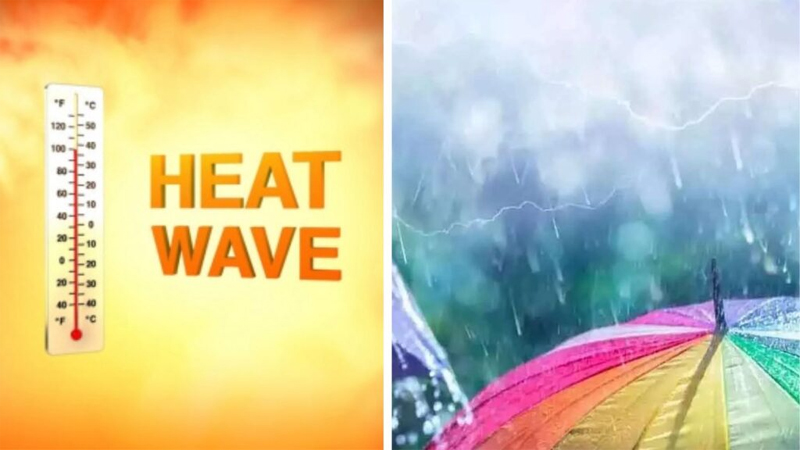
Heatwave like conditions this year arrived earlier than expected, raising concerns among meteorologists, health experts, and policymakers. Several regions across northern, central, and western India have already begun experiencing unusually high temperatures weeks before the traditional peak summer period. The early rise in temperatures triggered warnings about possible prolonged heat waves, water shortages, and health risks.
In fact, reports indicated that February 2026 was the 5th warmest on record since 1901. The uncomfortable part isn’t the heat itself — it’s what breaks under it: the wheat in your roti and the grid powering your fan or AC. While in metros and big cities unbearable heat may witness increased power needs, in villages lack of timely rain and excessive heat may affect crop yields.
IMD’s summer 2026 prediction covers maximum and minimum temperatures — meaning nights won’t cool down either. High-risk heatwave zones such as Rajasthan, Gujarat, Haryana, Punjab, Bihar, Odisha, and Andhra Pradesh may, like 2024, push peak power demand to a then-record 250 GW. The geography is mapped; the trend is clear. What matters now is what happens when the heat hits at scale. March is when India’s wheat crop enters its final ripening stage and temperatures spiking above 35°C cause heat damage lowering yields, eventually leading to higher atta, bread, and biscuit prices by May this year.
Power planners project peak daytime demand at 275–285 GW this summer. Cooling load alone adds 50–55 GW. Despite 65 GW of renewables added since 2024, a 10–12 GW supply gap persists during evening peaks. Despite the gap, nuclear capacity is expanding — Kaiga alone will add 1,400 MW by 2031. This heatwave economic impact India will face compounds existing strain on the system.
Meanwhile, the latest update from the World Meteorological Organization (WMO) on the possibility of an El Nino episode later this year is obviously bad news for India’s monsoon. The update has stated that the above average land surface temperatures during March-May period may be due to climatic factors. This is already being felt in India which has been facing some sort of heat wave conditions in many parts of the country. The WMO predicted that day temperatures are likely to remain above normal by 5-7 degreeC over J&K and Himachal Pradesh by 4-6 degree C over plains of northwest India. including Delhi NCR, Gujarat and Madhya Pradesh.
Rising global temperatures, reduced rainfall, weak weather systems, and urban heating effects are all contributing to the early surge in temperatures. With the hottest months still ahead, preparation and awareness will be critical. Crop loss or lesser yields may be an area of concern which needs to be seriously examined. Water availability remains a big problem and if rainfall is not adequate, this may accentuate conditions in the agricultural sector.
India needs to check pollution more seriously as its flagship, National Clean Air Programme continues to be limited in its scope as it covers only a fraction of polluted cities and over 60% of funds are reportedly directed toward dust reduction. Structural impediments – vehicular emissions, industrial output, coal dependence and agricultural burning – remain inadequately addressed. Thus, it is necessary that pollution control must be regionally coordinated and urban planning must integrate air quality considerations to reduce heat conditions, at least in cities and urban areas.
Governments, communities, and individuals must take proactive steps to protect health, manage water resources, and adapt to increasingly extreme summer conditions. As climate patterns continue to change, early heatwaves may become more common, making long-term climate adaptation and sustainable urban planning increasingly important for India’s future. But unfortunately, in the urban sector or even in the rural areas, green cover is steadily withering and this needs to be checked. India must draw up an effective plan to counter extreme heat as well as manage situations where rainfall is less.—INFA
(Copyright, India News & Feature Alliance)
 Follow our WhatsApp channel
