

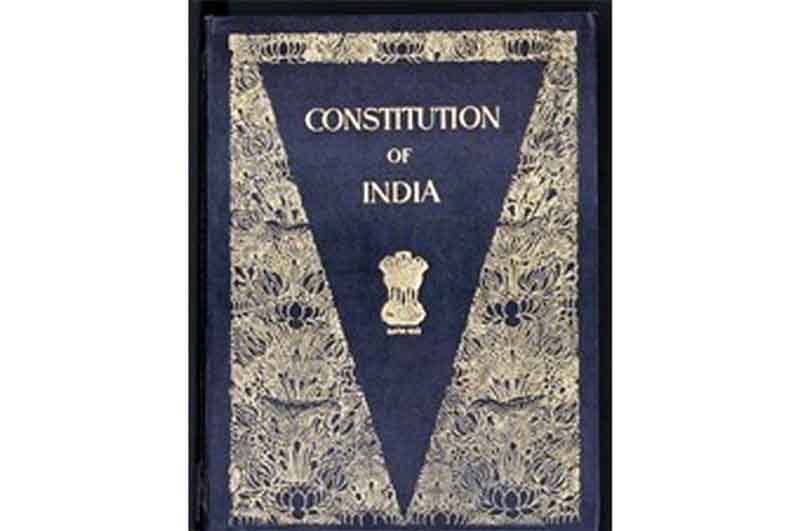
NEW DELHI, Apr 22 : A digital museum dedicated to the Constitution of India, bringing together Constituent Assembly debates, archival records, biographies of the formulators, and historical timelines, was launched at SGT University in Gurugram on Wednesday.
“The Living Constitution: The Draft of Democracy”, an initiative of the Advanced Study Institute of Asia and Faculty of Law, SGT University, is being showcased as the “first comprehensive digital museum” of the Constitution.
Created to mark 75 years of the Constitution, the initiative, according to the now-live website, “brings together archival materials, constitutional debates, biographies, visual art, timelines, and multimedia resources to make its making and evolution accessible to a wider audience”.
The platform aims to explore “the social, political, and historical contexts in which constitutional ideas emerged, were challenged, and reinterpreted” over time.
“Today’s launch is not just an unveiling of a platform but a celebration of the Constitution of India as the moral compass of our democracy. ‘The Living Constitution’ transforms constitutional knowledge into an immersive, accessible experience, ensuring that its ideals of justice, liberty, equality, and fraternity continue to inspire present and future generations,” Hemant Verma, Vice-Chancellor, SGT University, said in a statement.
Conceived as “a teaching tool, a research guide, and a comprehensive repository”, the virtual museum is divided into sections, which include complete Hindi and English transcripts of Constituent Assembly debates, details on various committees associated with the Constitution, and anecdotes from assembly proceedings.
The Constituent Assembly Debates, spread across 12 volumes in English and eight in Hindi, and spanning from December 1946 to January 1950, reflect how members of the assembly negotiated questions of governance, rights, federalism, minority protection, social justice, and the nature of the Indian state.
Another section explores the detailed framework of articles that together define the structure, powers, and principles of the Republic.
“The Constitution of India is not just a document; it is a living framework that evolves with its people. Like a home built with room for future generations, it gives us both structure and freedom, reminding every citizen that unity, responsibility, and respect for expression are the true pillars of our democracy,” Priyank Kanoongo, member of the National Human Rights Commission, said in a statement.
The digital platform also explores the “visual aspect” of the Constitution and its various motifs drawn from India’s civilisational history — ranging from the Indus Valley and the Vedic age to the freedom movement — illustrated by artist Nandalal Bose and his team at Kala Bhavana, Visva-Bharati in Santiniketan.
“Working with a group of his students and associates, Bose guided a remarkable artistic project that transformed the Constitution into a richly illustrated manuscript. Drawing inspiration from India’s artistic traditions — from Ajanta murals and classical sculptures to miniature painting and folk motifs — the team created borders, narrative panels, and symbolic imagery that visually narrated India’s cultural and historical journey,” the website mentions.
Among the principal artists who executed many of the illustrations were Beohar Rammanohar Sinha, Dinanath Bhargava, Vinayak Sivaram Masoji, and Biswarup Bose.
Also a work of craftsmanship, the manuscript’s text was hand-written in elegant calligraphy in English by Prem Behari Narain Raizada, while the Hindi version was inscribed by Vasant Krishanrao Vaidya.
The platform also offers students and scholars with “Teaching Modules” to support “meaningful engagement with the Constitution through structured, thematic learning” by introducing key ideas such as the making of the Constitution, its institutional design, the relationship between rights and social justice, the role of duties and governance, and the ways in which the Constitution continues to evolve through interpretation and amendment. (PTI)
 Follow our WhatsApp channel
