

‘From service to medical data, all fall under privacy shield’
*Issues show-cause notices, seeks explanations
Mohinder Verma
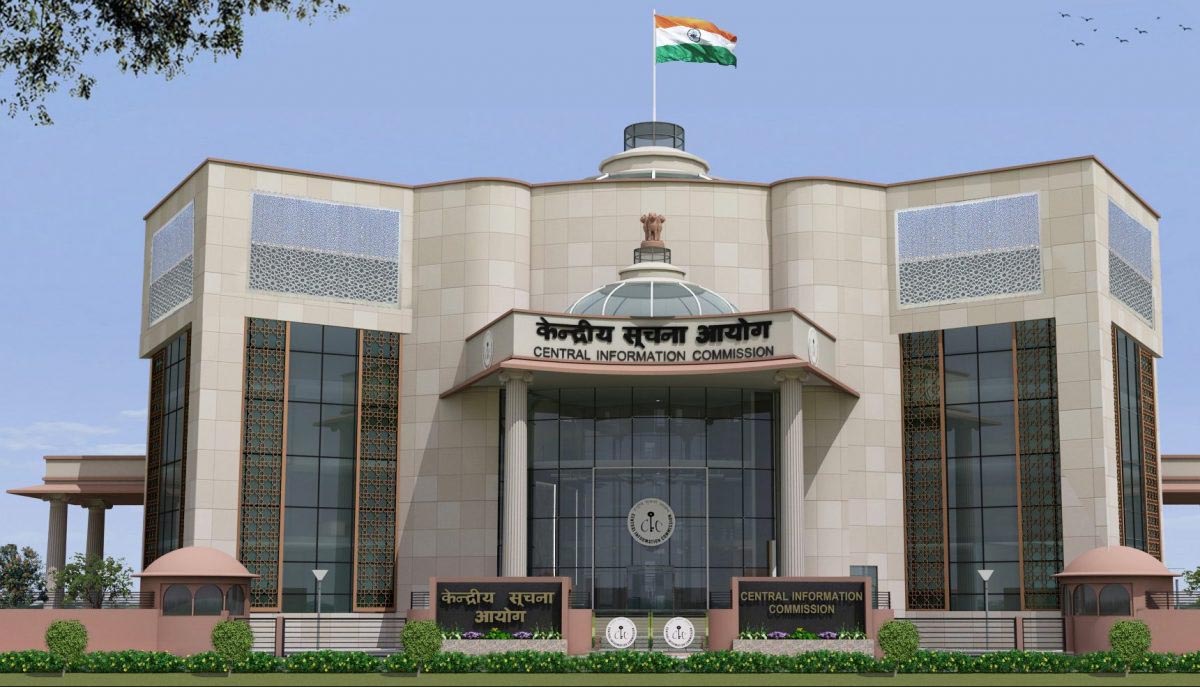
JAMMU, Apr 19: In a scathing indictment of the RTI mechanism in the Union Territory of Jammu and Kashmir, the Central Information Commission (CIC) has found that First Appellate Authorities (FAAs) lack understanding of key provisions of the Act, particularly those safeguarding Third- Party information from disclosure.
Follow the Daily Excelsior channel on WhatsApp
The sharp observation came while the Commission was adjudicating Second Appeals filed by the RTI applicants of the J&K.
In the first case, the applicant had sought copies of vigilance clearances received from the General Administration Department (GAD) in respect of various Engineers regularised as Chief Engineers, Superintending Engineers and Executive Engineers under multiple orders of the Power Development Department.
At the initial stage, the PIO had rightly informed the applicant that the information sought comes under the purview of Third Party information and could not be provided. However, when the applicant filed the First Appeal, the First Appellate Authority (FAA) held that once the DPC has been concluded, the vigilance clearance or promotion orders are no more confidential documents and can be provided under RTI Act.
Accordingly, the FAA directed the PIO to provide the requisite information to the applicant. In compliance of the order of the FAA, the PIO furnished the requisite documents to the applicant. Despite this, the applicant knocked the doors of the CIC with the plea that full information was not provided.
Rejecting the FAA’s reasoning, the CIC relied on the Constitution Bench judgment of the Supreme Court in CPIO, Supreme Court of India Versus Subhash Chandra Agarwal and other landmark rulings to underline the scope of “personal information” under Section 8(1)(j).
Quoting the judgment, the Commission noted that professional records, including qualification, performance, evaluation reports, ACRs and disciplinary proceedings are all personal information and are entitled to protection from unwarranted invasion of privacy.
The CIC categorically held that the disclosure made by the department was in contravention to Section 8(1)(j) read with Section 11 of the RTI Act and viewed the lapse adversely. It further ruled that the FAA’s order was “per incuriam”, effectively rendering it legally unsustainable.
Issuing a clear warning, the Commission advised the First Appellate Authority to exercise due caution while ordering disclosure of information related to Third Parties in the future.
In another case, the RTI applicant had sought wide-ranging information regarding engagement of contractual Computer Operators, Surveyors and Technical Assistants in Jammu Municipal Corporation. The queries included copies of engagement orders, extension details and information such as name, parentage, address and date of engagement, along with the number of extensions granted.
The PIO had responded that the record sought is more than seventeen years old and that the whole record is shifted to new place due to renovation work of building, making it presently not traceable. However, the First Appellate Authority, while deciding the First Appeal, directed the PIO to furnish the information to the applicant.
As the PIO reiterated the stand taken in the reply furnished to the original application, the applicant knocked the doors of the Central Information Commission. During the course of Second Appeal proceedings, the PIO submitted before the transparency watchdog of the country that information pertaining to certain points has already been furnished to the applicant.
Examining the response, the CIC found that while supplying information, the respondent has disclosed copies of contracts relating to Third Party contractual employees, violating the privacy of the individuals and provisions of Section 8(1)(e) and (j) of the RTI Act.
It further observed that such disclosure was made without even following the procedure laid down under Section 11 of the RTI Act, which governs Third-Party information. The Commission categorically held that the PIO has erred in furnishing information which should have been denied under provisions of the RTI Act.
Taking a stern view of the violation, the Commission has directed the CPIO/Under Secretary, JMC to submit an explanation as to why penal action should not be initiated for breaching the provisions of the RTI Act.
In another case exposing serious lapses in implementation of the RTI Act, the CIC dealt with a Second Appeal filed against the District Social Welfare Office, Kulgam, where the applicant had sought crucial information regarding public funds.
The Commission noted that despite the nature of queries involving public funds and accountability, no reply was furnished by the PIO within the stipulated time, nor was any order passed by the First Appellate Authority on record.
Taking a serious view, the Commission observed that the prima-facie failure of the PIO to comply with the mandate of Section 7(1) of the RTI Act, in not furnishing a reply amounts to a gross violation of the provisions of the RTI Act. It also took exception to the absence of the PIO during the hearing without any advance prayer for leave and for disregarding the instructions issued in the notice of hearing.
Accordingly, Commission ordered the PIO to provide a point-wise reply to the RTI application. Further, the PIO has been directed to submit a response to a show-cause notice as to why an action should not be taken against him/her under Section 20 of the RTI Act for the lapses.
Significantly, the Commission also flagged the failure of the First Appellate Authority, observing that the FAA had abdicated its statutory duty, which renders the channel of First Appeal redundant.
 Follow our WhatsApp channel
