

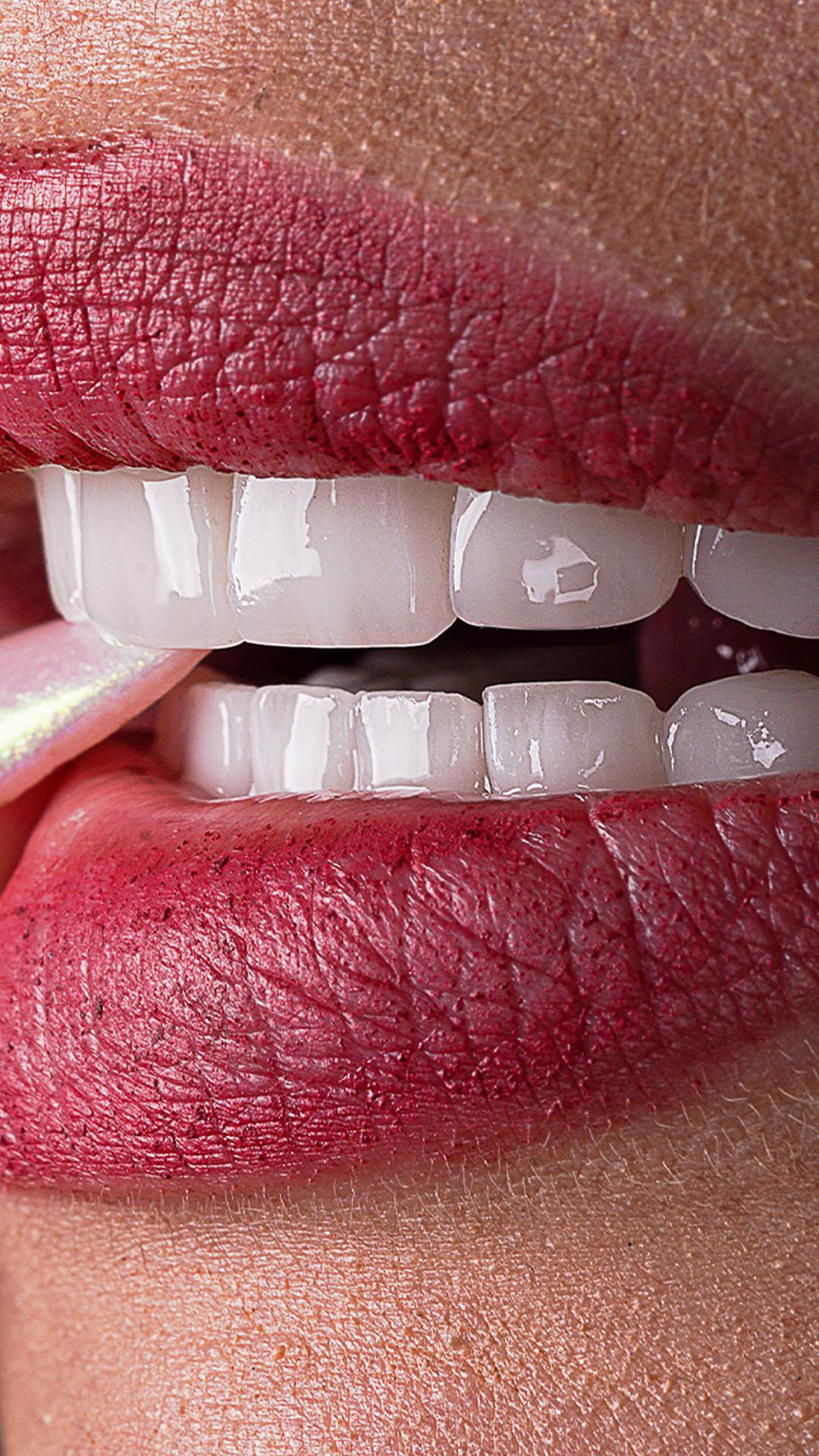
New Delhi [India]: The fear of ending up with obviously artificial teeth is one of the main reasons people hesitate to pursue cosmetic dental treatment — and it’s a completely legitimate concern. We’ve all seen the results when it goes wrong: uniformly white, perfectly rectangular teeth that look more like bathroom tiles than a real smile. The good news is that this outcome is entirely avoidable. It’s the product of poor planning and execution, not an inherent risk of the treatment itself.
This guide covers the artistic and technical principles that separate natural-looking Hollywood Smiles from obvious dental work — from shade selection and tooth shape to surface texture, gum aesthetics, and age-appropriate design. Understanding these factors gives you the tools to evaluate cosmetic dentists properly and pursue treatment with confidence.
Why Veneers Look Fake — and How to Avoid It
The “chiclet teeth” effect — named after the uniformly rectangular pieces of chewing gum — is the most common aesthetic failure in cosmetic dentistry, and it comes down to a few predictable mistakes. The first is making all teeth identical in size and shape. Natural teeth vary meaningfully within a single smile: central incisors are the longest and widest, lateral incisors are slightly smaller with more rounded corners, canines are narrower with more pronounced curves. When every tooth is made the same in a misguided pursuit of symmetry, the result looks manufactured.
The second mistake is creating teeth that are too flat. Natural enamel has subtle vertical lines, gentle curves, and slight surface variations that catch light in complex ways. Veneers fabricated without these micro-anatomical features reflect light uniformly — giving them that telltale flat, white appearance. The third issue is positioning teeth in a perfectly straight line. Ironically, teeth that are too geometrically perfect read as artificial. Skilled cosmetic dentists intentionally incorporate controlled irregularities — minor rotations, slight variations in position — that preserve natural character while correcting genuine flaws.
Choosing the Right Shade
Nothing influences whether veneers look natural more than shade selection. The pursuit of brilliant whiteness is understandable, but teeth that are too white cross into territory where they look like chalk rather than natural enamel. Natural-looking results typically fall in the B1 or BL range on the Vita Classical shade guide — the lightest shades that still maintain translucency and character.
The critical principle is that tooth colour should harmonise with skin tone, eye colour, and overall facial colouring. A shade that looks beautiful on one person can appear garish on another. Patients with fair skin and light features can often carry very light shades convincingly. Those with darker skin tones or olive complexions typically look more natural with slightly warmer shades that complement rather than clash with their features. When veneers are only being placed on the front teeth and back teeth remain untreated, the shade also needs to transition smoothly to avoid a stark visible line between treated and untreated teeth.
Translucency: What Makes Teeth Look Alive
One of the most sophisticated aspects of natural-looking dental work is replicating enamel translucency. Natural tooth enamel — particularly at the biting edge of front teeth — is semi-translucent. Light penetrates the surface, interacts with the underlying dentin layer, and reflects back out, creating depth and vitality. This is what prevents natural teeth from looking like solid white blocks.
High-quality dental porcelain can be layered to mimic this behaviour. Master ceramists build up veneers using different porcelain formulations: more opaque material in the body of the tooth where dentin shows through, transitioning to highly translucent porcelain at the incisal edge. Veneers made from single-shade porcelain without this layering reflect light uniformly across the entire surface — they may be white, but they look flat and lifeless. This is why veneer quality can’t be judged from photographs alone. Seeing restorations in person, observing how they interact with light from different angles, reveals whether they have the optical sophistication that creates natural appearance.
Customising Shape and Proportion to Your Face
Tooth anatomy isn’t one-size-fits-all, and the most natural-looking results are those designed around the individual’s facial structure, gender, and aesthetic preferences. Research in dental aesthetics has identified patterns in how tooth shape influences perceived femininity versus masculinity: traditionally feminine smiles tend to feature teeth with rounded corners and gentle curves; traditionally masculine smiles often incorporate more squared corners and proportions that emphasise width over length. These are tendencies, not rules — some people prefer shapes that deviate from these conventions entirely, and the design should reflect that.
Beyond gender considerations, tooth proportions need to harmonise with the scale of the face. Patients with broader faces and stronger features can carry wider, more prominent teeth convincingly. Those with more delicate features look more natural with proportionally smaller teeth. The smile width — how many teeth show when you smile broadly — also matters. A smile that’s too narrow looks constrained; one that shows too many teeth can appear exaggerated. Getting this balance right requires careful analysis of facial proportions and smile dynamics, not a formulaic approach.
The smile line — the curve traced by the upper front teeth edges — should mirror the curve of the lower lip when smiling naturally. When this relationship works, the smile integrates seamlessly with facial movement. When it doesn’t, the teeth look like they’ve been placed rather than grown. Patients researching Hollywood Smile Istanbul clinics should ask specifically about smile line analysis and facial proportion planning as part of the design process — these details separate comprehensive smile design from simply fitting white porcelain onto prepared teeth.
Gum Aesthetics Matter as Much as Teeth
Even the most beautifully crafted teeth can’t create a truly natural smile if the gum tissue framing them is disproportionate or asymmetrical. Gum tissue around each tooth should form a gentle scalloped pattern, with gum peaks over the canines and central incisors sitting slightly higher than the gum over the lateral incisors. When gum levels are uneven, the smile appears imbalanced regardless of how well the teeth are made.
Excessive gum tissue — where too much gum shows when smiling and teeth appear short as a result — can be corrected through precise gum contouring, often performed with dental lasers for accuracy and minimal recovery time. Gum recession that has created dark triangles between teeth can be addressed with grafting procedures. And critically, gum health needs to be fully established before any cosmetic work begins. Inflamed, bleeding gums undermine even the most technically excellent veneer work — both aesthetically and in terms of long-term stability.
The Digital Preview Process
One of the most significant developments in modern cosmetic dentistry is the ability to preview your smile before any irreversible changes are made. Digital smile design software takes photographs, facial measurements, and intraoral scans and uses them to create a simulation of the planned outcome — on your face, not someone else’s. You can review the design, request adjustments, and approve the result before preparation begins.
Once the digital design is approved, many clinics create a physical mock-up — temporary restorations bonded to your teeth or a removable appliance — that you can actually wear, photograph, and show to people in your life. If anything feels off, it’s adjusted before the permanent pieces are made. This process removes the anxiety that stops many people from committing to treatment, because you’re not guessing at the outcome — you’re approving it.
Surface Texture and Age-Appropriate Design
Natural tooth enamel isn’t uniformly glossy like polished glass. Young teeth have a smooth, reflective surface; as they age, micro-wear creates subtle texture variations — slight matte areas, wear facets, and surface character that catch light in complex rather than uniform ways. Veneers that are too glossy read as artificial immediately. Master ceramists replicate natural surface character by adjusting the final polish, creating texture variations that give each tooth individual personality while maintaining harmony across the full smile.
Age-appropriate design is equally important and frequently overlooked. Teeth that are too long, too white, or too geometrically perfect look incongruous on a patient with natural facial ageing — the contrast actually draws more attention to the dental work. The goal for older patients isn’t to recreate the smile of a 22-year-old but to produce teeth that look healthy, vital, and well cared for while remaining proportionate to the rest of the face. A shade slightly brighter than the existing colour, tooth length restored to a more youthful proportion but with appropriate surface characterisation — this is what produces results that look refreshed rather than replaced.
Why the Ceramist Makes or Breaks the Result
The difference between natural-looking and obviously artificial restorations often comes down to who fabricates them. Mass-produced veneers follow standardised protocols: a shade selected from a limited palette, a basic shape chosen from a preset library, porcelain layered according to formula. The results may be white and reasonably shaped, but they lack the nuance that creates natural appearance.
Bespoke veneers hand-layered by master ceramists are a fundamentally different product. These specialists study patient photographs, consider age, gender, skin tone, and aesthetic goals, and use that information to guide every decision. They hand-mix custom shades, build translucency variations, create surface texture and characterisation that gives each tooth individual character while maintaining cohesion across the smile. A master ceramist may spend hours on a single case — repeatedly building up and refining porcelain layers, test-firing pieces multiple times to achieve the right optical properties, hand-finishing surfaces to prevent that uniform, artificial look. Choosing a clinic that works with this level of laboratory craftsmanship is one of the most important decisions in a smile makeover. internationalplus.net maintains close partnerships with accomplished ceramists, ensuring that the artistic execution of each case matches the quality of the clinical planning behind it.
A natural-looking Hollywood Smile is entirely achievable — but it requires more than good materials and a competent technique. It requires a design philosophy that values subtle sophistication over rigid perfection, combined with the artistic skill to execute that vision at every stage of treatment. When those elements come together, the result is a smile that enhances your natural appearance rather than replacing it with something that visibly isn’t yours.
 Follow our WhatsApp channel
