

P K Nanda
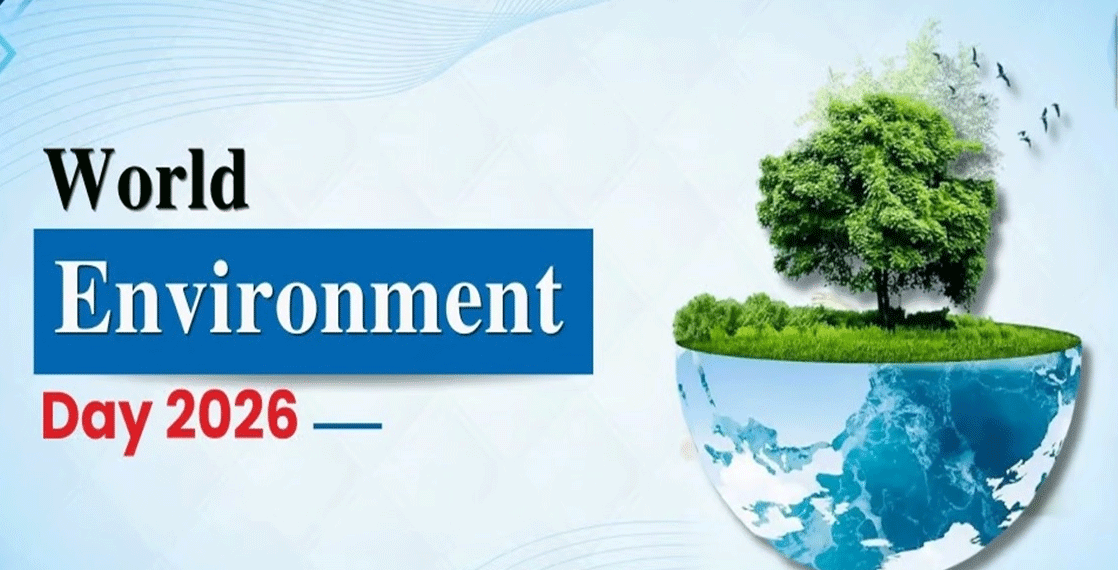
World Environment Day is celebrated on the 5th of June every year with the objective of highlighting the roles and responsibilities of every individual on this planet toward protecting and preserving the environment. It reminds humanity of its collective duty to maintain a healthy and congenial environment for present and future generations, while also shaping sustainable cities and towns for a better future.
The theme for 2026, “A Global Call for Climate Action,” focuses on addressing the multiple factors affecting all living beings across the globe. The theme highlights the urgent need to respond to environmental warning signs such as extreme heat, rising sea levels, and changing disease patterns. It also emphasizes that protecting biodiversity and living in harmony with nature are essential for human survival. Sustainable economic development can only be achieved when growth is aligned with environmental protection and proper planning.
Development of every settlement must go hand in hand with proper infrastructure and improvement in the economic condition of its residents. World Environment Day provides an opportunity to deliberate on the importance of sustainable growth in the face of a rapidly increasing population. Sustainability in the economy refers to the ability of societies to withstand economic shocks and adapt to changing circumstances.
It is a matter of great concern that overcrowded settlements across the world are crying out for a sympathetic and practical approach from all stakeholders to ensure:
* Proper and well-maintained road networks
* A healthy environment
* Clean and hygienic surroundings
Rapid population growth and unplanned development have created immense pressure on existing infrastructure, resulting in poor living conditions and environmental degradation. People migrate to urban settlements in search of better economic opportunities, leading to overcrowding and inadequate civic amenities. Therefore, future settlements must be planned scientifically with sustainable infrastructure capable of addressing emerging environmental and economic challenges. Such planned development can significantly improve hygienic conditions and the quality of life of inhabitants.
Global climatic conditions are also being adversely affected by the continuously increasing world population, which reached nearly 8.3 billion by May 2026 and is expected to rise further in the coming decades. Rapid population growth poses a serious threat to the achievement of Sustainable Development Goals related to climate protection and environmental preservation.
Unfortunately, unplanned urbanization has contributed significantly to the climate crisis through increased carbon dioxide emissions and the generation of all kinds of waste. These are among the major causes of environmental pollution. To tackle such challenges, new settlements should be designed with sufficiently wide roads to ensure smooth vehicular movement and minimize traffic congestion, thereby reducing carbon emissions.
Adequate open spaces should also be reserved along roads and within housing colonies to promote plantation and landscaping activities. Green cover helps regulate temperatures and creates a healthier environment for nearby areas.
It is also pertinent to note that during the COVID-19 pandemic, metropolitan cities witnessed the highest number of casualties due to poor air quality, overcrowding, and traffic congestion. Cities such as Mumbai, Delhi, and Kolkata were more severely affected than rural areas because of their dense populations and lack of open spaces. Therefore, urban planning must prioritize adequate green and open spaces to ensure healthier living conditions.
In our densely populated country, particularly in the Union Territory of Jammu & Kashmir, the ever-increasing population and rapid growth in the number of vehicles have become major causes of pollution and unhealthy environmental conditions. Jammu city itself is facing severe traffic congestion and pollution-related problems. Authorities responsible for traffic management and urban planning must adopt effective measures to decongest roads and improve transportation systems. More parking facilities should be developed in crowded areas such as the old city markets, Gole Market, Gandhi Nagar, Apsara Road, and adjoining localities. Such sustainable urban development would not only reduce congestion but also strengthen commercial activity and improve the local economy.
Agencies responsible for forest protection must also take proactive measures to improve the environment by launching extensive plantation and tree protection drives. Large-scale plantation should be undertaken along National Highways, educational institutions, religious places, and around major public structures in and around Jammu city. Residents should also actively participate in maintaining parks and green belts within their localities.
To ensure a healthy urban environment, migration must be regulated to prevent the unchecked growth of slums and unauthorized settlements. In Jammu, several vulnerable areas, including stretches near the railway station adjoining Trikuta Nagar, have seen the growth of slums lacking basic facilities such as water and electricity. Such settlements contribute to environmental pollution and place additional pressure on civic infrastructure. This issue can be addressed through proper registration and monitoring of migrant laborers by law enforcement agencies.
Environmental degradation is also accelerated by uncontrolled and unplanned urbanization, which contributes heavily to greenhouse gas emissions. There is an urgent need to plan cities based on the principles of “Zero Carbon” and “Zero Waste.” This means that all forms of waste-both liquid and solid-must be properly recycled or safely disposed of. Recognizing the urgency of the urban climate crisis, the Government of India earmarked ?1 lakh crore in 2025 for sustainable urban transformation initiatives. Similarly, the Lieutenant Governor of Jammu & Kashmir has emphasized the role of private developers and real estate players in promoting affordable and sustainable housing.
Another important concept that deserves attention is the Circular Economy, which can play a vital role in improving environmental sustainability. A Circular Economy is a sustainable economic model that aims to keep resources and materials in use for as long as possible while minimizing waste and encouraging resource regeneration. Unlike the traditional linear economy based on the “take, make, dispose” approach, the circular economy focuses on reusing, repairing, refurbishing, and recycling products and materials to extend their lifecycle and reduce environmental impact.
The Circular Economy is crucial in addressing major global challenges such as climate change, biodiversity loss, and pollution. By minimizing resource extraction and reducing waste generation, it helps lower greenhouse gas emissions and conserve natural resources. It also promotes sustainable economic growth and environmental resilience.
Conclusion
The Circular Economy represents a transformative approach to the way we produce and consume goods. By adopting circular principles, businesses, governments, and individuals can contribute to a more sustainable future where resources are utilized efficiently and responsibly while minimizing environmental damage. Embracing this model is essential for building a resilient economy that benefits both people and the planet.
(The author is FIE MIWWA, MIAH, MIIPA)
 Follow our WhatsApp channel
