

Shubham Mehta
Having been born and brought up in a glimmering, glittery, thrilling, exciting, hustle-bustle, stumbling and fast paced life of a city, I would always find myself in a fix while watching certain debates and news reports during childhood. This was bound to happen whenever I would listen to the phrase “the soul of India lies in our villages”. Perhaps that was an eternal lie for me until I was taught Maths and then some statistics. Certainly what’s within my foresight, but anything that’s less than one-third cannot project the true nature of the canvas in its entirety. In 2018, while we are here, having a little conversation, more than 67% of India is yet to fully explore the vividness of urban life.
Nonetheless what comes to your mind when I mention of Balwant Rai Mehta, Ashok Mehta, GVK Rao, Hanumantha Rao and Nagaur. I can hear somebody saying, “Nagaur!….. Rajasthan, perhaps?” Well I wouldn’t count it wrong but not completely correct, here, as well. There is a common thread that binds these names perfectly in cohesion such that each name falls aptly in place like pearls in a necklace. The hint lies in 73rd Constitutional Amendment Act of 1992. Now, I know that you can pick it up. Yes! We are certainly talking about the long walk to democratic decentralisation.
Though many of us would consider that inclusion of Article 40(Organisation of Village panchayats) and setting up of Balwant Rai Mehta committee to review the working of Community development programmes, later succeeded by first Panchayati Raj institution in Nagaur district of Rajasthan has been the first systematic step towards extending autonomy to villages in India. But some of you would appreciate it more when I’d help you recall that Lord Mayo, in pre-independence India, was the first person to provide for financial decentralisation upto village level. Lord Ripon took it a step further and is known as ” the father of Local bodies in India” for his resolution of local self government in 1882.
But even with the establishment of Panchayati Raj institutions in post independence India and gradual improvisations-here and there-based on the recommendations of succeeding committees, something was still amiss. For greater part of the time, layering within the organisational structure was not uniform across States, State Governments were always reluctant and ignorant when it would come to conducting panchayati elections and financial crunch was an eternal issue with panchayats. The long walk to democratic decentralisation, I wouldn’t term ‘culminated’, but rather heralded a new era and infused a new lease of life to the largest vibrant democracy of the world with the enactment of 73rd CAA. Now our panchayats were to enjoy constitutional protection, autonomy and help deliver on the goal of the father of the nation-Mahatma Gandhi.
Unequivocally, the enactment helped homogenise the three tier structure across states(two-tiers where population of the state is less than 20 lakhs); conducting elections became a regular feature which cannot be turned a blind eye to, unless the states are adamant to revoke Article 365 of the constitution and push themselves in a lull. Women are given political representation with a commitment of 33 percent reserved seats for them unless the state legislature desires to increase this number. Some states like Bihar have augmented this position to 50 percent mark. Historically marginalised sections of SCs and STs are promised due share in power based on the proportion of their population. In addition, Constitution of State Election commission and State Finance Commission are some of the features that fetch additional brownie points for this legislation.
But the graffiti on the wall is yet not picturesque unless I take into account all the intangible benefits that this legislation accrue to the concerned citizenry. Now it enables the women to have a shared perception of justice, deprivation and oppression as also the shared experience of marginalisation vis-a-vis power structure. More importantly, it provides them an opportunity to raise their grievances and other socio-economic problems in a formal forum. Reservation of seats of chairperson for STs has enabled the panchayats to make a collective call in association with gram Sabha on the allocation of their own natural resources. PESA(Panchayat extension to scheduled areas) Act, 1996 and Tribals and other forest dwellers Act, 2006 have further emboldened and entrenched their position.
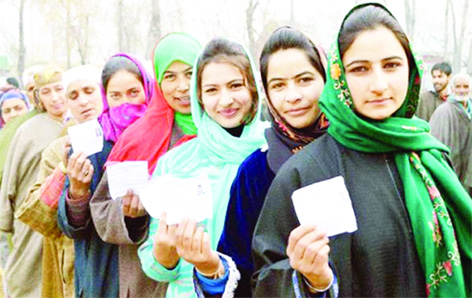
But on the flip side, majority of the powers to ensure that these local bodies work efficiently are vested in the state legislatures. They have the power to decide whether or not to extend the provision of reservation in panchayats to OBCs. Only they would decide the terms and conditions of the services of state election commissioner. Albeit 14th Finance commission tried to ensure that sufficient financial resources flow down to the local bodies, it is the state govt which takes the final call on the recommendations of state election commission’s recommendations. Many of the states have not provided these panchayats with adequate taxation structure to ensure self-sustainability in revenue and financial matters, and leaving the latter to be termed as “toothless tiger”. In terms of administrative matters, whilst undeniably the representation of women in these panchayats is a significant proportion, it has been observed that owing to patriarchal mindset their husbands would discharge duties on their behalf, resulting in “panchayat pati” syndrome. And a peculiar situation is observed vis-a-vis Jammu and Kashmir which fails to conduct local body elections, because the system has been held hostage to the terrorist activities.
And therefore even after ensuring that authority and funds flow seamlessly to village functionaries, we have failed to keep our village economy going and agricultural operations buoyant. Farmers are silently administering death sentence unto themselves which is pitch perfect to reverberate the ear drums of even the deaf. The village economy has not been able to provide its subjects with alternate means of earning when low monsoon upsets their agricultural productivity. Since our high GDP growth is attributed primarily to high consumption amidst low investments made presently, expansion of industries in the rural areas would be a real shot in the arm during monsoon distress.
But even while the challenges are abundant, political leadership is abreast with loopholes that call into question the very existence of these local bodies. Hence, Sansad Adarsh gram yojana helps ensure that model villages are developed in each state which provides a blueprint for others to emulate. Also the idea of Rurban mission to develop economic clusters and providing urban facilities to the areas possessing the soul fo the villages is a step in the right direction. The Bharatnet project to ensure digital integration of villages with the rest of India, DAY-NRLM, DDU- Gram Jyoti yojana and Saubhagya mission would allow the village citizenry to lead a life of dignity. The Government has further been successful in catching the bull with its horns through the special safeguard mechanisms and the peace clauses for public stockholding which has been successfully negotiated by central leadership at multi lateral forum of WTO. The GoI has also made it a point to remind the citizens of the importance of National day of Panchayati Raj on 24th April by making it part of the celebrations of Gram Swaraj Abhiyan, which are being held on the eve of Ambedkar Jayanti.
(The author is a graduate of Birla Institute of Technology and Sciences, Pilani)
feedbackexcelsior@gmail.com
 Follow our WhatsApp channel
