

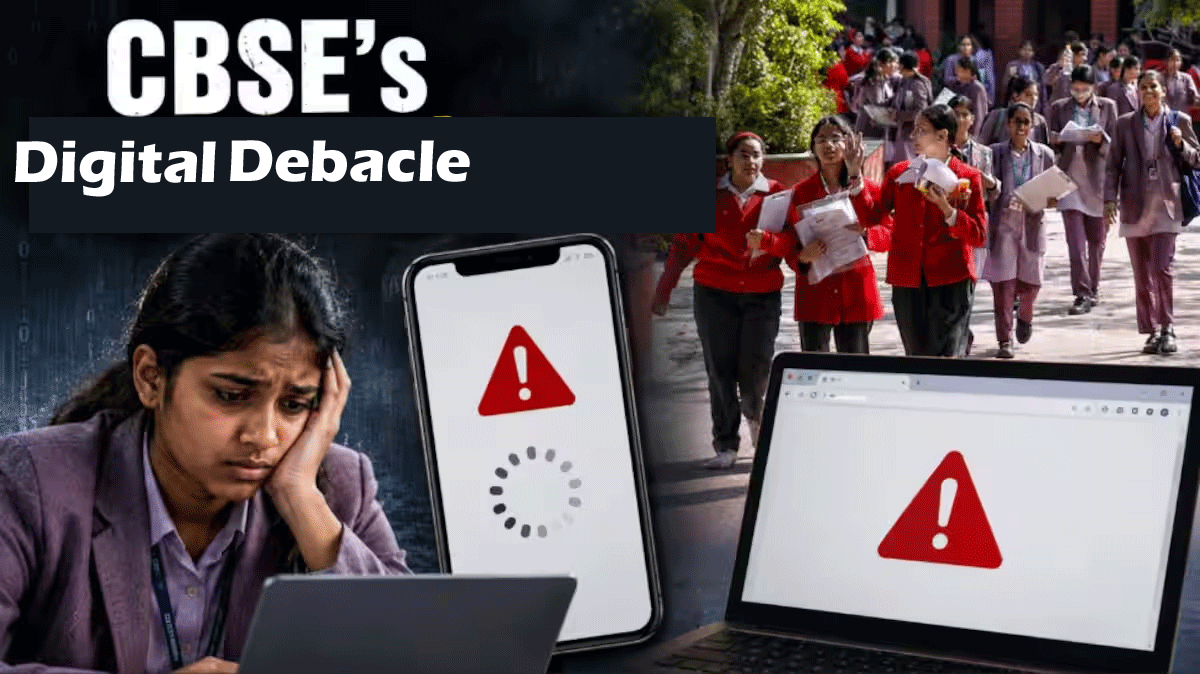
There is a particular cruelty in failing students-not through the rigour of examinations but through the recklessness of Administration. The unfolding crisis surrounding CBSE’s on-screen marking system for Class 12 board examinations is precisely such a failure – one that strikes at the heart of a system millions of young Indians trust with their futures. What was billed as a progressive leap into digital evaluation has proved a nightmare of the board’s own making. The errors reported by students are not routine technical glitches – they represent a systemic collapse. Scanned answer sheets mismatched with students’ own handwriting, blurred and illegible copies uploaded for evaluation, totalling mistakes: the list is as staggering as it is damning. What makes this crisis especially significant is that the provision allowing students to view their answer sheets – a rare transparency measure – exposed the rot. Had this window not existed, countless errors would have silently altered careers without a soul being any the wiser.
The shift from physical to digital evaluation was, in principle, sound. Done properly, OSM offers consistency, speed, and auditability. The failure lay entirely in execution. Allegations that a relatively small and untested firm was awarded the contract – bypassing experienced organisations such as TCS – raise grave questions about the tendering process. It is a damning commentary on institutional accountability that a seventeen-year-old student from Jharkhand, Sarthak Sidhant-himself affected by the very system he was scrutinising-presented a more rigorous seven-page analysis to the Parliamentary Committee on Education than anything the board could offer in its defence. That a teenager’s blog became the most credible source of scrutiny in a national examination controversy shows how exposed the prevalent system is.
Class 12 results are not mere scores – they are the foundation upon which admissions, scholarships, and life choices are built. Students who should be focusing on competitive entrance examinations are instead battling portal glitches and anxiously awaiting corrected marks. For many students, particularly those from economically disadvantaged backgrounds or smaller towns, a good board result represents years of sacrifice, both personal and familial. To have those results compromised by an untested digital system adopted without adequate safeguards is an injustice of the gravest order. The mental toll on young people cannot be captured in any official report. Adding insult to injury is the requirement to pay re-evaluation fees, a burden that is simply not affordable for many families. It is perverse logic to ask a student to pay for the privilege of correcting a mistake that was never theirs to make. This is unjust. All such charges must be waived immediately, and if every affected answer sheet must be re-evaluated manually, so be it – the cost must be borne by the institution, not the student. The CBSE must set up a dedicated, glitch-free helpline and portal specifically for OSM-related grievances. More broadly, the board must commit to a thorough and independent audit of the OSM system before it is used in any future examination – or reconsider its use entirely until it can be implemented with full reliability and security.
The board’s initial response to student grievances – one of denial and deflection – only deepened the crisis. The cybersecurity failures further illustrate how woefully unprepared the entire infrastructure was for a task of this magnitude. Institutions in positions of public trust cannot afford the luxury of opacity when things go wrong. Every day of stonewalling erodes confidence further. The Government has now acted rightly in transferring the two senior CBSE officials and constituting an inquiry committee under S. Radha Chauhan. However, transfers after prolonged denial carry limited moral weight. The committee must operate with full independence, unrestricted access to procurement records, and the mandate to pursue accountability at every level. Its findings must be placed in the public domain without euphemism or omission.
Denial and opacity are not options at this juncture. India’s students prepare for years, trusting that the examination system will evaluate them fairly. That trust, once broken, is not easily restored. The path back to credibility runs through complete transparency, genuine accountability, and an unequivocal commitment that no student’s future will be diminished by the failures of those who were entrusted to protect it.
 Follow our WhatsApp channel
