

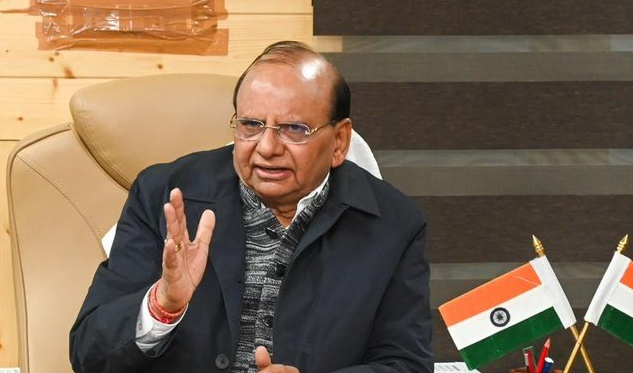
LEH/JAMMU, May 31: Lieutenant Governor Vinai Kumar Saxena on Monday approved the constitution of the Ladakh tourism development society, an autonomous body that will bring together government agencies, tourism stakeholders and local communities under a common platform, to promote tourism and ensure the planned, coordinated and sustainable development of the sector.
Saxena highlighted the significance of the initiative and said tourism remains a key pillar of Ladakh’s economy and a major source of livelihood for its people.
“A significant step has been taken towards strengthening tourism promotion and steering the planned, coordinated and sustainable development of the tourism sector in Ladakh. The Lieutenant Governor of Ladakh has accorded approval for the constitution of LTDS”, officials said.
Officials said the LTDS has been established to serve as a dedicated institutional mechanism for the holistic development of tourism in Ladakh.
“The society will function as the central agency for planning, promotion, regulation, coordination and implementation of tourism-related initiatives while ensuring environmental sustainability, cultural preservation and community participation,” they said.
The LTDS will operate as an autonomous, not-for-profit body under the administrative control and policy direction of the Department of Tourism and Culture, they said.
The lieutenant governor will serve as its chief patron, while the chief secretary will be the president and the secretary tourism will act as the member secretary, the officials added.
Highlighting the significance of the initiative, Saxena said tourism remains a key pillar of Ladakh’s economy and a major source of livelihood for its people.
He said the new society would create a professional, collaborative and futureready institutional framework to drive the sector’s growth in an environmentally responsible and culturally sensitive manner.
“Our goal is to balance growth with environmental conservation and cultural preservation and ensure that the benefits of tourism growth are shared among the people of Ladakh,” he said.
According to officials, the society’s key objectives include preservation and promotion of Ladakh’s cultural and natural heritage, strategic tourism planning, destination development, branding and marketing, and regulation of tourism and adventure activities with a focus on safety and environmental safeguards.
The LTDS will also focus on developing tourism infrastructure and visitor amenities, promoting festivals and cultural events, supporting experiential tourism initiatives, and strengthening Ladakh’s position as a premier destination for adventure, spiritual, heritage, nature-based and community tourism, they said.
“Other priorities include skill development and livelihood enhancement for local youth, guides, homestay operators and artisans, promotion of wildlife tourism, astro-tourism, eco-tourism and regenerative tourism models, and collaboration with the Government of India, foreign missions and international cultural organisations to boost tourism,” the officials said.
The society will additionally serve as the designated implementation agency for tourism-related policies and schemes, including the homestay policy, mountaineering policy, adventure tourism policy and other incentive-based programmes, they said.
To ensure effective governance and execution, the LTDS will function through a three-tier structure comprising a governing body, executive committee and finance committee, they said.
The Governing Body, the apex policy-making and supervisory authority, will include the Secretaries of Finance and Law & Justice Departments, Deputy Commissioners and Chief Executive Officers of the Ladakh Autonomous Hill Development Councils of Leh and Kargil, along with representatives of tourism and hospitality associations and experts from the fields of tourism, heritage, culture, wildlife and environment.
Officials said the Governing Body will provide overall policy direction, approve budgets, infrastructure projects, annual action plans and long-term vision documents, and monitor the performance of the Executive Committee.
 Follow our WhatsApp channel
