

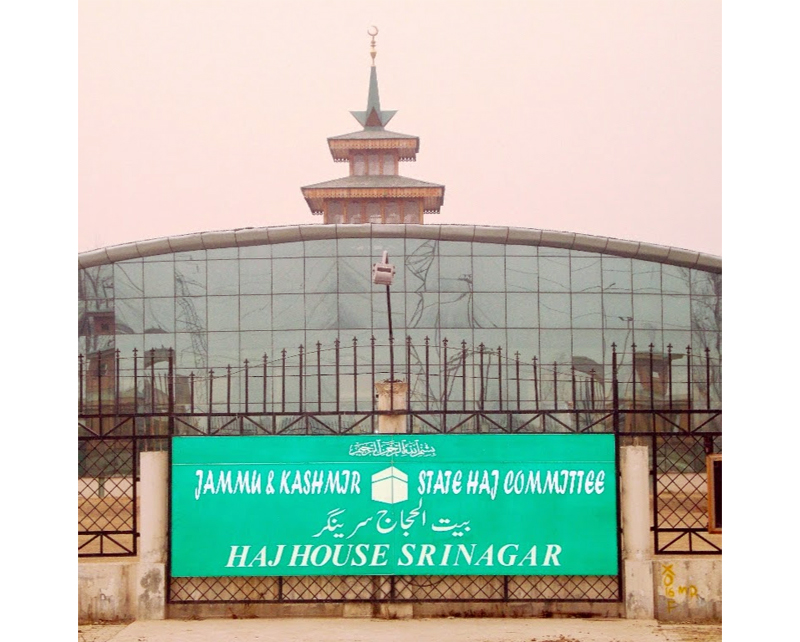
*Excess luggage will reach pilgrims within days: HCJK
Nawshaba Iqbal
SRINAGAR, May 30: The Haj Committee J&K (HCJK) today said the reduction in baggage allowance for returning Haj pilgrims was necessitated by operational restrictions at Srinagar International Airport due to ongoing runway maintenance.
Follow the Daily Excelsior channel on WhatsApp
The Committee assured pilgrims that the remaining luggage would be transported separately and delivered within a few days of their arrival, as return flights from Saudi Arabia are scheduled to begin on June 2.
Chief Executive Officer of HCJK, Dr Shujaat Quraishi, said Haj pilgrims are ordinarily entitled to carry 40 kg of checked baggage and 7 kg of hand baggage.
However, restrictions imposed under an active Notice to Airmen (NOTAM) have compelled airlines operating Haj flights to reduce aircraft loads on Srinagar-bound sectors.
“Aircraft cannot land at Srinagar with heavier loads during the runway maintenance period. Therefore, around 30 kg of each pilgrim’s baggage will be transported by road from Ahmedabad to Srinagar,” Quraishi told Excelsior.
The clarification comes amid concerns raised by Haj pilgrims currently in Mina over revised baggage arrangements for their return journey.
According to the Haj Committee, pilgrims will still be able to carry essential items, including valuables and perishable goods, within the permitted baggage allowance.
The remaining luggage is expected to reach Srinagar within three to four days of the pilgrims’ arrival, Quraishi said.
He added that Akasa Air, which is operating Haj flights to Srinagar, Ahmedabad, Kochi and Bengaluru, had reduced baggage loads due to operational limitations arising from airport restrictions.
Quraishi also said consignments of Zamzam water had already reached Srinagar and would be distributed to pilgrims upon their arrival.
Addressing complaints regarding food arrangements during Haj, he said Saudi authorities this year prohibited self-cooking facilities, unlike previous years when pilgrims could prepare meals in designated kitchens.
He said efforts were made to establish a centralized catering system, but the proposal could not be implemented due to diverse food preferences among pilgrims from different parts of the country and other logistical constraints.
“As a result, pilgrims were advised to obtain meals from restaurants and food outlets. Some complaints were received during the initial days, but later local caterers and kitchens began supplying food directly to hotels and accommodations,” he said.
Officials said that despite operational and technical challenges during Hajj 2026, the Haj Committee and other agencies took measures to address pilgrims’ concerns and ensure the smooth conduct of the pilgrimage.
 Follow our WhatsApp channel
