

Dr Daisy Parihar
daisy.parihar@gmail.com
Hidden within the majestic Himalayas of Kishtwar lies a region where spirituality survives not merely in temples or shrines, but in forests, rivers, sacred springs, mountain caves, oral traditions, and the collective memory of generations. Kishtwar is not simply a district known for scenic beauty; it is one of the oldest spiritual landscapes of the Chenab region where faith, mysticism, folklore, and history continue to coexist with remarkable depth.
For centuries, Kishtwar remained geographically isolated because of its difficult mountainous terrain. Yet this isolation protected many of its ancient spiritual traditions from disappearing under the pressure of rapid historical change. Long before modern roads entered these valleys, saints, pilgrims, ascetics, Sufi mystics, shepherds, and wandering sages crossed dangerous mountain routes in search of sacred spaces hidden amidst forests and snow-covered peaks. Ancient mountain routes linking Kishtwar with Kashmir, Jammu, Paddar, Dachhan, Marwah, and Warwan became pathways not merely of travel but of spiritual exchange and cultural continuity.
Historical references identify ancient Kishtwar as Kashthavata, mentioned in Kalhana’s Rajatarangini during the reign of Raja Kalsa in the eleventh century. Over centuries, the region absorbed influences from Shaivism, Shaktism, folk traditions, N?ga worship, and later Sufi spirituality, creating a composite spiritual culture rooted in coexistence and reverence for nature. The spiritual history of the region evolved not through a single tradition alone but through centuries of interaction between faiths, communities, saints, and local beliefs deeply connected with Himalayan ecology.
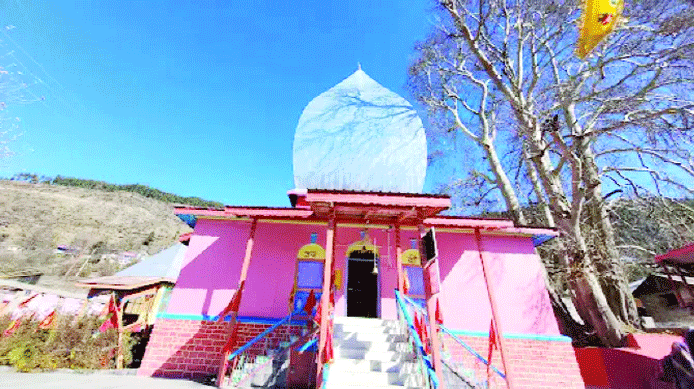
Among the holiest shrines of the region stands the revered Sarthal Devi Temple, popularly known as Sarthal Mata. Situated amidst thick forests nearly eighteen kilometres from Kishtwar town, the shrine is dedicated to Ashtadashbhuja Mata, the eighteen-armed manifestation of Goddess Durga, worshipped as the divine protector of the region.
Historical traditions associate the shrine with Raja Agar Dev of Kishtwar, under whose patronage the original structure was established centuries ago. During the reign of Maharaja Hari Singh in 1936, the temple underwent renovation using traditional wooden Himalayan architecture while preserving its spiritual identity and ancient rituals. Local legends narrate that the sacred idol of the Goddess became immovable at Sarthal while being transported elsewhere, which devotees interpreted as the divine wish of the deity to reside permanently at that sacred place.
The annual Sarthal Yatra remains among the most important spiritual gatherings of the Chenab region. Thousands of devotees undertake the pilgrimage every year carrying tridents, devotional flags, offerings, and prayers through mountainous terrain. During the Dogra period, the pilgrimage held such significance that a three-day public holiday was observed across the erstwhile Doda district for participation in the yatra.
The shrine preserves not only religious traditions but also centuries-old cultural practices including sacred fairs, devotional music, yajnas, mundan ceremonies, and collective prayers. Ancient tridents preserved within the shrine complex continue to symbolise generations of devotion associated with Sarthal Mata. The spiritual atmosphere surrounding the temple is strengthened by the silence of surrounding forests, the chants of pilgrims, and the enduring faith of people who continue to regard the shrine as a protector of the region.
Another major spiritual centre of Kishtwar is the revered Machail Mata Temple located in the remote Paddar valley. Surrounded by glaciers, alpine ridges, and rugged mountains, the shrine dedicated to Goddess Durga has emerged as one of the most important pilgrimage destinations of the Chenab region. The Machail Yatra symbolises endurance, discipline, and spiritual surrender as pilgrims undertake difficult journeys through unpredictable Himalayan terrain to seek blessings.
The spiritual traditions of Kishtwar also extend deeply into Dachhan, Marwah, Warwan, Saroor, and Kuntwara where ancient folk beliefs continue to survive alongside organised religious practices. Among the important spiritual traditions associated with Dachhan is the sacred Trisandhya Mata Yatra connected with Hudh Mata and ancient Himalayan beliefs preserved through generations. The pilgrimage continues to attract devotees from remote mountainous villages and remains a living symbol of cultural continuity and collective faith.
Dachhan also preserves remarkable examples of traditional Himalayan temple architecture including the ancient Kaikut Temple, believed to be nearly four centuries old and constructed in the Kath-Kuni style using interlocking wood and stone. Such temples reveal how spirituality and indigenous craftsmanship evolved together within isolated Himalayan societies where architecture itself reflected ecological wisdom and sacred symbolism.
Equally significant within the spiritual landscape of Kishtwar are the sacred nags or springs associated with ancient Himalayan traditions of water worship and reverence for nature. Springs were viewed not merely as water sources but as sacred manifestations of divine power. Rituals associated with these nags evolved around prayers for healing, prosperity, rainfall, agricultural fertility, and protection from natural calamities. In many villages, sacred springs became centres of community gatherings and spiritual rituals deeply linked with seasonal life.
Among the most spiritually and naturally beautiful sacred springs of Kishtwar is Bimal Nag located in the Saroor area. Surrounded by lush meadows, forests, and breathtaking high-altitude landscapes, Bimal Nag is regarded by locals as one of the most enchanting spiritual destinations of the district. The vast grassy expanse surrounding the sacred spring creates a rare natural illusion where the ground appears to rest upon water, giving the landscape an almost dreamlike beauty during summer months.
The journey towards Bimal Nag itself reflects the spiritual and ecological richness of Kishtwar. Pilgrims and visitors travel through forests, alpine meadows, and isolated mountain ridges before reaching the sacred spring whose crystal-clear waters hold deep religious significance among local communities. Traditional beliefs associate the nag with purity, divine blessings, and spiritual peace. The silence of the mountains, the untouched natural surroundings, and the reflective waters together create an atmosphere that feels both sacred and timeless.
Another sacred spring remembered in local traditions is Yasar Nag located in the Kuntwara region. Surrounded by dense forests, mountain slopes, and pristine natural landscapes, Yasar Nag continues to hold spiritual significance among local communities connected with older Himalayan traditions of nature worship and reverence for sacred water bodies. Though much of its history survives through oral narratives rather than formal documentation, the nag remains deeply rooted in the cultural memory of the region.
For generations, local communities regarded such sacred springs as living symbols of purity, divine presence, and life itself. Pilgrims visiting Yasar Nag often describe the place as possessing an extraordinary silence where nature itself appears engaged in prayer. The untouched beauty surrounding the spring reflects the ancient spiritual belief that divinity resides not only within temples and shrines but also within forests, mountains, rivers, and water sources protected by nature.
The spiritual identity of Kishtwar cannot be understood without acknowledging the profound influence of Sufi saints and Islamic spirituality which transformed the cultural and moral life of the region during medieval centuries. Numerous ziarats, khanqahs, and shrines became centres of compassion, wisdom, communal harmony, and humanitarian values.
Among the most revered spiritual centres is the ziarat associated with Shah Farid-ud-Din Baghdadi Sahib whose arrival in Kishtwar from Baghdad remains deeply embedded within local historical memory. Oral traditions narrate that the saint travelled through difficult mountain routes along with his disciples spreading the message of humanity, humility, and devotion.
The shrine of Shah Farid-ud-Din Sahib gradually evolved into one of the most important spiritual institutions of Kishtwar. Annual Urs celebrations continue to attract devotees from different parts of Jammu and Kashmir and neighbouring regions. Sacred relics preserved within the shrine, including staffs, turbans, swords, and belongings associated with the saintly lineage, continue to hold immense spiritual importance for followers.
The ziarats associated with Shah Asrar-ud-Din Sahib also occupy an important place within the spiritual history of Kishtwar. These shrines served not only as places of worship but also as centres of social interaction, charity, emotional healing, and community harmony. The teachings of Sufi saints strengthened values of coexistence and mutual respect within the mountainous society of Kishtwar where people from different communities lived together through difficult historical periods.
One of the most remarkable features of Kishtwar’s spiritual heritage has been communal harmony rooted in shared traditions and mutual respect. Temple bells and Sufi recitations echoed together across valleys for generations. Religious fairs, pilgrimages, and local gatherings frequently united communities rather than dividing them.
Nature itself remained central to the spiritual consciousness of Kishtwar. Mountains were viewed as protectors, forests as sacred spaces of meditation, springs as divine blessings, and caves as places of penance. Several traditions prohibited harming forests surrounding sacred sites because they were believed to possess spiritual sanctity.
Even today, elders narrate stories of saints meditating in caves, sacred springs believed to possess healing powers, and forests where cutting trees was once considered sinful. Such beliefs reflected a deep ecological wisdom embedded within traditional Himalayan spirituality long before environmental conservation became a modern global concern.
However, despite possessing immense historical and spiritual significance, much of Kishtwar’s heritage today faces gradual erosion. Ancient pathways leading to shrines are disappearing, oral traditions survive mostly among ageing generations, and several sacred structures require urgent preservation and restoration.
Modernisation, migration, environmental degradation, and commercialisation increasingly threaten the sanctity of pilgrimage sites once associated with silence, reflection, and discipline. Younger generations too risk becoming disconnected from the deeper spiritual and cultural foundations of their own land.
There is therefore an urgent need for systematic documentation and preservation of Kishtwar’s spiritual heritage. Historians, archaeologists, scholars, local communities, and government institutions must collectively archive oral narratives, temple architecture, sacred springs, pilgrimage routes, ziarats, folklore, and ancient rituals before invaluable cultural memory disappears forever.
Tourism policies must also prioritise ecological and cultural preservation rather than reducing sacred places into commercial attractions devoid of spiritual dignity. Development should respect the environmental fragility and historical importance of these Himalayan landscapes.
In many ways, Kishtwar represents a living bridge between history and spirituality, between humanity and nature, between faith and coexistence. Its temples, sacred springs, ziarats, forests, and mountains are not merely physical sites; they are silent witnesses to centuries of devotion, resilience, migration, and collective memory.
The sacred land of Kishtwar is not merely a district situated in the mountains of Jammu and Kashmir. It is a timeless spiritual heritage of the Chenab region where temples still preserve forgotten histories, sacred springs still reflect ancient beliefs, ziarats continue to inspire peace, forests still echo with legends of saints and sages, and faith survives with extraordinary dignity through the changing tides of modern civilisation.
 Follow our WhatsApp channel
