

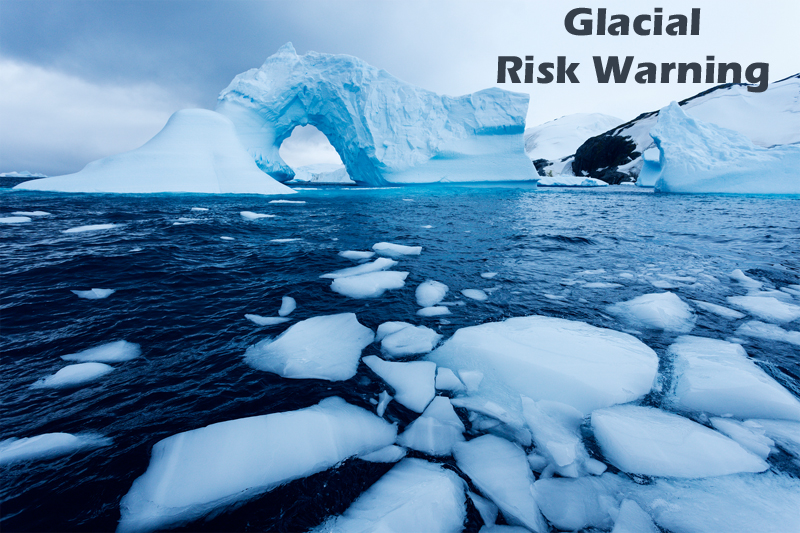
The meeting convened by the Union Home Minister to review the country’s preparedness against floods and heatwaves was no routine administrative exercise. It was a timely and necessary reckoning with a set of dangers that are no longer distant possibilities – they are present, measurable, and, in several instances, already catastrophic. His instruction that at least 60 glacial lakes across Jammu and Kashmir, Ladakh, Uttarakhand, Himachal Pradesh, Arunachal Pradesh and Sikkim must be brought under an early-warning system is not an expression of excessive caution. It is a frank acknowledgement of a reality that the Himalayas have been communicating with devastating clarity for years.
The tragedy is that nature has already issued its warnings, repeatedly and at enormous human cost. The 2013 Kedarnath disaster remains the most haunting reference point – thousands perished, entire settlements were erased, and the infrastructure of a region was reduced to rubble within hours of a glacial lake outburst flood. In October 2023, the breach of South Lhonak Lake in Sikkim killed more than 90 people and destroyed the Chungthang Dam. In 2021, Chamoli in 2021 sent a wall of water and debris that tore through Uttarakhand. These are not aberrations – they are the recurring consequence of a warming Himalaya, where glacial lakes are growing faster than our capacity to monitor or manage them.
Jammu and Kashmir is no stranger to this fury. The Shri Amarnath flash flood and the more recent cloudburst-triggered disaster at Chashoti are grim reminders that the region sits within a particularly volatile climatic and geological zone. With over 540 glacial lakes across J&K and thousands more in Ladakh – 57 already flagged for active expansion and five Kashmir lakes rated as carrying very high outburst risk – the scale of potential danger is sobering. Kishtwar district alone hosts three high-risk lakes that have expanded eightfold over two decades, from 10 to 12 hectares to an alarming 80 to 90 hectares. These are not statistics. They are time-sensitive warnings embedded in the landscape itself.
What makes the HM’s intervention particularly significant is the recognition that weather patterns are no longer predictable in the way they once were. Unseasonal snowfall, erratic rainfall, and sudden temperature spikes are now the norm across the higher Himalayan belt. These irregular patterns destabilise glacier formations, accelerate meltwater accumulation, and compress the timelines within which a breach can occur. A glacial lake outburst, when it happens, does not arrive with ceremony – it arrives in minutes, leaving virtually no time for evacuation unless warning systems are already in place and functioning.
The encouraging news is that the technology exists. India’s first prototype GLOF early-warning system, developed by C-DAC and tested in collaboration with the NDMA at Sissu in Himachal Pradesh’s Lahaul-Spiti, demonstrates that real-time monitoring and advanced warning are achievable. The system transmits continuous data via LoRa networks, satellite links and 5G connectivity, enabling downstream alerts that could translate directly into lives saved. With C-DAC acknowledging that over 150 glacial lakes across India require similar coverage, the imperative to accelerate deployment is unambiguous.
The Centre has made clear its intent to provide both technology and finances. What is now required is the swift and coordinated response of local administrations that possess an intimate understanding of the specific terrain, seasonal rhythms, and human settlements within their jurisdiction. State and UT Governments must expedite field validation of high-risk lakes, establish and activate flood crisis management teams, and ensure that communities in vulnerable zones are regularly drilled and prepared to respond.
Natural disasters, by their very nature, rarely announce themselves. What distinguishes a preventable catastrophe from an unavoidable tragedy is precisely the quality of the preparation that precedes it. The Home Minister has done his part in identifying the dangers and galvanising the institutional response. The early-warning infrastructure is proven and ready for deployment. The data, the expertise and the political resolve are all present. What remains now is speed. Every season without adequate warning systems is a season of unnecessary risk borne by the most vulnerable – those who live closest to the rivers, beneath the glaciers, and farthest from the levers of policy. Certain areas are already at high risk. The time for deliberation has passed. The time to act is now.
 Follow our WhatsApp channel
