

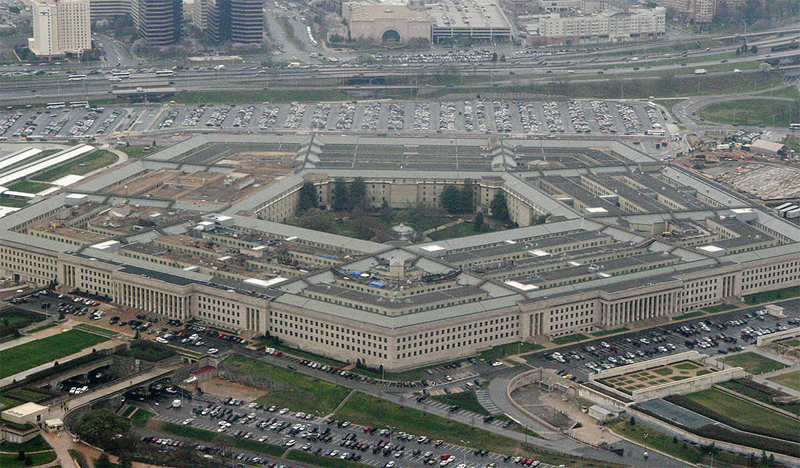
WASHINGTON, May 12: Under Secretary of War and acting Chief Financial Officer Jules W. Hurst III told a House Appropriations Defense Subcommittee hearing that the estimate has increased from roughly $25 billion reported in late April.
Hurst said the higher figure reflects updated costs for repairing and replacing military equipment, as well as ongoing operational expenses for maintaining deployed forces.
“At the time of testimony it was $25 billion, but the joint staff team and the comptroller team are constantly looking at that estimate, and so now we think it’s closer to $29 billion,” Hurst said.
” That’s because of updated repair and replacement of equipment costs and also just general operational costs to keep people in theater,” Hurst told the House Appropriations Defense Subcommittee during a hearing of the Department of Defense budget, as per US media reports.
The total includes air and naval operations, munitions use, logistics, and support for forward-deployed troops involved in strikes and regional operations. Officials cited heavier-than-expected use of precision-guided munitions, increased wear on aircraft and naval assets, and rapid repair needs as key drivers of the cost increase.
Lawmakers questioned the lack of detailed breakdowns of spending and raised concerns about transparency and oversight of war-related expenditures.
The $29 billion figure does not include longer-term costs such as veterans’ care, reconstruction, or potential future deployments, which analysts say could significantly increase the overall financial burden if operations continue or expand.
Pentagon officials noted that the sharp rise is largely driven by higher-than-expected consumption of precision-guided munitions, increased wear on aircraft and naval assets, and the need for rapid repairs following intensified operations aimed at degrading Iran’s military capabilities and securing key maritime routes such as the Strait of Hormuz.
“We don’t know what that includes, or for what time period,” said Rep. Rosa Delauro (D., Conn.). “This was only supposed to last six weeks. We have thus far been unable to get any reliable information as to the true cost of this war.” The Trump administration argued that the conflict ended on April 7 when the U.S. and Iran entered into a cease-fire, allowing the White House to bypass a 60-day deadline for lawmakers to approve the war. (UNI)
 Follow our WhatsApp channel
