

Excelsior Correspondent
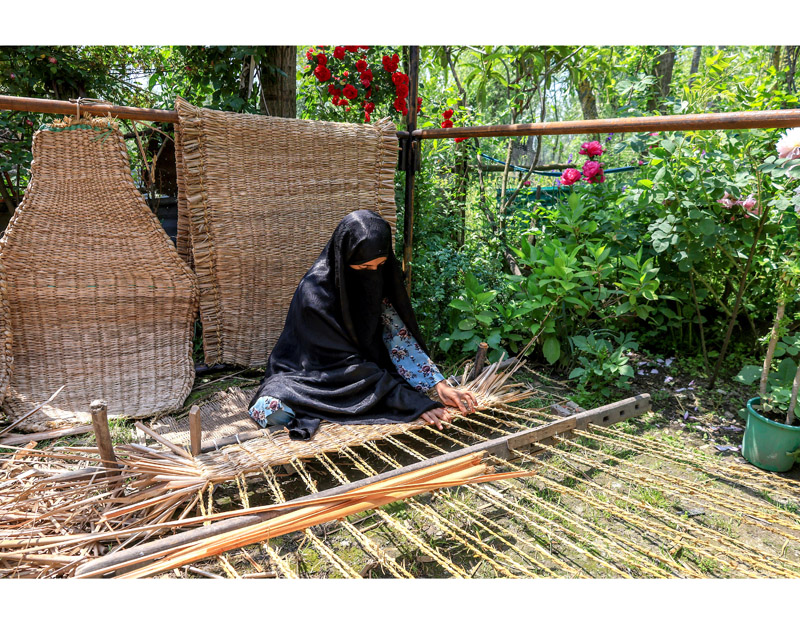
SRINAGAR, May 10: A postgraduate student from the interiors of Dal Lake is helping preserve her family’s decades-old Waguv-making craft at a time when many traditional Kashmiri crafts are struggling to survive due to changing lifestyles and the growing use of synthetic products.
Tanzeela, 24, a resident of Mir Behri in Rainawari area of Srinagar and a postgraduate student in Persian at the University of Kashmir, spends part of her day attending classes and the rest assisting her family in weaving Waguv, a traditional Kashmiri mat made from locally sourced natural material.
Independently engaged in the craft for the past two to three years, Tanzeela said she first developed an interest in Waguv-making during her school days while helping her parents at home.
“When I had free time after school, I started learning this work from my father. Later, I became more interested because everyone at home was associated with it,” she said.
Her father has been associated with the craft for nearly 40 years, while earlier generations of the family also depended on it for sustenance.
Her mother and a few hired workers currently assist in the process at their home near Dal Lake.
According to Tanzeela, the time required to complete a Waguv depends on its size and the amount of uninterrupted work possible during the day.
“If someone works continuously from morning till evening, one piece can be completed in a day. But because of household responsibilities, it usually takes two to three days,” she said.
Inside the modest house, stacks of dried raw material are neatly arranged as family members sit together weaving the mats by hand.
The rhythmic movement of hands, the earthy smell of the material and the quiet atmosphere reflect a craft that continues to survive largely through family-based labour and dedication.
Residents associated with the occupation said only a few families around Dal Lake now remain engaged in the craft.
They said a lack of marketing support, declining public interest and competition from cheaper synthetic products have forced many artisans to abandon the occupation over the years.
At a time when unemployment remains a major concern among educated youth in J&K, Tanzeela believes traditional crafts can provide meaningful self-employment opportunities if properly supported and promoted.
She said the craft not only helps preserve Kashmir’s cultural identity but also provides financial support to families associated with it.
 Follow our WhatsApp channel
