

Dr Vikas Sharma, Dr Rashmi
drvikassharma20202020@gmail.com
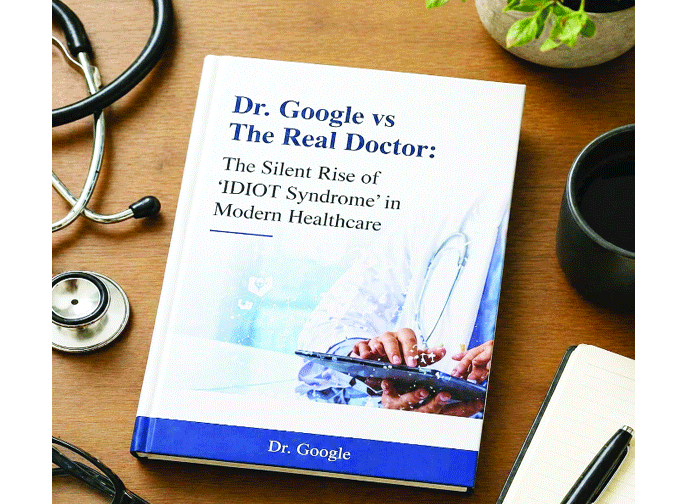
In today’s world, the first consultation often does not happen in a clinic-it happens on a screen. Before a patient even meets a doctor, symptoms are typed into a search bar, diagnoses are explored through blog posts, and treatments are evaluated through online forums. The internet has quietly become the first point of contact in healthcare. While this digital revolution has empowered patients with unprecedented access to information, it has also given rise to a paradoxical and increasingly concerning phenomenon-“IDIOT Syndrome,” or Internet Derived Information Obstructing Treatment. The term may sound provocative, even humorous at first glance, but it reflects a deeply relevant and growing challenge in modern medicine, where access to information, instead of improving outcomes, begins to interfere with them.
The modern patient is no longer passive. Gone are the days when a doctor’s word was accepted without question. Today, patients walk into consultation rooms not just with symptoms, but with opinions, screenshots, and self-diagnoses formed after hours of online searching. Statements like “I read online that this medicine is harmful,” or “Google says this could be something serious,” have become routine in clinical practice. This shift is not entirely negative. It represents a move toward awareness, autonomy, and active participation in healthcare decisions. Patients are more curious, more engaged, and more willing to understand their conditions. However, the challenge lies in the fact that medicine is not merely about acquiring information-it is about interpreting that information correctly, in the context of an individual’s unique clinical picture. Without that context, even accurate information can become misleading.
The internet offers answers, but it rarely offers perspective. A simple search for a common symptom like headache can yield possibilities ranging from benign causes such as dehydration or stress to severe conditions like brain tumors. Without medical training, the human mind naturally gravitates toward the most alarming possibilities. This tendency is amplified by the way information is presented online, where rare and dramatic conditions often receive disproportionate visibility. As a result, individuals may begin to overestimate the severity of their symptoms, leading to unnecessary anxiety and distress. This pattern, often described as cyberchondria, reflects how excessive online searching can paradoxically worsen mental well-being rather than alleviate concerns.
The real problem emerges when information is not just consumed, but acted upon without professional guidance. Patients may alter their medications, skip doses, or abandon treatment altogether based on what they have read or watched online. A patient prescribed antidepressants, for instance, may discontinue them abruptly after reading about potential side effects, without understanding the importance of gradual titration or the risks of relapse. Similarly, individuals with chronic conditions such as hypertension or diabetes may experiment with alternative remedies promoted on social media, often delaying effective treatment and increasing the risk of complications. In such scenarios, the internet ceases to be a tool for empowerment and becomes a barrier to appropriate care.
From a psychological perspective, this phenomenon is not merely about misinformation; it is about how human cognition interacts with information. People tend to seek out content that confirms their existing fears, a process known as confirmation bias. Rare but serious conditions become more memorable and seem more likely due to their repeated exposure online, a cognitive shortcut referred to as the availability heuristic. At the same time, a superficial understanding of complex medical concepts can create a false sense of confidence, leading individuals to overestimate their ability to make informed decisions. This interplay of cognitive biases and emotional vulnerability creates a fertile ground for misinterpretation and poor decision-making.
In the field of psychiatry, the impact of this trend is particularly pronounced. Patients with obsessive-compulsive disorder may engage in repetitive online searches as a form of reassurance-seeking, reinforcing their compulsions and worsening their symptoms. Those with health anxiety may find their fears amplified with each search, interpreting benign bodily sensations as signs of serious illness. In depression, exposure to negative or misleading narratives can deepen feelings of hopelessness, while in substance use disorders, misinformation about detoxification and withdrawal can lead to dangerous attempts at self-management. In such cases, the internet does not merely provide information; it actively contributes to the maintenance and exacerbation of psychological distress.
For doctors, this evolving landscape presents a new and complex challenge. The role of the physician is no longer limited to diagnosing and treating disease; it now includes addressing misinformation, managing expectations shaped by online content, and rebuilding trust that may have been eroded by conflicting narratives. Consultations often involve not just clinical evaluation, but also the careful correction of misconceptions and the reassurance of anxious patients. This additional burden increases the time and emotional effort required in each interaction, contributing to stress and burnout among healthcare professionals. The pressure is no longer solely clinical; it is communicational and psychological.
At the heart of this issue lies a subtle but significant shift in the doctor-patient relationship. Trust, once implicit, has become conditional. Patients are more likely to question, compare, and verify medical advice against what they have encountered online. While a certain degree of questioning is healthy and necessary, excessive skepticism can disrupt the therapeutic alliance, particularly in specialties like psychiatry, where trust and rapport are central to effective treatment. The challenge is not to discourage patients from seeking information, but to ensure that this information complements rather than competes with professional guidance.
Social media has further amplified this challenge by creating an ecosystem where information is designed to be engaging rather than accurate. Short videos and posts often present simplified solutions to complex medical problems, promoting quick fixes and miracle cures without acknowledging the nuances of diagnosis and treatment. Personal experiences are frequently generalized, and anecdotal success stories are presented as universal truths. Such content spreads rapidly because it is easy to consume and emotionally appealing, but it often lacks scientific validity. This creates unrealistic expectations and fosters mistrust in conventional medical approaches, which are inherently more cautious and evidence-based.
It would be incorrect, however, to view the internet as the enemy. The digital age has brought undeniable benefits to healthcare, including increased awareness, early detection of diseases, and access to a vast repository of knowledge. The problem lies not in the availability of information, but in its interpretation without adequate guidance. The goal should not be to limit access, but to improve understanding.
Moving forward, a collaborative approach is essential. Doctors must adapt their communication styles, using clear and relatable language to explain diagnoses and treatments, and proactively addressing common concerns that patients may encounter online. Encouraging open dialogue is crucial; asking patients what they have read or understood allows clinicians to identify and correct misconceptions without dismissing their efforts to be informed. At the same time, there is a pressing need to promote digital health literacy, enabling individuals to critically evaluate the information they encounter and distinguish between credible sources and unreliable content.
In psychiatry, therapeutic interventions such as cognitive behavioral therapy can play a vital role in addressing maladaptive patterns of thinking and behavior related to excessive information seeking. Helping patients develop tolerance for uncertainty and reduce compulsive searching can significantly improve outcomes. Additionally, healthcare professionals must actively participate in the digital space, providing accurate, accessible, and evidence-based information to counter the spread of misinformation.
Ultimately, the phenomenon described as “IDIOT Syndrome” is not a reflection of patient inadequacy, but a symptom of a rapidly changing world where information is abundant but understanding is not always proportional. It highlights the gap between knowing and comprehending, between access and insight. As we navigate this evolving landscape, the focus must remain on fostering a balanced approach-one that values curiosity but respects expertise, that encourages participation but maintains trust.
Healthcare has always been as much about human connection as it is about science. No algorithm, no matter how advanced, can replace the nuanced judgment, empathy, and experience of a trained physician. The internet can inform, but it cannot examine; it can suggest, but it cannot diagnose; it can guide, but it cannot replace the human element at the core of medical practice.
In the end, the solution does not lie in choosing between “Dr. Google” and the real doctor, but in understanding their roles. Information can empower, but only when it is interpreted wisely. And perhaps the true challenge of our time is not the abundance of information, but learning how to use it without losing sight of the expertise that has always been the foundation of healing.
 Follow our WhatsApp channel
