

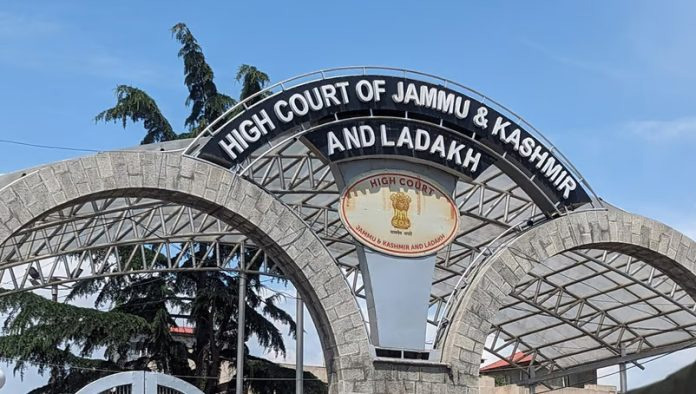
Law Secy directed to respond to persistent non compliance
*Pulls up Govt for scant respect to court orders
Mohinder Verma
JAMMU, Apr 24: In a strong indictment of executive inaction, the High Court of Jammu & Kashmir and Ladakh has held that judicial orders cannot be rendered nugatory by executive inaction or indifference terming such conduct as plainly impermissible and incompatible with constitutional discipline.
Follow the Daily Excelsior channel on WhatsApp
Hearing the petition titled Ali Mohammad Wani Versus Union Territory of J&K and Others, Justice Wasim Sadiq Nargal recorded that despite the petition having been filed on 14th June, 2023 and repeated opportunities granted, the respondents failed to file their reply, leading to closure of their right vide order dated 28th November, 2025.
The High Court noted that thereafter, the matter was again listed on 9th March 2026, on which date Government Advocate was directed to produce the record on the next date fixed in the matter.
Two days back, when the matter was taken up, neither the record was produced nor there was any representation on behalf of the respondents.
“From a bare perusal of the orders passed by this court, it is apparently clear that the respondents have not bothered to comply with the orders which depicts that the respondents have shown scant respect to the orders of this court and taking the orders very casually”, Justice Nargal observed.
Expressing concern over a recurring pattern, the High Court said, “it is being noticed that in a large number of cases involving the Government, replies are not being filed within the stipulated time despite repeated opportunities. Such a practice not only contributes to the mounting backlog of cases, but also seriously impedes the efficient administration of justice”.
The High Court emphasized the need for an effective and time-bound mechanism to ensure prompt transmission of records to counsel, timely preparation and filing of replies, effective monitoring of pending cases and fixation of responsibility upon officers who are remiss in discharging their duties.
“Such a mechanism would not only facilitate effective representation of the Government before the courts, but also obviate the necessity of passing coercive orders against the Government and safeguard the public interest”, the High Court added.
It was brought to the notice of the High Court that Law Officers have been consistently issuing communications and reminders and even making telephonic requests to concerned officers, yet para-wise replies are not being furnished in time. The High Court directed that in such a situation, the Secretary Law shall fix the responsibility on such officers, who are remiss in drafting of comments/reply well in time as a result of which adverse orders are passed against the Government and interests of Government are hampered.
Highlighting the larger constitutional principle, the High Court observed, “one of the measures to judge democratic commitment of any Government is the respect it accords to the orders of the court,” adding that speedy implementation of court orders is inextricably interwoven in the enforcement of rule of law.
The Bench made it clear that timely compliance of the orders and directions of the court is not a matter of discretion, but a constitutional imperative, warning that any delay or indifference strikes at the very root of the rule of law and erodes public confidence in the administration of justice.
“The Union Territory and its authorities, being vital stakeholders in the justice delivery system, are under a bounden obligation to act in aid of the court and to ensure the expeditious culmination of proceedings. Any conduct on the part of the State that impedes or obstructs the timely disposal of cases is wholly impermissible and undermines the faith of the common man in the efficacy and credibility of the judicial process”, the High Court further observed.
“It needs to be emphasised that judicial orders cannot be rendered nugatory by executive inaction or indifference. Any conduct on the part of the State that obstructs, delays, or defeats the due enforcement of such orders is plainly impermissible and incompatible with constitutional discipline”, the High Court said, adding “such a course, if permitted, would not only impair the efficacy of the judicial process but would also diminish the authority of the courts and erode the faith reposed by the common citizen in the fairness, credibility, and effectiveness of the justice delivery system”.
“Earlier also, an order dated 7th August, 2024 was passed by this court impressing upon the respondent authorities to evolve effective measures for providing proper and timely assistance, so that the justice delivery system is not hampered and the court time is not wasted on gaining opportunities without any justifiable cause. However, the situation remains the same, with repeated instances of non-compliance persisting unabated, thereby reflecting a lack of seriousness on the part of the concerned authorities”, the High Court pointed out.
Accordingly, the High Court directed the Secretary, Department of Law, Justice and Parliamentary Affairs to appear in person on the next date of hearing to apprise the court of the steps being taken to ensure that cases concerning the Government are properly defended and the interests of the Government are duly protected, and such matters do not remain unattended.
Directing Registry to forward present and similar other orders to the Law Secretary, the High Court said, “the Law Secretary shall examine the issue and take necessary steps for putting in place and establishing an effective mechanism to ensure timely assistance to the Government counsel by the concerned officers and strict compliance with court directions in all matters concerning the Government”.
The matter has now been listed on April 27.
 Follow our WhatsApp channel
