

Raman Suri
ramansuribjp@gmail.com
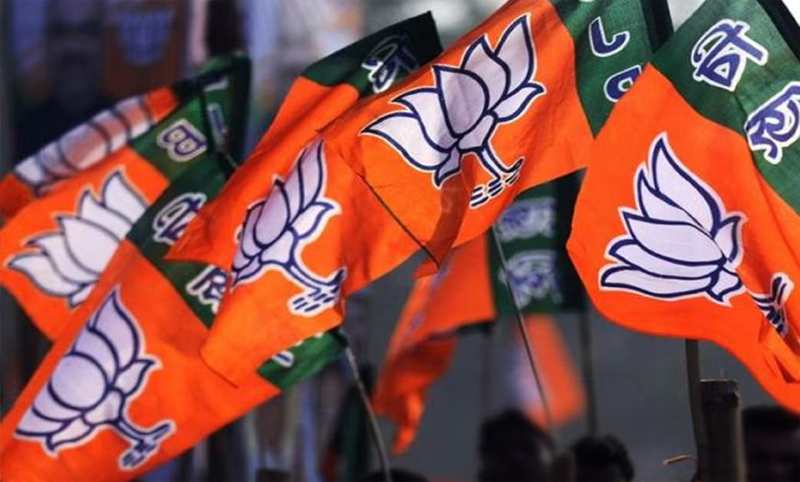
As dawn broke over India, a sea of saffron light illuminated the headquarters of the Bharatiya Janata Party (BJP) across the country, each lamp reflecting not just celebration, but a journey of Sangharsh, Sankalp and Seva. The radiance was not merely electric; it was deeply emotional, symbolizing the rise of a movement that grew from the margins to become the heartbeat of a resurgent India.
Founded on April 6, 1980, the BJP emerged with a vision rooted in nationalism, cultural ethos, and grassroots strength. In its formative years, stalwarts like Atal Bihari Vajpayee and Lal Krishna Advani gave the party a distinct ideological voice. At the beginning of electoral politics in 1984, the party could just win two Lok Sabha seats by A.K. Patel from Mehsana, Gujarat and C. Janga Reddy from Hanamkonda, Andhra Pradesh. This was not a defeat but a defining moment of resolve for Bharatiya Janata Party (BJP).
From those humble beginnings, the BJP has today grown into the largest political party in the world, commanding a dominant presence in the Lok Sabha and a strong influence in the Rajya Sabha. Governing over a dozen states either independently or in alliance, the BJP’s footprint now spans the entire nation.
The 1990 Rath Yatra, led by Lal Krishna Advani, proved to be a turning point, galvanizing public support and strengthening ideological clarity. Alongside him, Atal Bihari Vajpayee provided statesmanship and vision, while a young Narendra Modi worked tirelessly at the organizational level, shaping the party’s future.
The BJP first formed a government at the Centre in 1996, but it was in 1998, under Vajpayee’s leadership, that the “Atal Yug” truly began. India conducted the Pokhran-II nuclear tests, asserting its sovereignty on the global stage. The Kargil War victory (1999) demonstrated unmatched courage, while projects like the Golden Quadrilateral (2001) laid the foundation of modern infrastructure.
A new era dawned in 2014, when Narendra Modi led the BJP to a historic mandate. Governance became synonymous with transparency, efficiency, and inclusivity. Landmark schemes like Pradhan Mantri Jan Dhan Yojana brought millions into the banking system, while Swachh Bharat Abhiyan transformed cleanliness into a people’s movement.
Importantly, the BJP government has also taken historic steps for social justice and empowerment of Muslim women. The enactment of the Muslim Women (Protection of Rights on Marriage) Act, 2019, which criminalized instant triple talaq, ensured dignity and legal protection for Muslim women. Measures like raising the legal age and rights awareness, access to financial inclusion through Jan Dhan accounts, housing under PM Awas Yojana, and scholarships have contributed to their socio-economic upliftment.
The BJP’s governance has also created iconic national symbols. The towering Statue of Unity in Gujarat stands as a tribute to national unity, while the Char Dham Highway Development Project has revolutionized connectivity to sacred Himalayan shrines, boosting both faith tourism and regional growth. Building of the world’s highest railway bridge at Karta has not only connected Jammu and Kashmir with rest of the India but also bridged the socio-economic gap and strengthened ties of people.
The abrogation of Article 370 in 2019 marked a historic step towards full integration of Jammu & Kashmir, unlocking new avenues of development and stability. The realization of the Ram Mandir in Ayodhya fulfilled a long-cherished civilizational aspiration. In 2021, India carried out the world’s largest vaccination drive, showcasing its administrative strength. Hosting the G20 Summit in 2023 elevated India’s global stature, while in 2024, the BJP secured a third consecutive term at the Centre, reflecting the trust of the people.
The BJP government has also taken several meaningful steps to honour and strengthen the Sikh community’s heritage and sentiments. Under the leadership of Narendra Modi, the courage and sacrifice of the Chaar Sahibzaade has been given national recognition with the observance of Veer Bal Diwas, ensuring that future generations remember their unparalleled martyrdom. The spiritual and cultural ethos of Sikhism found a historic moment when Gurbani Kirtan was broadcast from the Red Fort (Lal Quila), symbolizing national respect for the faith.
In a remarkable humanitarian gesture, the government facilitated the safe evacuation and return of the sacred Guru Granth Sahib from Afghanistan amidst crisis, reflecting deep reverence and commitment towards Sikh sentiments. From commemorating Guru Nanak Dev Ji’s 550th Prakash Parv at a global scale to improving connectivity through the Kartarpur Corridor, the Modi government has consistently demonstrated its resolve to honour Sikh traditions, protect their legacy, and integrate their pride into the national narrative.
To sum up, it’s the Modi government which irrespective of caste, creed, region or religion works for the nation and its people. Under Modi’s leadership the country has witnessed massive development, zero tolerance against corruption and terrorism. It’s working towards building a great nation which is going to lead the world from the front and show how good governance can help nations sail smoothly even during the worst of crises and how people are made to progress and prosper with the right kind of policies and government initiatives.
The new Parliament building symbolizes a confident India shedding colonial legacies. On national security, decisive actions from Uri to Balakot have reinforced India’s zero-tolerance stance on terrorism. The finishing of Naxalism and firm internal security measures reflect a governance model rooted in stability and strength. Politically, the BJP continues to expand, with growing influence in states like West Bengal and beyond and its effect will be seen in days to come. Unlike dynastic parties, the BJP is powered by its Karyakartas, driven by the ethos of “Seva Se Sangathan, Sangathan Se Rashtra.”
At 47, the BJP is not merely a political party, it is a movement that has redefined governance, nationalism, and development. It has demonstrated that India can lead globally, manage crises effectively, secure its interests, and maintain strong international relations. As lamps continue to glow across the nation, they illuminate a path forward of hope, strength, and Rashtra Nirman. The journey continues, with the BJP steadfast in its commitment to building a stronger and self-reliant Bharat.
(The writer is Joint Treasurer, BJP Jammu Kashmir)
 Follow our WhatsApp channel
