

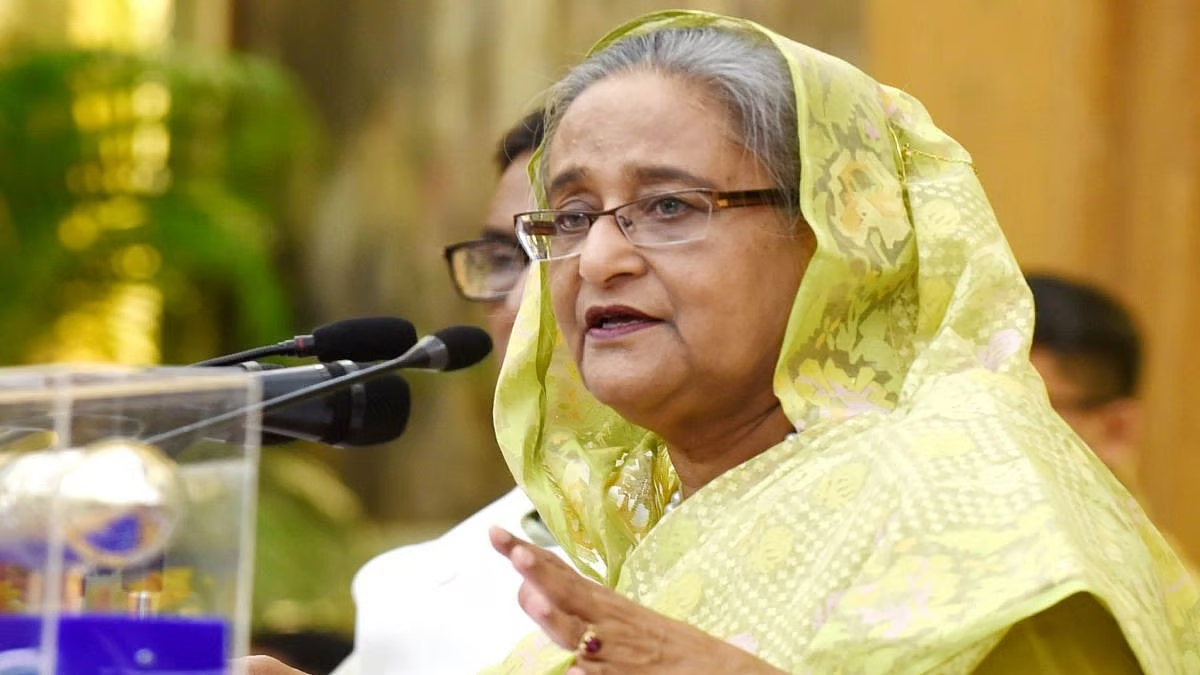
DHAKA, Apr 8: Bangladesh’s Parliament on Wednesday passed a law endorsing the previous Muhammad Yunus-led interim government’s order to disband deposed prime minister Sheikh Hasina’s Awami League party.
“This bill (law) concerns the banning of a genocidal, terrorist organisation. This is an amendment to the previous Anti-Terrorism Act,” Home Minister Salahuddin Ahmed told the Parliament, without naming the Awami League.
Ahmed said the new law would continue the suspension of the Awami League’s registration with the election commission and ensure the party’s trial for its alleged involvement in “genocide”.
Treasury bench members belonging to Prime Minister Tarique Rahman’s Bangladesh Nationalist Party (BNP) passed the bill in a voice vote as Ahmed tabled it, keeping intact the ordinance framed by the interim government while amending a previous terrorism law.
The Yunus government had first amended the original Anti-Terrorism Act, with the revised one suggesting that if any individual or organisation was found to be involved in terrorist activities, the government might disband them.
Soon after promulgating the ordinance, the interim government issued an executive order banning the Awami League, which led Bangladesh’s 1971 Liberation War against Pakistan, and debarred it from contesting in the elections.
The law prohibited publication or printing of press statements by or on behalf of or in support of a banned party and any propaganda using mainstream or social media alongside activities like processions or public speeches in support of that party.
Main opposition Jamaat-e-Islami (JI) chief Shafikur Rahman sought more time to review the bill, saying lawmakers received the bill only minutes earlier.
He said that since “the law is sensitive, we should be given time to read and understand it”.
The home minister, in response, said the opposition leader should recall that JI and their “friends” in the student-led National Citizen Party (NCP), which was floated last year with Yunus’ blessings, had launched a movement in 2024.
“Based on that, their (Awami League) activities were banned under the amended Anti-Terrorism Act,” Ahmed said.
UN officials, including the Special Rapporteur on Human Rights and the UN Human Rights Office chief, had criticised the Yunus government for banning the Awami League, calling it restrictions on freedom of association and peaceful assembly.
Leading constitutional expert Swadhin Malik said Bangladesh was only the “second in history” to ban a party that led its independence.
Malik, a staunch Awami League critic, said banning the political activities of a major party like the Awami League was “not desirable” for a healthy democracy.
The law was passed a day after police arrested former parliament speaker Shirin Sharmin Choudhury on attempted “murder charges”, marking the first detention of a prominent figure from Hasina’s toppled regime under the newly elected BNP government.
Despite being non-partisan as the three-time speaker, Choudhury went to parliament with an Awami League ticket, while several analysts said her arrest could be part of an attempt to make it difficult for the party to regroup with people of cleaner images.
Chaudhury had not been seen in public since a violent student-led street protest, or the “July Uprising”, toppled the Hasina-led Awami League government in 2024.
Hasina fled to India after her ouster.
A special Bangladeshi tribunal, in a controversial trial in absentia, earlier handed down a death sentence to Hasina for committing crimes against humanity in her efforts to tame the uprising. (PTI)
 Follow our WhatsApp channel
