

‘Many hospitals lack OPD services, OTs, blood storage units’
Sanjeev K Sharma
JAMMU, Apr 4: The available manpower, including crucial manpower, at J&K Hospitals, has not been distributed uniformly across the districts as against the sanctioned strength of 46,115 posts, J&K Union Territory (UT) had 30,745 (67 per cent) doctors, nurses and paramedical staff as of March 2022, and one government doctor was serving a population of 2,191 (2,461 in case of allopathic doctors).
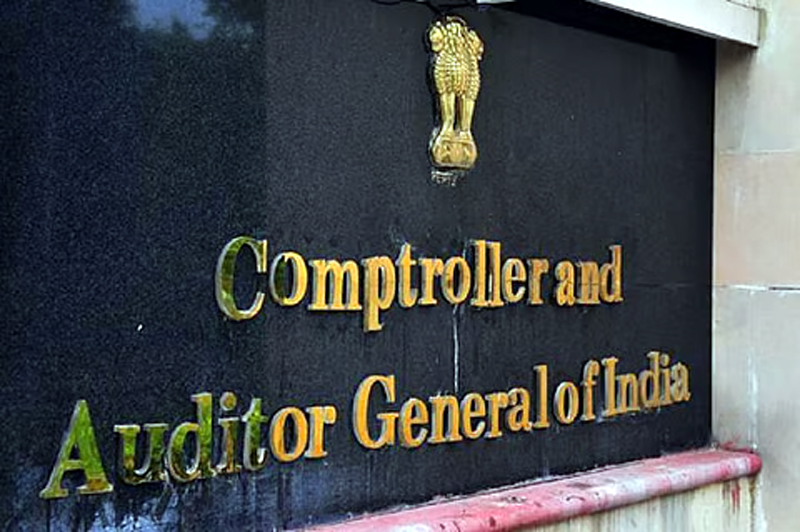
This was stated by the Comptroller and Auditor General (CAG) of India in a Report on Public Health Infrastructure and Management of Health Services for the period ended March 2022 for J&K.
The report further stated that there was skewed distribution of manpower as shortfall of overall manpower was lowest (11.52 per cent) in Kulgam district and highest (43.55 per cent) in Kishtwar.
“There was a shortage of specialists in Health and Medical Education Department (H&MED) while the shortage of manpower in District Hospitals (DHs) had affected the delivery of medical services leading to a situation under which the patients either had to wait in queues outside the Out Patient Departments (OPDs) for a long time or were compelled to approach other hospitals having such facilities,” the report maintained adding: “Under the National Health Mission (NHM), shortage of doctors, paramedical staff and nurses in J&K was respectively 19 per cent, 8 per cent and 16 per cent in 2021-22.”
It claimed that in the six sampled districts, although most of the emergency services were available in all the sampled District Hospitals (DHs) except DH Handwara but availability of Emergency Operation Theatre (OT) was not there in seven SDHs (out of 18 test-checked) and blood storage unit was also not available in 10 SDHs (out of 18 test-checked) and nine CHCs (out of 10 test-checked).
The CAG report claimed that OPD services of ENT, Psychiatry, Ophthalmology and Skin & VD were not available in eight, nine, six and 13 DHs respectively while all the required essential OPD services were also not available in all 18 test-checked Sub-District Hospitals (SDHs) and all OPD services as required as per IPHS norms were not available in the 10 test-checked Community Health Centres (CHCs).
It also said that the registration counters were also not found adequate in Tertiary Level Hospitals (TLHs) and DHs.
“All In-Patient Department (IPD) services as per IPHS 2012 norms were available in only three DHs out of six test-checked DHs. In respect of 28 sampled SDHs/CHCs, all IPD services were available in only seven SDHs and one CHC. Operation Theatre (OT) services were available in all test-checked DHs. Out of sampled 18 SDHs, OT facility was available in 11 SDHs. Out of 52 sampled PHCs, only two PHCs (Majalta and Achabal) had OT facility for surgical procedures such as Vasectomy, Tubectomy and Hydrocelectomy,” the CAG report stated.
On Ambulance service, it stated that it was available in all test-checked DHs and SDHs/CHCs except SDH Langate while the ambulance service was available in only 19 out of 52 sampled PHCs.
In yet another startling exposure, the CAG report further claimed that there was shortage of essential drugs and equipment in all test-checked Health Institutions (HIs).
“Availability of the prescribed essential equipment was also found deficient in test-checked institutions. There was delay in finalisation of rate contracts that would have had adverse impact on timely supply of drugs/equipment to the health institutions. There was delay in empanelment of laboratories for testing and analysis of drugs and in furnishing of test/analysis reports by empanelled laboratories,” it continued further revealing that non-implementation of e-Aushadhi/Drug and Vaccine Distribution Management System for the entire chain of drug supply was also observed.
The report said that there was inadequate availability of Sub-Centres (SCs) and CHCs in J&K and in the six sampled districts, there was a shortage of SCs (45 per cent) and CHCs (81 per cent).
It further claimed that although the requisite number of Health and Wellness Centres (HWCs) were upgraded yet there was shortage of infrastructure, services, human resources, diagnostic services etc in the HWCs in the six selected districts.
“Out of sampled 10 CHCs, six CHCs did not have beds as per norms. Out of 18 sampled SDHs, 11 SDHs had less than 31 beds. Out of 52 selected Primary Health Centres (PHCs), seven PHCs were functioning without beds and 33 PHCs were lacking required number of beds as per Indian Public Health Standards (IPHS) 2012,” the CAG report continued.
It also said that no survey was conducted to ascertain the actual number of Clinical Establishments (CEs) eligible for registration. As a result, the possibility of CEs operating without registration could not be ruled out and there was disparity in rates of various pathological/radiological tests while the requisite annual reports were not submitted by some of the Health Care Facilities (HCFs) under Bio-Medical Waste (BMW) Management Rules, 2016 and authorisation was not obtained by the occupier or operator handling BMW in all cases.
 Follow our WhatsApp channel
