

Excelsior Correspondent
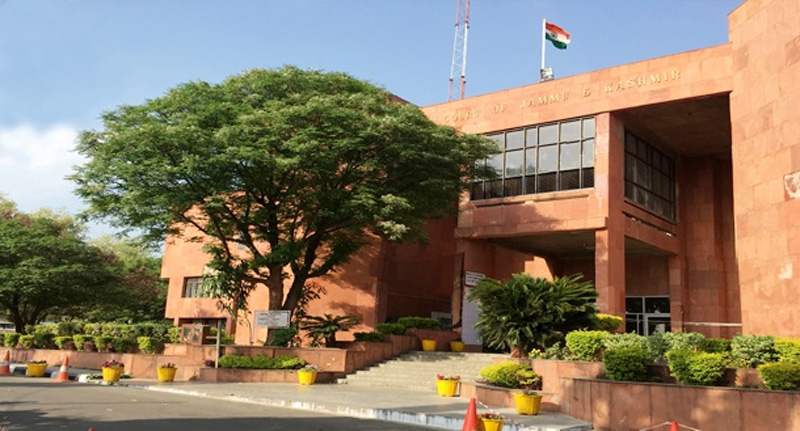
JAMMU, Apr 2: The High Court of Jammu & Kashmir and Ladakh has refused to interfere with an order framing charges against officials and others in an alleged fake kerosene allotment order racket, holding that the material on record discloses a prima facie case and raises grave suspicion warranting trial.
Justice Sanjay Parihar passed the judgment while dismissing two connected petitions, CRMC No. 67/2013 and CRMC No. 15/2013, arising out of a common order dated December 15, 2012 passed by the Principal Sessions Judge, Jammu, in a case linked to FIR No. 31/2006 registered at Police Station Peer Mitha under Sections 3/7 of the Essential Commodities Act and Sections 419, 420, 467, 468 and 471 RPC.
By the impugned order, the petitioners had been discharged of offences under Sections 467 and 471 RPC, but were directed to face trial for offences under Sections 419, 420, 468, 120-B RPC and Sections 3/7 of the Essential Commodities Act. Challenging that order, the petitioners argued that they had been falsely implicated, that there was no legal material to frame charges, and that the present case amounted to a second FIR in relation to the same transaction.
The High Court, however, found that the record could not be said to be “wholly bereft of incriminating circumstances.” The Court noted that investigation had revealed recovery of multiple allotment orders and forensic indication that at least one allotment order was fake, prima facie pointing to a systematic modus operandi involving preparation and use of forged allotment orders for illegal release and black-marketing of kerosene oil meant for public distribution.
The court also took note of prosecution material suggesting that when suspicion arose regarding the genuineness of a questioned allotment order, departmental officials had allegedly represented it to be genuine, following which kerosene oil was released. It further observed that statements gathered during investigation indicated repeated typing of allotment orders outside the department and circumstances pointing towards an organized conspiracy involving private persons and departmental officials.
Rejecting the plea that the case was based only on statements of co-accused, the High Court held that the prosecution was not resting solely on police statements under Section 161 CrPC and that there was additional material indicating circulation and use of forged allotment orders, their verification by departmental officials and interaction between private accused and public servants.
At the stage of framing of charge, the court said, such material was sufficient to raise grave suspicion requiring adjudication during trial.
On the argument that FIR No. 31/2006 was barred as a second FIR, the Court held that the earlier FIR related to a specific incident of black-marketing based on a particular allotment order, whereas the later FIR pertained to a larger conspiracy involving preparation and circulation of multiple forged allotment orders. It ruled that both FIRs operated in distinct spheres of criminality and that the second FIR was legally permissible.
Observing that the trial court had exercised due judicial discretion by discharging the petitioners for some offences while proceeding against them for others, the High Court found no ground for interference. The petitions were accordingly dismissed and the interim directions, if any, were vacated, enabling the trial court to proceed further in accordance with law.
 Follow our WhatsApp channel
