

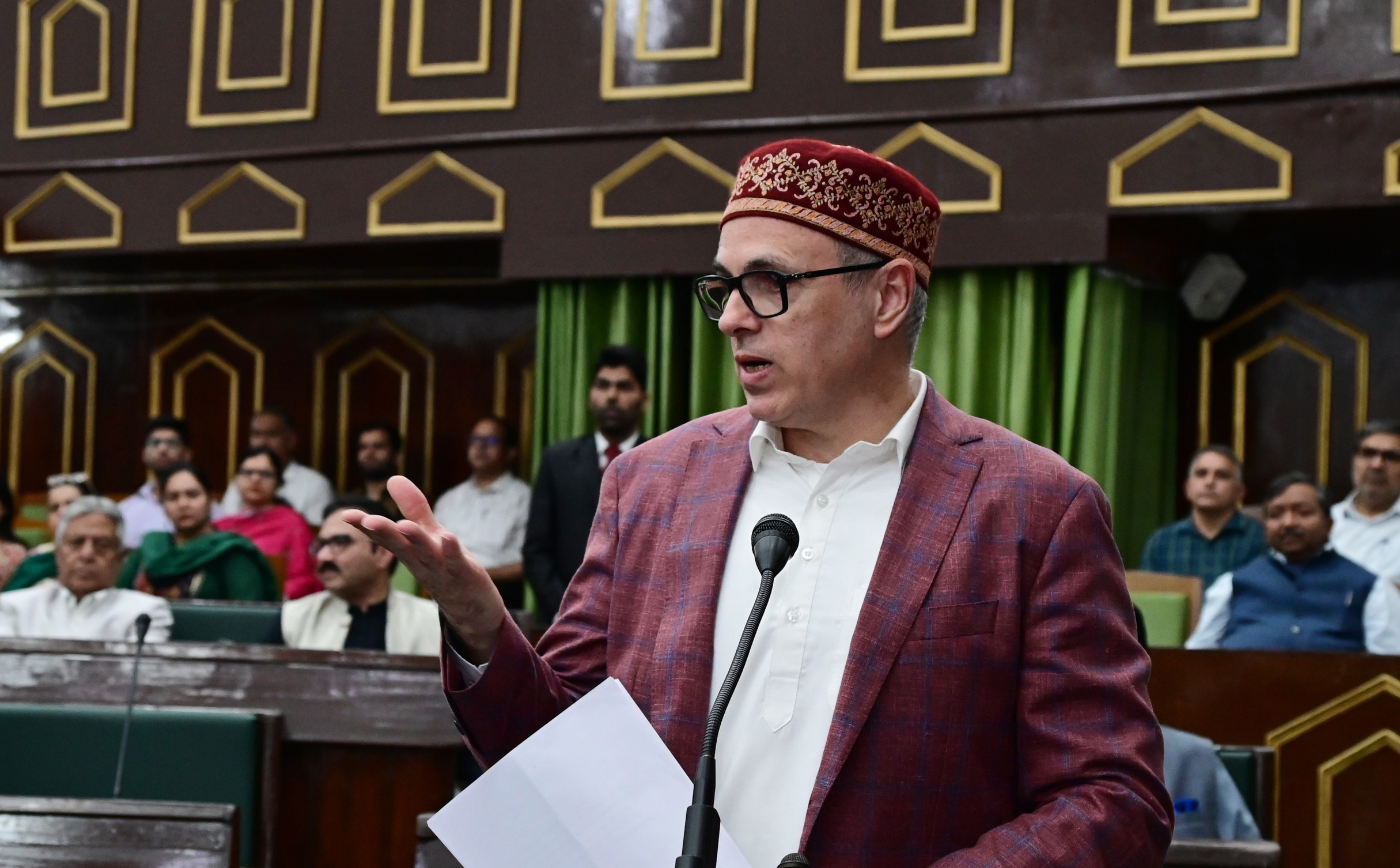
JAMMU, Mar 27: The Jammu and Kashmir government on Friday said the Union Territory possesses an estimated hydropower potential of about 18,000 MW, of which nearly 15,000 MW has been identified, and that it is on a fast track to triple its installed capacity to around 11,000 MW by 2035.
Replying to a question of MLA Javaid Iqbal in Jammu and Kashmir assembly on Friday, Chief Minister Omar Abdullah said: “J&K has an estimated hydropower potential of around 18,000 MW out of which around 15,000 MW has been identified”.
He said that the 3,540.15 MW — about 24 per cent of the identified potential — has been harnessed so far.
“This includes 13 projects with an aggregate capacity of 1,197.4 MW in the UT sector, six projects totaling 2,250 MW in the Central sector, and 12 projects with a combined capacity of 92.75 MW in the Independent Power Producer (IPP) or private sector”, he said.
Chief Minister said that a comprehensive roadmap for the next decade has been drawn and is under implementation, and the UT is on a fast track to triple its installed hydropower capacity by 2035.
“The roadmap includes 3,063.5 MW from six under-construction hydroelectric projects and 4,507 MW from eight projects in the tendering, award, DPR or clearance stages. An additional 100–150 MW is expected to come from private sector projects during this period”.
Consequently, the total installed hydropower capacity of Jammu and Kashmir is projected to reach around 11,000 MW by 2035, he added.
The government also said that in the backdrop of the Indus Water Treaty being kept in abeyance by the government, construction on ongoing projects has accelerated, and efforts are underway to identify potential storage projects to maximize the remaining hydropower potential.
On the existing operational capacity, he said that union territory-owned hydropower projects contribute 1,197.4 MW, including major plants such as Baglihar-I and II (450 MW each), Lower Jhelum (105 MW) and Upper Sindh projects.
Central sector projects operated by NHPC account for 2,250 MW, including Salal (690 MW), Uri-I (480 MW), Dulhasti (390 MW), Kishenganga (330 MW) and Uri-II (240 MW), he said.
“Private sector projects contribute 92.75 MW through smaller installations across districts such as Doda, Poonch, Bandipora, Baramulla, Ganderbal, Budgam, Anantnag and Ramban”, he added.
 Follow our WhatsApp channel
