

DUBAI, Mar 27: Israel launched a new wave of strikes on Iran on Friday even as US President Donald Trump claimed talks on ending the war were going well, extending his self-imposed deadline to Tehran on opening the Strait of Hormuz, while Iran has shown no signs of backing down.
Air raid sirens sounded in Israel too as the military said it was working to intercept Iranian missiles in what has been a daily occurrence.
Israel’s Defence Minister Israel Katz said attacks on Iran “will escalate and expand.”
Israel Katz made the comment in a statement noting that he and Prime Minister Benjamin Netanyahu “warned the Iranian terrorist regime to stop firing missiles at the civilian population in Israel.”
“Despite the warnings, the firing continues – and therefore attacks in Iran will escalate and expand to additional targets and areas that assist the regime in building and operating weapons against Israeli citizens,” Katz said. “They will pay heavy, increasing prices for this war crime.”
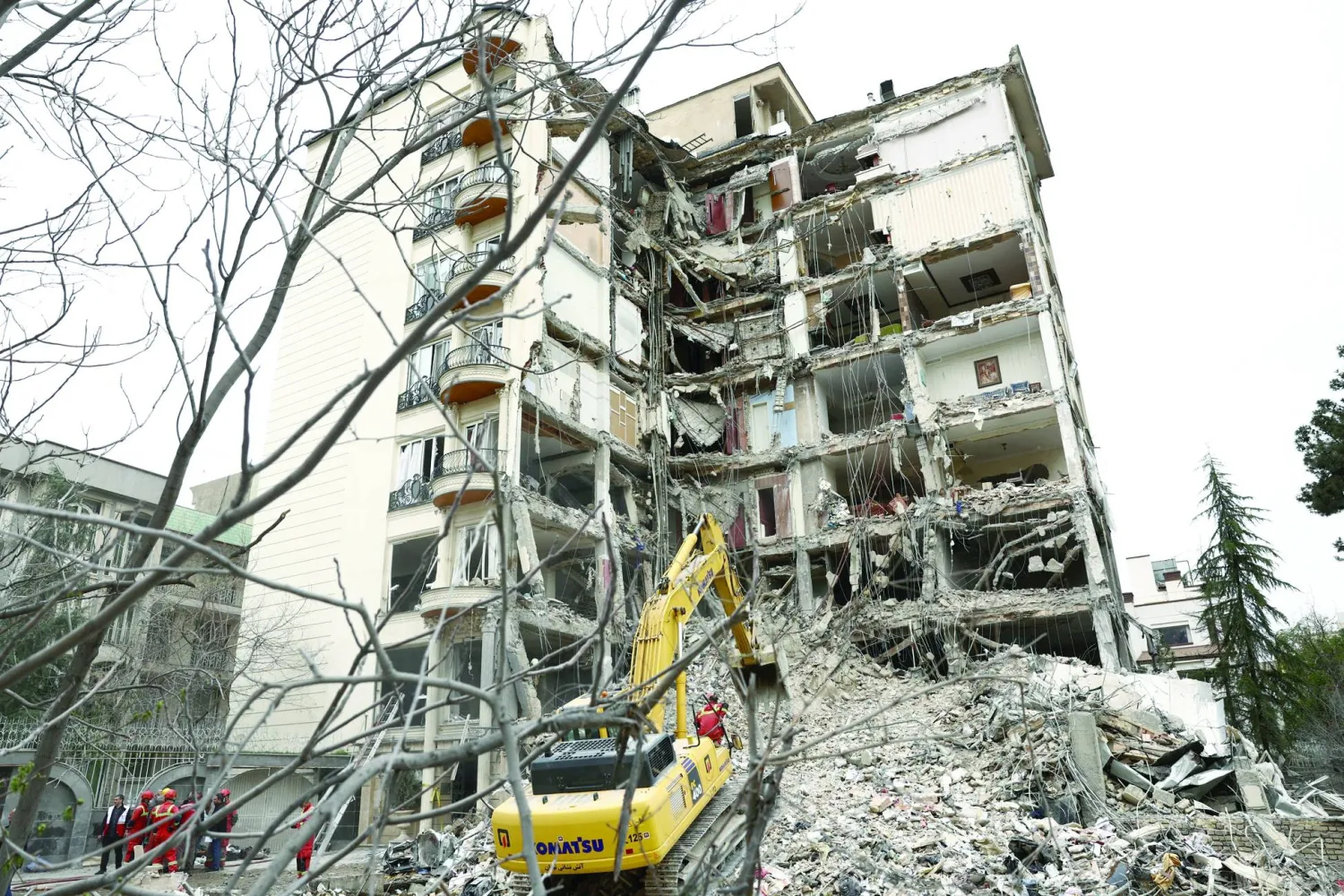
Israel’s Friday strikes “in the heart of Tehran” targeted sites used by Iran to produce ballistic missiles and other weapons, the Israel military said, adding that it also hit missile launchers and storage sites in western Iran.
Smoke was also seen rising over Beirut, although Israel did not immediately report hitting the Lebanon capital. Air raid sirens were heard in Israel as the military said it was working to intercept Iran’s missiles. Tehran kept firing missiles and drones at its Gulf neighbours, with sirens warning of attacks in Bahrain, Qatar and the UAE.
Saudi Arabia’s Defence Ministry on Friday said it has shot down missiles and drones targeting its capital, Riyadh.
Kuwait said both its Shuwaikh Port in Kuwait City and the Mubarak Al Kabeer Port to the north, which is under construction as part of China’s “Belt and Road” initiative, sustained “material damage” in strikes.
It appears to be the first instance when a China-affiliated project in the Gulf has come under assault in the ongoing war. Throughout the conflict, China has continued to purchase Iranian crude.
With stock markets reeling and economic fallout from the war extending far beyond the Middle East, Trump is under growing pressure to end Iran’s chokehold on the strait, a strategic waterway through which a fifth of the world’s oil is usually shipped.
The US has offered Iran a 15-point proposal for a ceasefire, which includes its relinquishing control of the Strait of Hormuz, but has simultaneously ordered deployment of thousands of additional troops to the region, possibly in preparation for a military attempt to wrest the key maritime passage from Iran’s grasp.
Trump, who had earlier threatened to destroy Iran’s energy plants if the strait was not opened within 48 hours — only to extend the deadline to five days after Tehran cautioned of severe retaliation — pushed his self-imposed timeline to April 6 on Thursday, saying that talks on ending the conflict were going “very well”.
Iran, however, maintains it is not engaged in any negotiations.
After Wall Street’s worst day since the war began, Asian shares mostly fell Friday over growing doubts about the chances of de-escalation. Oil prices rose again, the Brent crude, the international standard, at USD 107 a barrel in morning trading, up more than 45 per cent since Israel and the US attacked Iran on February 28 to start the war.
US pushes diplomatic solution, but sends more troops
———————————————————-
Iran’s stranglehold on shipping through the Strait of Hormuz, has caused growing concerns of a global energy crisis, and appears part of a strategy to get the US to back down by roiling the world economy. The Gulf Arab bloc said on Thursday that Iran is now exacting tolls from ships to ensure their safe passage through the waterway.
Trump envoy Steve Witkoff said Washington has delivered a 15-point “action list” to Iran for a possible ceasefire, using Pakistan as an intermediary. The list includes restrictions on Iran’s nuclear programme and re-opening the Strait of Hormuz.
Iran has rejected the US offer and put forth its own five-point proposal, which includes reparations and recognition of its sovereignty over the Strait of Hormuz.
Diplomats from several countries have been trying to organise a direct meeting between envoys from the US and Iran, possibly in Pakistan.
Egypt’s Foreign Ministry said in a statement Friday that Foreign Minster Badr Abdelatty held phone calls the day before with his Turkish and Pakistan counterparts as part of their “intensive efforts” to organise the talks.
Abdelatty said he hoped the tri-country effort would result in “gradual de-escalation efforts that would ultimately lead to the end of the war”.
As the diplomatic efforts went on, a group of US ships drew closer to the region with some 2,500 Marines. Additionally, at least 1,000 paratroopers from the 82nd Airborne – trained to land in hostile territory to secure key territory and airfields – have been ordered to the region.
As US and Israel strikes on Iran continued, the UN Security Council scheduled closed consultation on Iran in New York, according to two UN diplomats who spoke on condition of anonymity.
They further said Russia had sought a meeting on US-Israel attacks on civilian infrastructure in Iran, which the US — which holds the Security Council presidency — scheduled for Friday.
Jan Egeland, secretary general of the Norwegian Refugee Council, said the humanitarian organisation’s teams in Iran have reported that “countless homes, hospitals and schools have been damaged or destroyed,” and nearly every neighbourhood in Tehran has sustained damage.
“Civilians are paying the highest price for this war – it must end,” he said in a statement.
The International Organization for Migration said Friday that 82,000 civilian buildings, including hospitals and the homes of 180,000 people have been damaged in Iran so far.
“If this war continues, we risk a far wider humanitarian disaster,” Egeland said. “Millions could be forced to flee across borders, placing immense pressure on an already overstretched region.”
Deaths continue to climb in Iran, Lebanon
——————————————–
The Israel army said Thursday it had deployed the 162nd Division into southern Lebanon, joining thousands of troops that were moved there after the war erupted. Israel says the open-ended invasion is aimed at protecting its northern border towns from Hezbollah attacks and uprooting the militant group from the area.
Eighteen people have died in Israel, while four Israel soldiers have also been killed in Lebanon. Two soldiers were severely injured in Lebanon on Friday during an “operational accident,” the Israel military said.
Authorities said more than 1,100 people have died in Lebanon, and over 1,900 people have been killed in Iran.
At least 13 American troops have been killed and four people in the occupied West Bank and 20 in Gulf Arab states have also died.
In Iraq, where Iranian-supported militia groups have entered the conflict, 80 members of the security forces have been killed. (AP)
 Follow our WhatsApp channel
