

Govind Sharma
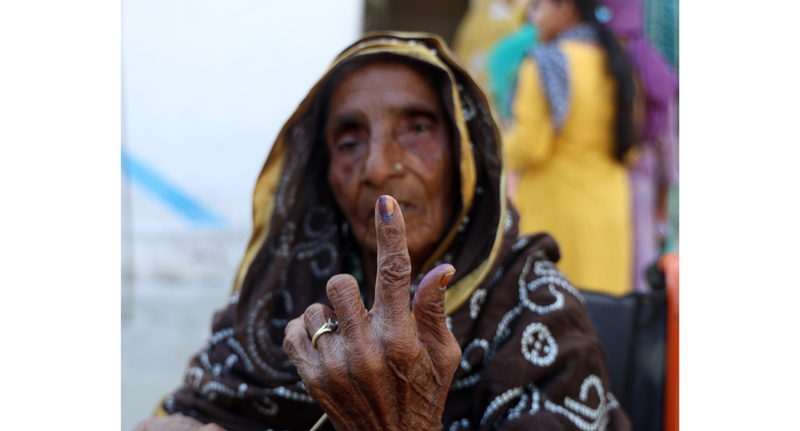
JAMMU, Nov 11: Nagrota witnessed one of its most enthusiastic polling days today as thousands of voters, especially women and senior citizens, queued up outside polling stations from early morning. Brisk voter participation was recorded across rural and semi-urban belts, with people stepping out in large numbers to exercise their democratic right. Development and welfare schemes dominated public sentiment, as voters voiced hope for continued progress and better facilities in the constituency.
Follow the Daily Excelsior channel on WhatsApp
Polling stations at Chak Bhalwal, Kangrail, Aghore, Gharota, Seri, Sarote and adjoining areas remained active throughout the day. People were seen voting till late evening, indicating a high-energy electoral environment and strong public engagement.
A large number of voters credited welfare initiatives for shaping their opinion. At Government Middle School Bhalwal, shopkeeper Suraj Sapolia said that development has been a significant factor for common residents. According to him, improved roads, better access to services and assistance to poor households have changed everyday life in many villages, leading to a positive sentiment among people who wish to see uninterrupted progress.
Women spoke strongly about schemes promoting education and financial security for girls. Reena Kumari, who voted at Government Primary School Kaink, said that the ‘Ladli Beti’ financial support scheme has provided deep relief to economically weaker families. Monthly assistance transferred directly into children’s bank accounts has helped families plan for the future without fear of financial burden. She believes many mothers feel safer under such schemes and want the benefits to continue.
Employment concerns also figured prominently. At GHS Kangrail, Amit Kumar, a daily-rated worker in a Government Degree College in Jammu, shared that temporary employees like him earn meagre amounts despite years of service. He hoped that the next elected representative will take up the cause of contractual workers, secure timely wages and move toward regularization. Many contractual workers in the constituency expressed similar expectations.
Among senior citizens, healthcare was a deciding factor. Chanchal Dass, after casting his vote at Government Girls High School Aghore, recalled how the Ayushman Bharat scheme saved his family from a financial disaster when his son needed surgery. Free cashless treatment for poor families, he said, has brought a major change in rural health accessibility. Many elderly said that such schemes helped them avoid debts and ensured medical care with dignity.
Women in far-flung pockets highlighted the strength of self-help groups and livelihood missions. Neelam Devi, aged 70, said that cooperative groups have made women financially independent. From running small businesses to contributing to household income, she said women in villages are no longer dependent for every expense. According to her, rural women now look at elections as a chance to support leaders who strengthen community-based employment.
Voters with disabilities also made their presence felt. Nek Ram, a 62-year-old specially-abled resident of Gharota, said that disability pensions have increased considerably, helping people like him manage basic needs. He said candidates reached out personally in his area, making differently-abled residents feel included in the democratic process.
Agricultural support featured prominently in the countryside. Yograj, a farmer from Seri, said that yearly financial assistance provided under national schemes helps in buying seeds, fertilizers and other essential items. Even small support, he said, brings relief during crop failures or low market returns.
In Sarote and Mathwar, the biggest shift has been in public transport. Beena Devi, a 75-year-old voter from Sarote, said that villagers earlier waited hours for a single bus, causing major inconvenience, especially for women. The new e-bus service has changed everyday life, allowing easy travel to Jammu Bus Stand. Free travel for women has made it even more beneficial for poor families.
Campaigning in Nagrota remained intense during the past weeks, with candidates holding door-to-door interactions and small street meetings. Development works carried out earlier by former MLA Devender Singh Rana were widely discussed across the constituency. Many residents also noted that the present candidate from his family maintained close public contact during campaigning, which created a favourable sentiment among them.
Others spoke about previous initiatives of different parties, including free transport for women and financial transfers for girl children under earlier State Governments. Youth, meanwhile, discussed employment, internet connectivity, and education infrastructure, expressing hope for improvements in skill-based opportunities.
With polling over and strong turnout reported across both remote and urban belts, the mood in Nagrota clearly revolved around welfare schemes, women’s security, healthcare support, disability pensions, agricultural aid, and road connectivity. The heavy participation of women and elderly citizens signalled that voters value development that directly touches household needs.
As EVMs were sealed and security personnel escorted them to strongrooms, political observers noted that public mood appeared inclined towards continuity in development-focused governance. Counting results are awaited with keen interest, as voters hope the next representative will address local issues with speed and accountability.
 Follow our WhatsApp channel
