

Mohinder Kumar Goswami
mohindergoswami69@gmail.com
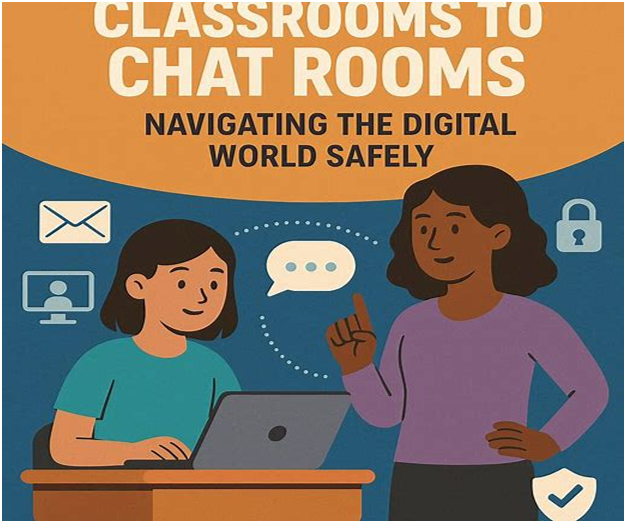
“Technology is double edged- sword -It can empower or endanger, depending on how to use it”. In today’s era, education has moved from traditional classrooms and textbooks to chatrooms. Technology has revolutionized how students learn, how teachers teach and how the schools operate. Online platforms have made learning more interactive, accessible and inclusive allowing students to explore beyond traditional boundaries. Virtual classrooms promote collaboration, provide access to global resources and ensure continuity of education as seen during the pandemic.
India’s National Education Policy ( NEP-2020) recognizes this digital shift and emphasizing integrating technology into all the levels of education .It envisions a future ready generation equipped with digital literacy ,critical thinking and problem solving ( 21st Century Skills ) .However ,with this digital revolution comes a growing need for Cyber Safety .As students and teachers more spend more time in online spaces ,protecting personal data and maintaining digital wellbeing have become essential.
.Cybersecurity is no longer just a technical issue -it is an educational necessity. Parents must guide their children about responsible internet use, teachers must model safe online behaviour and the schools must create safe online environments. Teachers play a key role in guiding students to use technology wisely. By incorporating lessons on the cyber ethics, online etiquette and data privacy, they can shape responsible digital citizens. Students must follow basic safety rules by never sharing passwords, avoid chatting with strangers and think before clicking suspicious links. Parents should monitor children’s online activities and encourage open communication about their digital experiences.
Policy makers, too, have a critical role in ensuring robust cyber laws, awareness programmesand digital infrastructure to protect young users. Society members including educators, community leaders and policy makers must promote a culture of cyber awareness. In the modern world, digital empowerment begins with awareness. Preparing our students today, will ensure a safer internet tomorrow.
Capacity building is equally important not only for the students but also for the teachers and administrators. Training progammmes and regular updates on Cyber threats can strengthen the entire educational ecosystems. Students must be guided to visit verified awareness portals like Stay safe line campaign under ISEA project of Ministry of Electronics and Information Technology (Meity), and for reporting cybercrimes students must visit www.cybercrime.gov.in .Students must report suspicious activities on online abuse immediately.
The sooner we teach students to navigate the digital world wisely, the better equipped they will be to thrive securely in it. As classrooms evolve into chatrooms, the goal should not only be to connect learners globally but also to safeguard them digitally. Sooner we integrate cybersecurity into our education system, the better prepared our society will be for the future challenges of the digital future.
mohindergoswami69@gmail.com
Teacher, posted in PM Shri HSS Sanasar ( Ramban)
 Follow our WhatsApp channel
