

Excelsior Correspondent
JAMMU, Jan 24: Under the patronage of Justice Arun Palli, Chief Justice, High Court of Jammu & Kashmir and Ladakh (Patron-in-Chief, J&K Judicial Academy) and guidance of Chairperson and Members of Governing Committee for J&K Judicial Academy, one day workshop on “Expediting Trials under the Prevention of Corruption Act, 1988 and the NDPS Act, 1985, including Judicial Ethics & Behaviour” was organized today.
The workshop was aimed at enhancing the capacity of Judicial Officers by addressing procedural challenges, judicial best practices and ethical dimensions involved in conducting trials under special statutes which mandate strict compliance and expeditious disposal.
The programme commenced with a welcome address and introduction by Naseer Ahmad Dar, Director, J&K Judicial Academy, who highlighted the importance of judicial efficiency, ethical conduct and timely adjudication in cases involving corruption and narcotics offences.
Session-I focused on “Expediting Trials under the Prevention of Corruption Act, 1988”. The session was conducted by Justice Muzaffar Hussain Attar, Former Judge, High Court of J&K, who deliberated upon the legislative intent of the PC Act, recent judicial trends, procedural safeguards, common bottlenecks causing delay and effective case-management techniques for expeditious disposal of corruption cases.
Session-II, on “Expediting Trials under the NDPS Act, 1985”, was conducted by Sunil Sethi, Senior Advocate, High Court of J&K and Ladakh. The session covered salient features of the NDPS Act, strict compliance requirements, evidentiary standards relating to search, seizure and sampling, and the crucial role of Trial Courts in balancing individual liberty with societal interest, while also addressing common procedural lapses and judicial remedies.
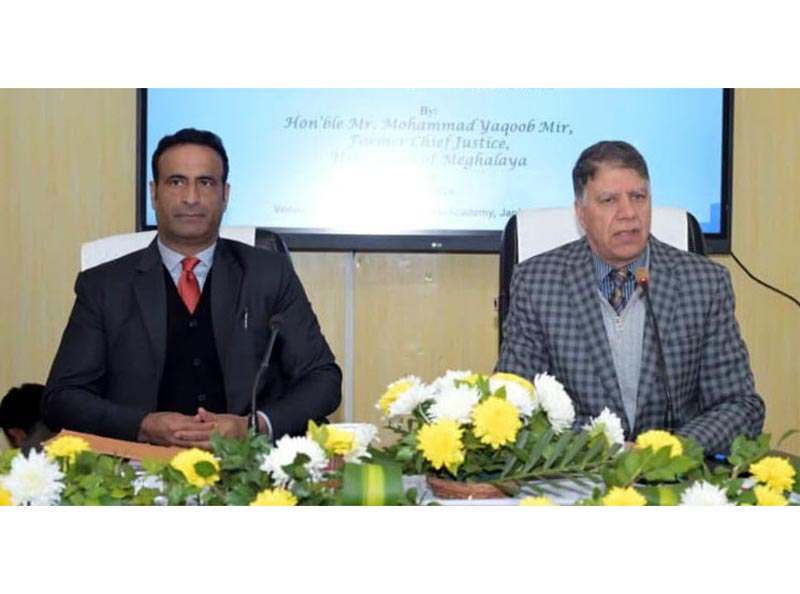
Session-III was devoted to Judicial Conduct & Ethics and was delivered by Justice Mohammad Yaqoob Mir, Former Chief Justice, High Court of Meghalaya. His address underscored the core values of judicial independence, integrity, courtroom demeanour, and ethical challenges faced by Judicial Officers in contemporary times, including handling pressure, criticism, and social media scrutiny.
The workshop concluded with an interactive session and feedback from the participants, reaffirming the collective commitment of the judiciary towards ethical conduct and expeditious justice delivery.
The programme witnessed active participation and meaningful deliberations, contributing significantly to professional enrichment and judicial excellence.
 Follow our WhatsApp channel
