

Walk into any insurance office and they’ll bombard you with products. Health, life, vehicle, home – dozen different types of insurance.
Nobody tells you upfront: understanding broader types of insurance makes choosing between types of life insurance policies way easier. Here’s why.
The Four Main Categories
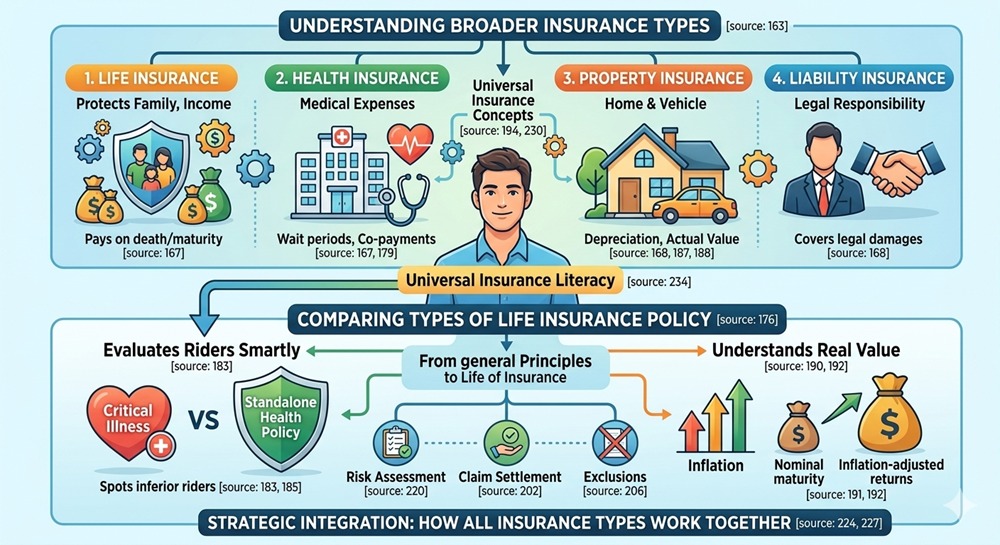
All types of insurance fall into four buckets:
Life insurance: Pays when you die. Protects people depending on their income. Health insurance: Covers medical expenses. Property insurance: Protects your house, car, and assets. Liability insurance: Covers if you’re legally responsible for damage.
Many people confuse what each does. They buy life insurance, thinking it covers medical costs. Or skip health insurance because they have life insurance. Knowing categories prevents expensive mistakes.
Why Life Insurance Is Different
Types of life insurance policy are unique – they pay only when you die or reach maturity. That’s fundamentally different.
Health insurance pays while you’re alive and sick. Car insurance fixes your vehicle. Home insurance rebuilds after fire.
Life insurance? Money goes to family after you’re gone. You can’t benefit yourself.
This difference affects everything – structure, cost, who needs it, coverage duration.
Understanding this helps evaluate types of life insurance policy on their own terms instead of comparing to products that work differently.
How Health Insurance Knowledge Helps
Knowing health insurance makes you smarter about types of life insurance policies.
Health insurance has annual limits, co-payments, network restrictions, and waiting periods.
Life insurance is simpler. Sum assured is sum assured. Die during term? Family gets ₹1 crore. No co-payment. No network restrictions.
But some types of life insurance policies add critical illness riders or hospital cash benefits.
Understanding health insurance helps you realize these riders are usually inferior to proper health coverage. Critical illness rider paying ₹10 lakhs vs a standalone policy paying ₹25 lakhs for the same premium.
You spot when life insurers add features that sound valuable but aren’t.
Vehicle and Property Insurance Lessons
Vehicle and property insurance teach depreciation and actual value.
Car insurance pays the current market value, not the original price. A ten-year-old car worth ₹2 lakhs gets ₹2 lakhs, not the ₹8 lakhs paid new.
Some types of life insurance policies work similarly. Endowment plans return premiums with a bonus. But inflation means ₹10 lakhs after 20 years is worth maybe ₹4 lakhs today.
Understanding depreciation makes you better at evaluating maturity benefits. You ask about inflation-adjusted returns instead of accepting nominal numbers.
Premium Structure Patterns
All types of insurance use similar logic:
Higher risk = higher premium. Longer coverage = higher premium. Larger payout = higher premium. Age and health affect cost.
Learning this with auto or health insurance makes you better at evaluating types of life insurance policies.
30-year old paying ₹12,000 yearly for ₹1 crore term insurance makes sense – low risk, pure protection, high payout.
The same person paying ₹60,000 yearly for a ₹1 crore traditional plan triggers questions. Premium is 5x higher for the same death benefit. Extra ₹48,000 going into investment component with 4-5% returns.
Understanding premium logic helps you spot when life insurance costs don’t add up.
Claim Settlement Truth
Every insurance type has a claim settlement ratio. What percentage of claims actually get paid?
A company settling 98% of health claims beats one settling 85%. Same for types of life insurance policies.
Many learn about settlement ratios through bad vehicle or health insurance experiences. Then forget to check for life insurance.
Understanding this matters across all types of insurance makes you automatically check it for life insurance, too.
Exclusions Exist
Health insurance excludes cosmetic surgery, alternative treatments, and self-inflicted injuries. Vehicle excludes drunk driving, racing, and unauthorised commercial use.
Types of life insurance policy exclude suicide within the first year, death during criminal activity, non-disclosure of facts, and death in war.
Learning that every insurance has exclusions makes you read life insurance documents carefully.
People who’ve dealt with claim rejections already know that reading exclusions matters.
Policy Terms Transfer
Reading one insurance policy makes you better at all policies.
Health insurance includes waiting periods, grace periods, renewal conditions, and coverage limits. Same concepts exist in types of life insurance policy: suicide coverage waiting (12 months), premium grace (30 days), guaranteed vs non-guaranteed benefits.
Getting comfortable with insurance language through health or vehicle means life insurance documents don’t intimidate.
Compare Like with Like
Understanding types of insurance teaches comparing like with like. Don’t compare health to vehicle insurance – different purposes.
When evaluating types of life insurance policy, compare term to term, endowment to endowment, ULIP to ULIP. Don’t compare term to endowment – fundamentally different despite both being life insurance.
Risk Assessment Skills
All types of insurance require risk assessment. Home insurance: fire, theft risk? Health insurance: medical history, lifestyle risks? Types of life insurance policy: who depends on income, debt level, and time till independence?
People good at risk assessment for other insurance calculate actual life insurance needs instead of buying ₹1 crore because the agent suggested it.
The Integration View
Understanding all types of insurance shows how they work together. Life protects the family from income loss. Health protects savings from medical costs. Vehicle protects from accident damage. Home protects largest asset.
Each serves a distinct purpose. This prevents mistakes like buying health riders in life insurance when a standalone health policy is better, or thinking life insurance covers medical costs.
Understanding the ecosystem makes you strategic about which types of life insurance policies fit your plan.
Bottom Line
Types of insurance aren’t isolated. They’re interconnected financial protection tools.
Health insurance knowledge improves life insurance rider evaluation. Vehicle insurance teaches premium logic and claims. Property insurance helps with inflation thinking.
When comparing types of life insurance policy, you’re applying knowledge from every insurance interaction.
Understanding any insurance type makes you better at all types. Insurance literacy is universal, not product-specific.
Use that advantage when evaluating term insurance, traditional plans, and investment-linked policies.
 Follow our WhatsApp channel
