

Vikas Kapoor
vikaskapoorjk@gmail.com
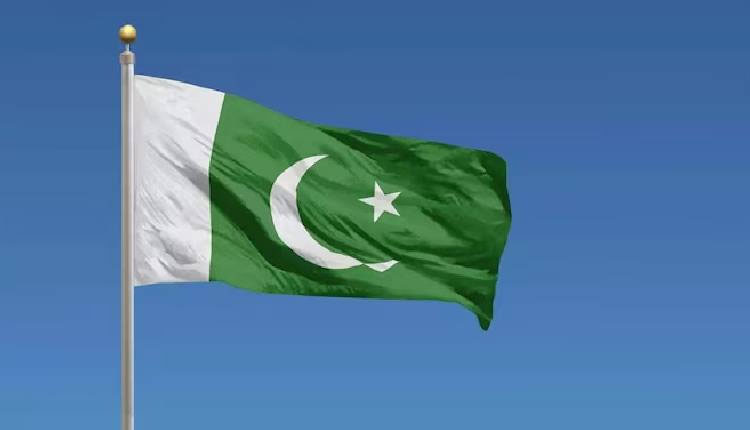
In dealing with Pakistan, India must carefully balance diplomatically with other powerful countries like China, Russia, the US, various European countries and Saudi Arabia. Over time, It has been established that Pakistan partitioned at the same time with India, did not grow economically when compared to mighty Bharat due to its lopsided and wayward approach towards basics of economics, they (Pakistan) were rather continually remained focussed on how to bleed India than working for their own welfare. India in the meanwhile remained very focussed and emerged as much greater power than a debt ridden country Pakistan. India’s GDP is almost 11 times bigger than Pakistan ($4187 to $399 Bn) in 2025. To compare with,In fact, Tata group with market capitalization of more than $400 Bn is bigger than Pakistan’s total GDP.
However, all said & done, recent developments after “Operation Sindoor” in which Pakistan has been decimated on all fronts especially by our Air Force & Air Defence system’s surveillance,new US President Donald Trump’s recent outreach, and China’s steady support to Islamabad underline that the major powers are very much engaged with our troublesome neighbour. US as many defence analysts believe has got stirred with India after our indigenous Brahmos hit right on Kirana hills, housing US’s nuclear arsenal in Pakistan. It gave a stern message to world and Pakistan in particular that India will not succumb to any pressure and has the capability, when it comes to saving its country and people against any radical violence.
Still, Why Pakistan is so attractive to many countries like China, US and others, reasons are its :Location, disruptive capabilities, and power.
First, Pakistan’s location matters. The country abuts Afghanistan, Iran, and China (and India). It is proximate to the Gulf states, including Saudi Arabia. Through Afghanistan, it is connected to Central Asia. From Pakistani naval bases and air bases, distant powers can project force in a wide arc. In addition, foreign ground forces can operate from Pakistan against Afghanistan and Iran. It may seem fanciful today, but Pakistan could even be a staging post for Chinese attacks against India. China’s access to Gilgit-Balitistan for minerals and fresh water of Shakham valley & other Glaciers (for making Chips) and Strategic access through CPEC corridor from Kashgar to Gwadar off Karachi for easy transportation of goods and materials to rest of the world from China.
Second, and less positively, Pakistan matters because it is a potential disrupter and danger.
It has been observed that Islamabad has that capability that it is feared, engaged, and even propitiated. China, Russia, and the US as well as others must worry about Pakistan’s support of Islamic militancy and terrorism as also its subtle forms of blackmail via its control over violent-minded groups.
A lesson for India is that we need to be more cautious about Pakistan and not to let Islamabad play its nefarious designs. To circumvent any further dastardly act by Pakistan, R & AW and connected intelligence agencies need to very proactive in pre-empting and containing that attack on Indian soil. This is more so because Pakistani leadership are not overly embarrassed by their dark reputation. Indeed, they use their image as an international “poison pill” to reinforce global concerns over the country’s possible disruptive role.
Third, contrary to our belief that Pakistan is a puny entity, our neighbour has five assets that make it both feared and attractive – its military, demographic, Islamic, diasporic, and alliance power.
Above all, Pakistan is a formidable military power. With half a million men in uniform, its armed forces are among the biggest in the world. In addition, it is a nuclear power. With roughly 200 nuclear weapons, it is India’s peer. In fact, there is evidence that it may have more warheads than India. Trump’s latest revelation indicates Pakistan is testing its Nukes, Plus, as our recent fracas with Pakistan showed us and the world, is capable of disrupting peace. Backed by Chinese weapons systems and real-information feeds, it garners attention and more vigil.
Pakistani military power could also be harnessed for other countries’ fights. Are we sure that Islamabad’s current conflict with Afghanistan is simply about the Durand Line, Afghan-backed militancy and separatism in Pakistan, and a broader protracted rivalry between two neighbours? Is it not also possible that foreign powers are using Islamabad against the Afghan Taliban? US’ keenness to aquire Bagram base in Afghanistan by US could be one cue, and Pakistan’s unconditional offer to US on Rare earth elements estimated reserves around $ 6 Trillion in Balochistan, another one !
Pakistani power is not simply military. This is a country of around 260 million people, making it the fifth-most populous globally. By 2050, some estimates put its population at between 340 and 360 million, which would make it the third largest in the world, behind only India and China. Like India, it will have a huge population of young, potentially productive or not, cannot be sure about. Will any major power give up on Pakistan given its demography?
Another component of Pakistani power comes from its position in the global Muslim community. Pakistan is the second-largest Muslim country in the world in population terms. While it is poorer than many other Muslim countries, it is influential in global Islam by sheer size of numbers. Its demographic size is amplified by its military and diplomatic power.
We in India consider our diaspora a source of power. The Pakistani diaspora is not as large or influential as India’s, but it cannot be dismissed. Between 1995 and 2020, the UN World Migration Report estimates 6.14 million Pakistanis emigrated, placing it in sixth position (India had 17.79 million emigrants). The total size of its diaspora is uncertain but could be between 10 and 11 million (Pakistan’s own estimate), less than one-third of India’s. The diaspora is largely in Saudi Arabia, the Gulf, and the Anglosphere. Like other diasporic communities, Pakistanis abroad wield political, lobbying, and host governments must reckon with their influence.
Finally, Pakistan has alliance power. It was a formal ally of the US in SEATO and CENTO in the 1950s and 1960s. It has been a quasi-ally of China since 1963 and was a quasi-ally of both China and the US against the Soviet Union in the 1980s (in supporting the Afghan mujahideen). It was also forced to be a quasi-ally of the US in Afghanistan after the events of September 11, 2001. For years, it has partnered with Saudi Arabia militarily, including intermittently stationing troops on Saudi soil. And it has just signed an alliance pact with Riyadh, which apparently includes nuclear protection. Its willingness to enter alliance-like relationships makes it attractive to these powers even now.
In sum, galling as it is, we must recognise that Pakistan cannot be dismissed in strategic terms. Powerful others will continue to engage with it, despite their strong ties to India, probably this is “New normal in Geopolitics”. This is the reality. Our diplomacy at the same time cannot be cool-headed in thinking about Pakistan’s place in the world because of Pakistan’s continual front and back stabbing in terms of spreading Terrorism in the name of Jihad and Hawala’s. India’s exasperation and haughtiness are genuinely ascribed to it.
 Follow our WhatsApp channel
