

Walk into any coffee shop and you’ll hear young people talking about investments. SIPs, mutual funds, crypto – they know it all. But when it comes to life insurance, things have changed completely.
Our parents bought traditional policies without asking many questions. Today’s generation does things differently. They prefer term plans over old-style insurance.
Let me explain why this shift is happening.
The Cost Factor
Money matters to everyone, especially when you’re just starting your career.
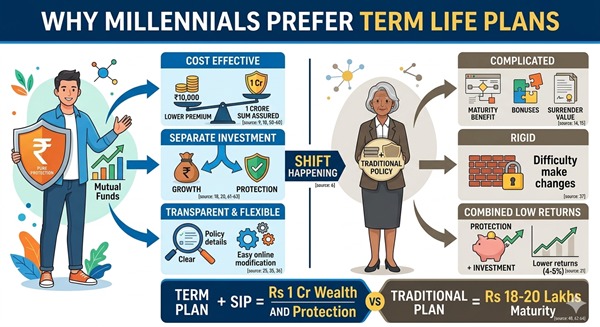
A 28-year-old wants Rs 1 crore coverage. A traditional life insurance policy might cost Rs 40,000 per year. The same coverage through a term plan? Just Rs 12,000 per year.
That’s a massive difference. You save Rs 28,000 every year.
Young people are smart with money. They see this gap and make the obvious choice.
Simple is Better
Traditional policies come with complicated terms. Maturity benefits, bonuses, surrender values – too many things to track.
Term plans are straightforward. You pay premium. If something happens to you, your family gets money. That’s it.
No confusing calculations. No wondering about returns. Just pure protection.
Millennials like things simple. They don’t want to spend hours understanding policy documents.
Investment and Insurance Separated
Here’s something our parents did differently. They mixed insurance with investment in one policy.
Today’s generation keeps them separate. Buy a term plan for protection. Invest the remaining money elsewhere for better returns.
A traditional policy might give 4-5% returns. The same money in mutual funds could give 10-12% over time.
This separation makes financial sense. You get better protection and better returns.
Transparency Wins
Young people value honesty and clarity.
Term plans are transparent. The premium you pay goes toward covering risk. No hidden charges eating up your money.
Traditional policies have multiple charges. Premium allocation charges, policy administration charges, fund management charges – the list goes on.
With term plans, you know exactly what you’re paying for. No surprises later.
Online Research Changes Everything
Millennials don’t buy things blindly. They research online first.
Before buying life insurance, they read blogs, watch videos, compare plans on websites. They join forums and ask questions.
This research shows them the truth. Term plans offer better value for pure protection needs.
Information is freely available now. People make informed choices instead of just following what their parents did.
Flexibility Matters
Life changes fast when you’re young. You switch jobs, move cities, get married, have kids.
Term plans offer flexibility. You can increase coverage when needed. You can add riders for critical illness or accident cover.
The process is usually simple. Many insurers let you make changes online.
Traditional policies are rigid. Making changes is difficult and often costly.
No Pressure from Agents
Here’s an honest truth. Many traditional policies got sold because agents pushed them hard.
Agents earned big commissions on traditional life insurance. So they promoted these policies heavily.
Term plans pay lower commissions. Agents don’t push them as much.
But millennials buy online directly. They skip the agent altogether. They compare plans themselves and choose what fits their needs.
Understanding Actual Needs
Young people today understand what insurance actually means.
Life insurance should protect your family if you’re not around. It’s not an investment tool to make money.
A term plan does exactly this job. It gives your family financial security during tough times.
Traditional policies tried to do both – protection and investment. They ended up doing neither job really well.
The Math Makes Sense
Let’s do simple math to see the difference.
Ravi is 30 years old. He wants Rs 1 crore coverage for 30 years.
Traditional Policy:
- Annual premium: Rs 45,000
- Total paid in 30 years: Rs 13.5 lakhs
- Maturity amount: Around Rs 18-20 lakhs
- Cover during policy: Rs 1 crore
Term Plan:
- Annual premium: Rs 10,000
- Total paid in 30 years: Rs 3 lakhs
- Maturity amount: Nothing
- Cover during policy: Rs 1 crore
Ravi saves Rs 35,000 every year with a term plan. He invests this in mutual funds at 12% average return.
After 30 years, his investment grows to around Rs 1 crore.
So with a term plan plus separate investment, he gets Rs 1 crore protection AND builds Rs 1 crore wealth.
The traditional policy gives only Rs 18-20 lakhs at the end.
The numbers speak for themselves.
Digital Native Generation
Millennials grew up with technology. They’re comfortable buying things online.
Buying a term plan online takes 15 minutes. Fill a form, upload documents, pay premium. Done.
No need to meet agents. No lengthy paperwork. No multiple visits to offices.
This convenience appeals to young people who value their time.
Focus on Real Protection
When someone asks “Why do you need life insurance?” the honest answer is simple.
To protect people who depend on your income. Your parents, spouse, children.
A term plan gives maximum protection for minimum cost. It serves this purpose perfectly.
Traditional policies got sold with promises of returns and savings. But protection took a back seat.
Millennials see through this. They prioritize actual protection over fancy features.
Peer Influence and Social Proof
Young people talk to each other. They share experiences online and offline.
When one person buys a term plan and shares their positive experience, others listen.
Social media groups discuss these topics openly. Someone asks “Which life insurance should I buy?” Ten people recommend term plans.
This peer influence is powerful. It spreads awareness faster than any advertisement.
The Verdict
The shift from traditional life insurance to term plans isn’t just a trend. It’s a smart financial decision.
Millennials prefer term plans because these policies make sense. They’re affordable, transparent, and focused on actual protection.
The saved money gets invested separately for better returns. Insurance does its job – protecting the family. Investments do their job – building wealth.
This approach is logical and effective. More young people will continue choosing term plans over traditional policies.
 Follow our WhatsApp channel
