

Sunil Singh
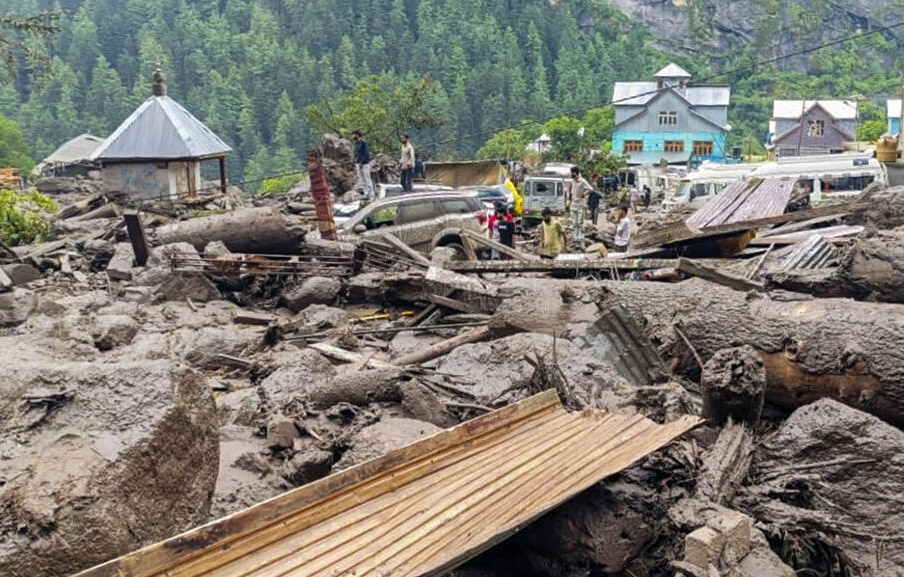
The year 2025 began with one of the most devastating tragedies in living memory when a deadly cloudburst struck Chashoti in Paddar, Kishtwar. Torrential waters, massive boulders, uprooted trees and debris ripped through villages, sweeping away houses, cattle, and even the langar facility set up for devotees of Maa Chandi. Hundreds of Machail Mata pilgrims were caught in the calamity, with many lives lost and several still missing. This heart-rending event has underlined the urgent question: Are we scientifically prepared to mitigate such disasters? Sadly, the answer remains no.
A Grim Reminder
Just weeks earlier, Ramban district witnessed a severe pre-monsoon cloudburst on April 20, 2025, triggering flash floods and landslides that devastated markets and homes. Soon after, a landslide at Adhkuwari near Vaishno Devi claimed more than 35 pilgrims’ lives. Cloudbursts in Kathua, Rajgarh, Reasi and flash floods in rivers like Tawi, Chenab, Ravi, Ujh, Basanter, Devak and Neeru Nallah (Bhaderwah) caused heavy damage to crops, property, highways and bridges. Massive slides in Doda, Bhellessa and the Jammu-Srinagar National Highway further exposed the vulnerability of our region.
The Himalayan belt of J&K has once again witnessed cloudbursts, floods, landslides and recurrent earthquakes. This is not just nature’s fury, but a grim reminder of neglecting geology and scientific planning.
The Science Behind Himalayan Disasters
The unique topography of J&K steep slopes and deep gorges makes it prone to cloudbursts. Moisture-laden monsoon winds rise rapidly (orographic uplift), cool abruptly, and release sudden downpours exceeding 100 mm per hour, often over catchments as small as 1-10 sq. km. Climate change has intensified this, as warmer air holds 7% more moisture per 1°C rise. Fragile regions like Paddar, Ramban, Bhaderwah and Doda are thus becoming disaster hotspots.
Fragile Himalayas and Human Neglect
The Himalayas are young, tectonically active, and fragile. Deforestation, slope destabilization, unscientific tunneling, dams and roads without geological surveys, glacial retreat and unregulated construction have compounded risks. These factors, combined with climate change, explain the surge in landslides and flash floods.
Geological Setting
The Himalayas were formed by the ongoing collision of Indian and Eurasian plates, causing unstable slopes, active fault lines and seismicity. Disasters in J&K are not merely “acts of God” but results of neglect when geoscience is ignored in planning.
Seismic Vulnerability: A Ticking Bomb
Experts call J&K a seismic “ticking bomb.” Kashmir Valley, Doda, Ramban, and Kishtwar fall under Seismic Zone V (highest risk), while most of the region is in Zone IV. Major fault lines like the Main Boundary Thrust, Main Central Thrust, Panjal Thrust, and Balakot-Bagh Fault are highly active. The last megaquake in this seismic gap was in 1555 (8.0 magnitude). Accumulated strain makes another major quake inevitable.
Unsafe construction, hydroelectric projects in Chenab Valley, dense populations in fragile valleys, and soft Karewa sediments prone to liquefaction amplify risks. A major quake would trigger widespread landslides and cripple infrastructure.
Neglect of Geology in J&K
It is tragic that J&K, once a pioneer in geology, now neglects the subject. Prof. Darashaw Wadia, Father of Himalayan Geology, began teaching geology in 1905 at GGM Science College, Jammu. Yet today, geology is offered in very few schools, posts for lecturers remain vacant, and no dedicated geologists are recruited in planning or disaster management. This apathy persists even as UPSC recruits geologists annually for national services.
Why Geologists Matter
Geologists are protectors of lives and infrastructure. Their roles include hazard mapping, seismic risk assessment, slope stabilization, and advising safe alignments for tunnels, roads, and dams. With modern GIS, GPS and remote sensing, vulnerable slopes, glaciers and rivers can be monitored in real time, but these tools remain underutilized in J&K. Ignoring geology means risking lives and billions in infrastructure.
GIS & Remote Sensing: Underused Tools
Modern geology uses GIS and remote sensing for real-time monitoring of slopes, rivers, glaciers and seismic zones. GPS-enabled alerts can warn of landslides and flash floods. Yet in J&K, these remain largely absent. Without geology, tunnels, dams and roads stay unsafe, and earthquake resilience a dream.
Need of the Hour: Managing Risks
While geology cannot prevent natural forces, authorities can reduce risks by enforcing seismic building codes, retrofitting old structures, mapping vulnerable slopes, and strengthening early warning systems. Public awareness and earthquake safety education are essential. Disaster management in J&K must shift from relief to preparedness and prevention.
Roadmap for a Safer J&K
Make geological surveys mandatory for all infrastructure projects.
Introduce geology in senior secondary schools and expand research departments.
Create posts for professional geologists in PWD, mining, irrigation and disaster management.
Establish a Regional Institute of Himalayan Geosciences in J&K. Strictly enforce seismic building codes and retrofit older buildings. Promote GIS and remote sensing for real-time monitoring. Launch public awareness campaigns on slope safety and seismic resilience.
Conclusion
The tragedies of 2025 from Ramban’s pre-monsoon cloudburst to Chashoti Paddar’s devastation – send a loud message: time is running out. Unless geology, climate science and sustainable planning are placed at the heart of governance, disasters will keep repeating.
The best tribute to Prof. Wadia and the people of J&K is to restore geology to the centre of education, governance and planning. Only then can we transform J&K from a disaster-prone zone into a model of sustainable Himalayan development.
(The author is Ex-Geologist, JSPL & Shree Cement Ltd.)
 Follow our WhatsApp channel
