

Jammu and Kashmir’s world-famous artisanal heritage is undergoing a massive makeover. Long held back by middlemen and counterfeit products, the traditional craft sector is now being reborn through technology and innovation. Over the last five years, bold Government policies and the rise of local startups have turned ancient crafts into competitive global businesses. Today, a new generation is choosing entrepreneurship over conflict, using digital tools and GI tags to protect and sell their heritage. This transformation is turning J&K from an informal market into a modern, tech-driven startup hub. Ankit Patel interacts with some of the entrepreneurs and brings forth the present status of handloom heritage in J&K.
In the crisp, sun-drenched mountains of Bhaderwah and Kishtwar, a new revolution is brewing. Founded in 2022 by visionary entrepreneur Shabir Ahmed Zargar, The Saz Valley is far more than a luxury retreat; it is a powerful engine for local prosperity. By blending high-end tourism with a farm-to-table model, Zargar is transforming the region into a global destination while ensuring the wealth of the mountains stays exactly where it belongs: with the local farmers and artisans.
The Saz Valley Emporium is bypassing middlemen to connect travelers directly with J&K’s authentic soul. From Saffron and Walnuts to GI-tagged Bhaderwah Rajma, every product is sourced straight from local fields and looms. This “direct-to-consumer” model has doubled the bargaining power of local growers, ensuring that as tourism in Bhaderwah booms, the profits stay exactly where they belong with the farmers and artisans who create the magic.
Jammu and Kashmir’s economy is soaring toward a record Rs 2.88 lakh crore this year, fueled by a massive Rs 1.13 lakh crore budget and over Rs 33,000 crore dedicated to new infrastructure. In a game-changing move, the Central Government has taken over regional policing costs, freeing up a security dividend that is now being poured into Mission YUVA, a flagship program designed to launch 1.37 lakh new businesses and create 4 lakh jobs. With a dedicated Rs 50 crore startup fund and a major tax cut slashing GST from 12% to just 5% on heritage crafts like Pashmina and hand-knotted carpets, J & K is successfully pivoting away from the shadows of the past and toward a bright, innovation-led future.
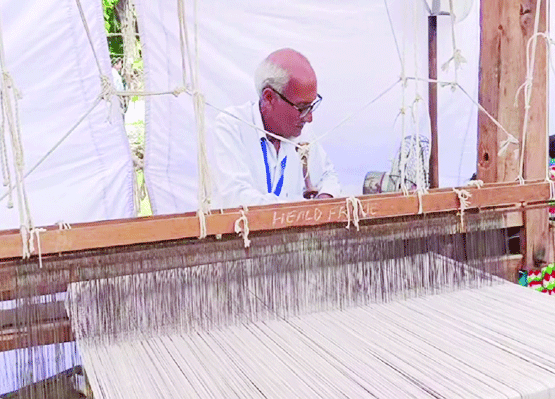
In Samba, the rhythmic clack-clack of the handloom is no longer a fading echo; it is the heartbeat of a thriving economy. At 74 years old, veteran weaver Tarak Chand stands as a living testament to this revival. Having spent over 60 years behind the loom, he has seen the industry’s darkest days, but today, his eyes sparkle with a new kind of hope. “In all my decades, I have never seen demand like this,” he says. “It is increasing every single day. Our craft is finally being valued again.”
This surge in interest is no accident. It is the result of a deliberate push by the Government Handloom Department, where officials like Sohan Lal are working to ensure the craft survives for another century. Through a specialized one-year skill development program, groups of 20 to 22 participants, predominantly local women, are being trained in the intricate arts of weaving. To support them during their journey, the government provides a monthly stipend of Rs 1,000.
“We don’t just train them and leave,” says Sohan Lal. “Once they complete the year, we register them with the department, giving them a formal platform to produce and sell their own creations.” Beyond training, the Financial Support Scheme acts as a powerful catalyst; it provides a Rs 1 lakh grant to new 11-member groups, allowing them to set up their own stalls and production units for items like bedsheets, stoles, and blankets. By merging the lifelong wisdom of masters like Tarak Chand with fresh capital and modern training, Samba is proving that J&K’s handloom industry is more than just heritage, it is a robust, growing engine of livelihood that is weaving a brighter future for thousands.
J&K’s heritage is powering a massive economic comeback, with exports skyrocketing by 243% to nearly Rs 310 crore in early 2025. Boosted by strategic tax cuts and Srinagar’s status as a UNESCO World Crafts City, the region’s 4.5 lakh artisans are using digital tools to turn ancient skills into a high-growth global industry. This shift has propelled J&K from 35th to 17th place on the national Export Promotion Index, proving that its traditional crafts are now more competitive and profitable than ever. The J&K Startup Policy 2024-2027 is turning traditional artisans into modern CEOs. With a bold goal to launch 2,000 new businesses, the government has backed the plan with a Rs 250 crore Venture Capital Fund and seed funding of up to Rs 20 lakh for fresh ideas. To help these new companies grow, office spaces are now 50% cheaper, and prior experience rules have been waived meaning even a brand-new startup can now win major Government contracts.
High-interest debt is becoming a thing of the past for J&K’s craftsmen. Through the Artisan Credit Card, makers can now access collateral-free loans of up to Rs 2 lakh at a tiny 4% interest rate. Over Rs 5 crore has already been distributed to help artisans thrive. Additionally, registered cooperatives can receive Rs 1 lakh grants and a 50% subsidy to buy modern machinery, helping rural families turn ancient skills into profitable, sustainable businesses.
In Chenani town of Udhampur, the vibrant colors of history come alive under the nimble fingers of Bashira Bano. For over 34 years, she has dedicated her life to preserving Phulkari- an ancient embroidery technique that literally translates to flower work.Traditionally stitched using brightly colored silk thread over cotton fabric, Phulkari is famous for its complex, geometric patterns that are painstakingly woven from the reverse side of the cloth. Once a celebrated staple of local heritage and bridal trousseau, the art form faced a slow decline against the rise of cheap, machine-made textiles until artisans like Bashira decided to fight back.
Today, Bashira’s decades of dedication are being amplified by powerful Government backing. Recognizing the immense cultural and economic value of this craft, the Udhampur Handicraft Department runs specialized training centers explicitly dedicated to teaching Phulkari to a new generation of women. To further formalize this heritage, the J&K Skill Development Department offers a formal one-year diploma in Traditional Phulkari Arts across local polytechnics and ITIs.
The revival of Phulkari is about more than just preserving heritage, it’s a pathway to financial independence. Through government-backed Artisan Credit Cards and cooperative grants, local women are transitioning from traditional trainees to successful business owners. For Bashira Bano, what began as a lifelong passion is now sparking a movement, weaving the women of Udhampur directly into the fabric of J&K’s modern, self-sustaining economy.
A Rs 142.5 crore investment in Mega Clusters is creating shared workspaces for 25,000 weavers, while 1.30 lakh Pehchan ID cards ensure government benefits reach artisans directly. This infrastructure has fueled a historic startup boom growing from 237 to over 1,000 businesses, with 36% led by women. By using tech to bypass middlemen, J&K is ensuring that profits finally stay exactly where they belong: in the hands of its people.
Winding lanes of Karial village in Akhnoor, 32-year-old Rajni is weaving a story of success that has captured the attention of the nation. An 8th-class passout who never saw the inside of a university, Rajni has defied every stereotype, proving that true genius is not found in a degree, but in the hands of a master. Her craft? The ancient, humble art of turning wild grass into exquisite, eco-friendly masterpieces.
Rajni’s specialty is the “Chaabdi Binna” traditional, intricately woven grass containers once used in every rural home to keep rotis fresh and warm. For years, this skill was confined to the shadows of domestic chores. That changed in 2018 when Rajni joined the Jai Baba Kalibeer Self Help Group (SHG) in Mathwar. Empowered by the government’s Umeed initiative, which provides the vital financial and organizational backbone to rural women, Rajni’s talent found its wings. What started as a village-level skill quickly leaped onto grander stages. From local fairs to the vibrant aisles of Dilli Haat and various national and international craft expos, Rajni became the face of Jammu’s rural heritage. Her work is more than just a container; it is a symbol of a sustainable, plastic-free future. Yet, Rajni’s greatest legacy isn’t the products she sells-it’s the women she leads. Driven by a fierce commitment to collective growth, she now travels to far-flung districts like Kishtwar to conduct intensive, hands-on design workshops. There, she teaches other women how to turn simple blades of grass into a sustainable livelihood. Rajni’s journey is a brilliant reminder that when rural talent is given the right platform, it doesn’t just survive-it shines on a global stage, proving that the most sustainable innovations are often the ones rooted deeply in our traditions.
J&K is securing its future by legally protecting 25 iconic products with GI tags, ranging from the world’s highest-quality Saffron and Mushqbudji Rice to Udhampur Kaladi cheese and organic Sulai Honey. To save even more niche skills from fakes, 17 new crafts including Kashmir Willow cricket bats, Tilla embroidery, and Dal Lake houseboats are currently being added to the legal safety net. This protection is backed by a high-tech QR code system that has already tagged over 51,000 authentic shawls and 20,000 carpets, allowing global shoppers to trace every thread back to the original loom. By combining these legal shields with strict crackdowns on fraud, J&K is ensuring that its artisans finally command the premium global prices their legendary heritage deserves. While Geographical Indication tags have turned Kashmiri crafts into global luxury brands, a recent deep-dive study into 388 Pashmina and Kani shawl makers has revealed a startling Artisan Paradox. On one hand, the GI tag is a massive success, it has boosted tourism, opened up international e-commerce, and allowed retailers in cities like London and New York to charge premium prices.
Jammu and Kashmir’s economy is growing at a record pace, surging toward a record ?2.88 lakh crore with a massive 243% jump in exports this year. This transformation is fueled by a Rs 250 crore Venture Capital Fund and high-tech protections like QR codes and 25 GI tags that safeguard authentic heritage. By cutting out middlemen and using digital platforms to connect artisans directly to the world, J&K has successfully evolved into a vibrant, tech-driven global hub, ensuring its newfound wealth stays exactly where it belongs in the hands of its people.
 Follow our WhatsApp channel
