

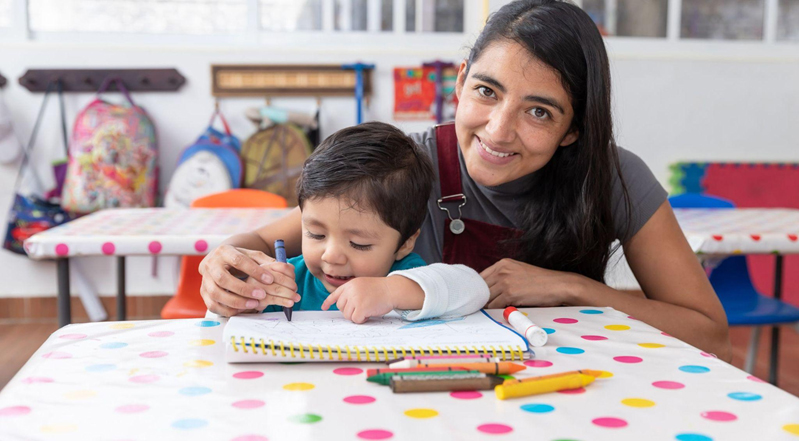
When comparing franchise opportunities in India, early education often stands out because preschool is a priority for most families, not an optional expense. Parents want a safe, structured start for their child, and when they find a centre they trust, they usually continue with it and recommend it to other parents. This is why a preschool franchise in India is often seen as a stable, long-term business option.
What Makes Preschools a Steady Business Category
Preschools cater to a recurring life-stage requirement, and when parents find a centre they trust for safety, care, and learning, they tend to stay enrolled and recommend it, creating steady demand beyond seasonal marketing.
Demand is Linked to a Life Stage, Not a Trend
Preschools serve a predictable need that repeats in every neighbourhood. Parents may compare options, but the requirement itself does not disappear. This keeps enquiries more consistent than categories that depend heavily on changing consumer tastes.
Trust Drives Repeat Admissions and Referrals
In early years, parent decisions are strongly influenced by safety, teacher warmth, cleanliness, and communication. When these basics are delivered consistently, word-of-mouth becomes a reliable growth engine. It is slower than striking marketing, but it tends to last longer.
Operations are Routine-Led
Preschools run on repeatable routines: arrivals, classroom flow, activity cycles, parent updates, and safety checks. Businesses built around routines are usually easier to stabilise over time, especially when the operating system is well-defined.
Why Franchising Adds Stability Compared to Starting Independently
A strong franchise reduces the trial-and-error phase. Instead of building everything from scratch, you get a model that has already tested what works in classrooms and in day-to-day centre management.
A Defined Curriculum With a Ready Classroom Structure
The best networks treat curriculum like a complete system, not a folder of worksheets. You typically receive structured lesson plans, teaching aids, and classroom routines that help teachers deliver consistent learning, even if the team has mixed experience levels.
Training That Supports Both Business and Academics
In a preschool, training cannot be limited to teaching alone. Good franchises train centre heads on operations and parent communication, while also training educators on classroom delivery, child guidance, and learning methods suited to early years.
Set Up Guidance That Avoids Expensive Mistakes
Many franchise models support decisions around layout planning, centre ambience, essential equipment, and safety readiness. This matters because an unsuitable setup can affect daily operations, not just appearance. A well-designed centre improves supervision through clear visibility across classrooms and common areas, supports smooth movement between activities, and reduces crowding during arrivals, dispersal, and transitions.
Admissions and Marketing Support That Builds Consistency
Preschools need a steady enquiry pipeline, but they also need an ethical, parent-friendly counselling approach. Established franchises often provide frameworks for lead handling, admissions process design, and local marketing support, so your centre does not depend purely on improvisation.
Risks That Can Weaken Even Good Franchise Opportunities
A preschool franchise in India can be stable, but only when delivery quality is protected. Watch for warning signs such as unclear training scope, vague safety standards, limited operational support, or a model that focuses heavily on branding but lightly on classroom execution. In early education, parents notice the gap quickly.
Final Thoughts
Preschool franchising remains one of the more dependable franchise opportunities because it serves a recurring need and grows through trust-led reputation. The stability, however, comes from systems: curriculum strength, training depth, operational discipline, and ongoing support. If you evaluate these elements carefully, you are far more likely to choose a franchise model that can grow steadily and sustain parent confidence over the long term.
 Follow our WhatsApp channel
