

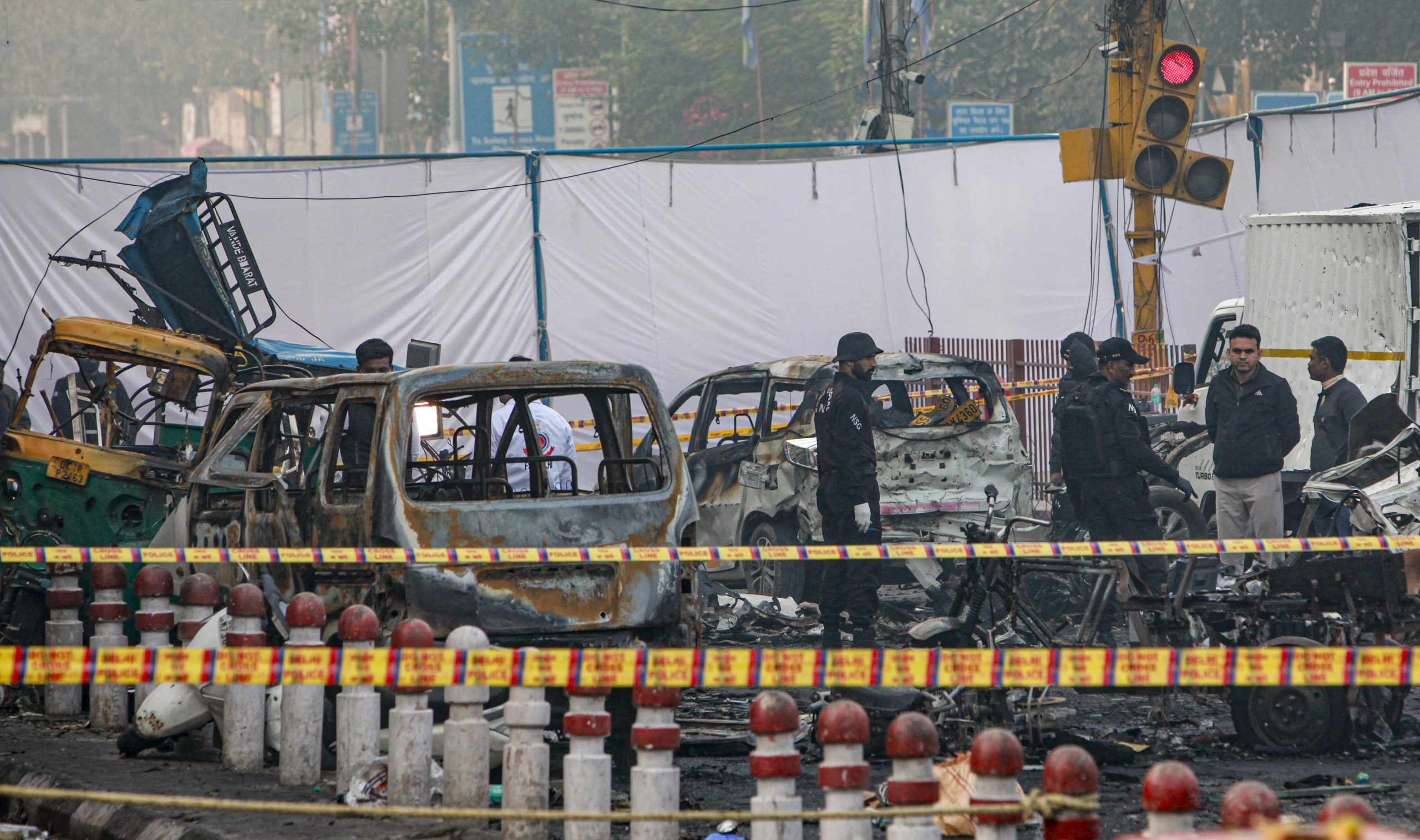
The unravelling of a “white-collar” terror module behind the Red Fort blast has exposed a disturbing evolution in extremist recruitment in India. What makes this case particularly alarming is not only the sophistication of the modus operandi but the profile of the recruits themselves-doctors, engineers, and well-educated professionals drawn into the vortex of violence through entirely digital means. The radicalisation of these individuals began as early as 2019, driven by persistent online grooming by handlers based across the border. This shows, in no uncertain terms, that education alone is no shield against indoctrination; even academically accomplished individuals remain vulnerable to psychological manipulation when propaganda is sustained, targeted, and presented in the guise of ideological or religious appeal.
The recruitment process followed a now-clear pattern. Potential targets were first identified on open platforms, such as Facebook, X, and YouTube, where they expressed curiosity or ideological leanings. They were then swiftly channelled into closed Telegram groups-digital echo chambers, where handlers deployed a mix of fabricated content, AI-generated videos, and tailored narratives to deepen their emotional and ideological drift. This was followed by virtual training through YouTube tutorials on constructing IEDs, operational guidance through encrypted chats, and logistical coordination using VPNs and fake identities. The entire chain-from identification to indoctrination to operationalisation-was executed without a single physical interaction, highlighting a dramatic tactical shift in the post-2018 terror landscape.
The spread of this influence beyond Jammu & Kashmir is equally troubling. The involvement of doctors from Punjab and an engineer from Uttar Pradesh signals that terror networks are probing vulnerabilities across the country, seeking educated recruits who can blend seamlessly into society while quietly enabling sophisticated attacks. The revelation that a 2008 Indian Mujahideen bomber was also an alumnus of Al-Falah University further underscores how deeply embedded these networks may already be in academic and professional spaces.
Now that the modus operandi has become clearer, dismantling such modules becomes more achievable. The recent breakthrough by the Jammu & Kashmir Police demonstrates the effectiveness of a proactive, intelligence-driven approach. But the momentum must not be allowed to fade. Counter-radicalisation efforts, digital surveillance, community vigilance, and cross-agency coordination must be relentlessly strengthened. White-collar terrorism is the newest and perhaps most insidious frontier of extremist violence-and India must stay ahead of it.
 Follow our WhatsApp channel
