

Dr Vikas Bhandari
In contemporary world, where modern states claim to follow the rule of law, we often face a harsh reality. These claims frequently fail in practice. The advanced democracies of the world often compromise legal principles for political gain, ideology, or strategic interests. From illegal surveillance programs justified by national security to selective judicial actions aimed at political opponents, the truth is that laws are often manipulated, ignored, or selectively enforced. Despite grand statements about justice and equality, the rule of law often gives way to the rule of ideology. Behind the shiny institutions of modern life lies a concerning moral emptiness.
In contrast, India’s ancient civilization provides a model of governance grounded in ethics and spirituality. This is a civilization where the idea of Dharma was paramount. Long before the West developed concepts of constitutionalism and legal systems, Indian society was organized around Dharma, a moral and cosmic order that governed individuals, families, communities, and rulers. Dharma was not just a set of laws; it was a way of life, a timeless principle of righteousness that ensured justice, harmony, and balance in society. In this framework, even the most powerful kings were not above the law. Their legitimacy depended entirely on their adherence to Dharma.
The Indian tradition viewed law not as merely a tool of the state but as a sacred duty rooted in truth, balance, and the common good. There was no distinction between law and morality. Dharma influenced not only legal transactions but also personal behavior, political decisions, and spiritual growth. It provided an ethical foundation that modern systems often lack. While today’s legal systems are created by humans and subject to manipulation, Dharma was seen as eternalSanatananot swayed by politicians or changing public opinion.
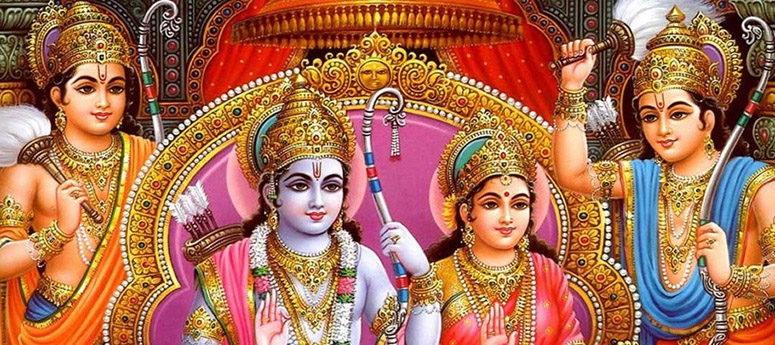
This philosophy is vividly portrayed in the epic Ramayana, where Lord Ram, the ideal king, prioritizes Dharma over his own happiness. When his citizens question the chastity of his wife, Sita, Ram exiles hernot because he doubts her, but because he believes a king must uphold the highest standards of public accountability. This painful choice stemmed not from weakness but from a strong commitment to Raja Dharma, the duty of a ruler. Ram placed his personal feelings below the expectations of his role. Today, we rarely see such selflessness for the sake of principle. Ram’s reign, often called Ram Rajya, became the highest standard for justice, compassion, and righteousness-an era where every citizen was protected, prosperity flourished, and law was intertwined with Dharma.
In the same way, the Mahabharata provides deep insights into the complexity of Dharma. The great war between the Pandavas and Kauravas was not just about political conflict-it was a fight for Dharma. The Pandavas, despite their blood ties to the Kauravas, chose to go to war because they could not allow adharma, or injustice, to win. Lord Krishna, guiding them, stressed that upholding Dharma was more crucial than family ties or personal loss. The Pandavas’ victory represented a triumph of Dharma over ego, greed, and tyranny. This lesson reverberates through time: when injustice becomes law, resistance becomes a duty.
In India’s traditional systems, individuals enjoyed freedom-but only within the limits of Dharma. Freedom did not mean a license to do anything; it was the duty to act rightly. Unlike modern ideas of absolute freedom, which often lead to chaos and moral ambiguity, Dharmic freedom was balanced by responsibilities-toward society, nature, and the divine. Even kings had duties. Manusmriti and other Dharmashastras provided clear guidelines for rulers, teachers, merchants, and householders. Everyone had a role, a purpose, and a path to follow. This created a harmonious social order, where justice was not forced through the fear of punishment but emerged naturally from an internal sense of duty.
While modern legal systems rely on the fear of consequences, the Indian system focused on promotic inner virtue. Justice was not something imposed from the outside; it was an internal guide. A truly just society cannot be built on enforcement alone; it must be rooted in consciousness, character, and culture. Dharma supplied that cultural foundation. It remained dynamic and adaptable but was grounded in eternal truths. It acknowledged the diversity of duties based on time, place, and context while holding universal principles like truth (satya), non-violence (ahimsa), and compassion (karuna) at its heart.
Today, as the world struggles with ideological divides, institutional decline, and moral uncertainty, India must reconnect with the wisdom of its Dharmic legacy. Modernity without Dharma is empty; it creates systems without soul, laws without justice, and freedom without responsibility. The ancient Indian civilization recognized something many modern societies have forgotten, that true law is not about control but about harmony. It is not enforced from above but lived from within.
If we want to move toward a truly just and ethical global society, the world should not follow the West blindly, but rather the timeless civilizational values of Bharat. The path of Dharma, walked by Lord Ram, upheld by Lord Krishna, and taught by the sages, provides not only a better model of governance but also a profound way of life. It reminds us that the highest form of rule is not the rule of men or ideology but the rule of Dharma the enduring law that sustains the world.
(The author is a political commentator and political observer)
 Follow our WhatsApp channel
