

B D Sharma
bds.jmu@gmail.com
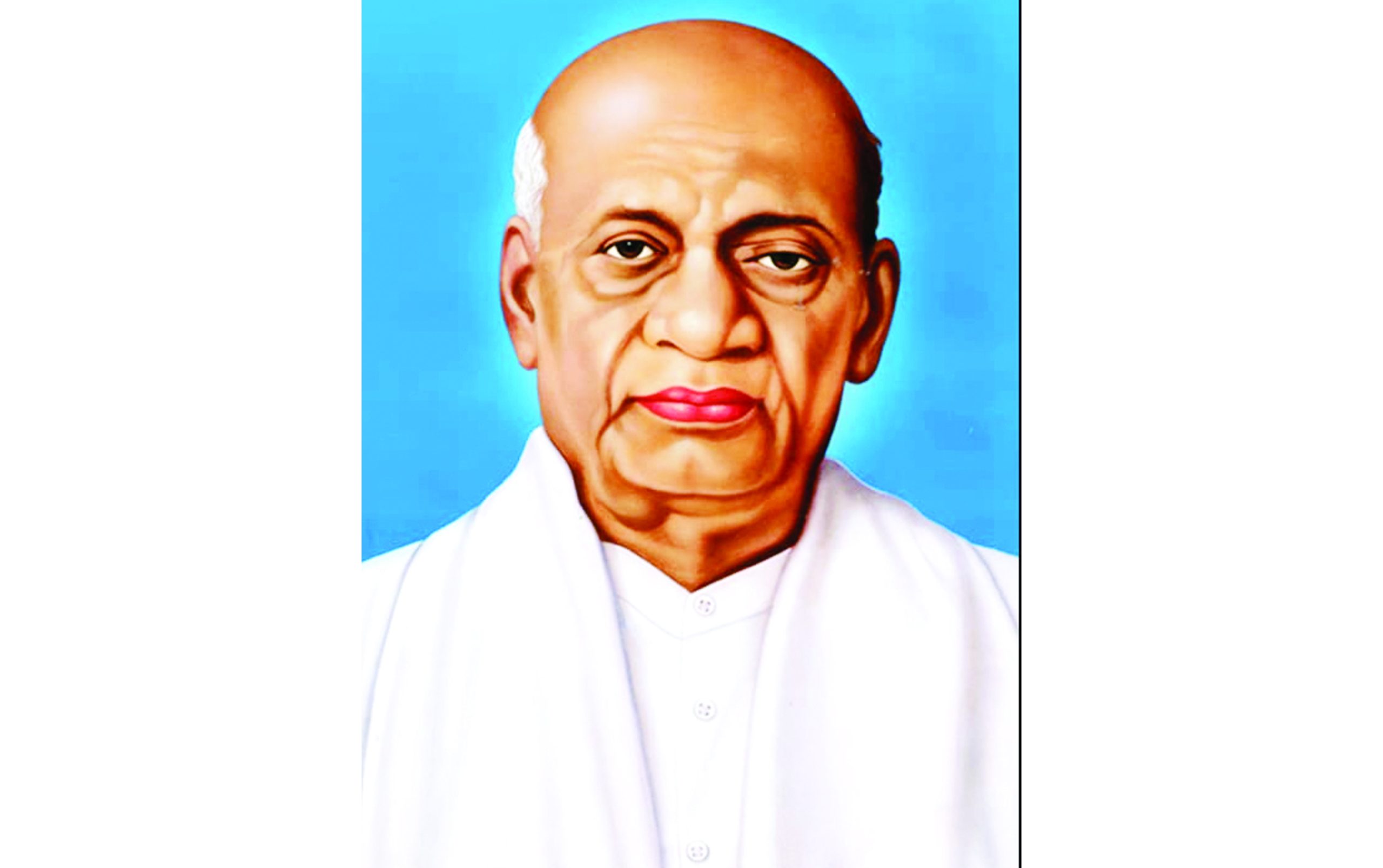
One sometime wonders as to why Sardar Patel commands so much respect from his country men even after his death 75 years back. After all he was only a Minister in the first cabinet under Pt Nehru. Dy Prime Minister ship used to be and continues to be merely ceremonial, second among equals. His exalted place is because of his achieving integration of more than 550 states in the Union as also his being instrumental in other fields of nation building. This becomes evident from the opinion of some senior officers who occasioned to work with him or were in the position to observe his style of working. Officers of those days had high standards of integrity and professionalism. And with seniority they would get ripened and mature also. So their judgement, opinion and views in assessing any leader, they had worked with, could hardly be doubted. Fortunately many officers have given their views regarding the accomplishments of Sardar Patel and their reflections help us to assess his personality. One such senior officer who had worked closely with the Sardar was VP Menon. Though a non-ICS, Menon had worked out his way from a stenographer to the post of Reforms Commissioner to the last three Viceroys, the most significant post held by an Indian. His role during the years before and after independence was very significant. Menon tells us that much before working with Patel as Secretary of States, he had formed the opinion that the Sardar was a powerful man; that he was superbly efficient at administration and organization; that he was a blunt but truthful force to reckon with.
In such a man, Menon inferred, laid the real strength: the kind which, if tapped properly, could take India to new heights. When Nehru’s stance on the Viceroy’s proposed role in the interim government threatened to torpedo the whole affair, Menon cannily advised the then Viceroy, Wavell to reach out to Patel to ascertain his views on the matter. Patel found the way out and ensured that the Congress Working Committee agreed to form the interim government. Menon’s estimation that though Nehru was wonderfully a nuanced, cultured and intelligent statesman but it was Patel who was grounded to the earth and had a better foresight. Menon had a hand in the preparation of Plan for transfer of power. With the initial plans for independence in tatters, desperate Mountbatten turned to Menon to devise an alternative, coherent and workable plan for independence. This would play midwife to India’s birth as a free nation. Initially Patel like Gandhiji was not agreeable to partition India. Nehru and Patel had gradually got convinced of the inevitability of partition. Partition was the best they could make out of a thoroughly desperate situation prevailing at the time. Their bitter experience of running the interim government with Muslim League had also made them to accept the Plan. Gandhiji had, however, announced that the partition would take place over his dead body.
Though Gandhiji was on the periphery of negotiations but his capacity to disrupt any negotiations was enormous. Patel’s efforts ultimately succeeded to bring round the Mahatma and the Congress party to accept it. This timely appreciation of the situation by Patel smoothened the way to independence. Sardar’s clear perception and his ability to get the Congress party to agree to the Plan proved helpful. Another feather in his cap was, of course, integration of the states with tact and perseverance. After the demise of Patel, Menon recollected his immense contributions thus: “If integration had not been completed during Sardar’s life, I couldn’t have done it alone. Though he had heart attacks while he was on the job, I know how powerful he was. He was the man against whom no one would dare to go.” Our State had acceded to India in October,1947 and Sheikh Abdullah had been given the reins of Administration. Pt Nehru had full faith in the Sheikh but he was alarmed of the utterances of Sheikh Abdullah later.
In January 1949, the Sheikh had given interview to two foreign correspondents, Davidson and Ward Price in which he had visualized the possibility of an independent Kashmir. Nehru was dismayed over these reports as the Kashmir case was being discussed actively in the UNO and without Sheikh’s support the matter would have got complicated for India. On receipt of some more similar reports, BN Mullick, the newly appointed Deputy Director of IB was sent to the State in August, 1949 to make an independent assessment of the actual position and to assess discretely the views of the Sheikh on certain issues. Mullick interacted with the Sheikh, Bakshi, Sadiq, Saraf, Dhar and a large number of other Hindus and Muslims, both officials and non-officials. In his report Mullick submitted that there was no reason to suspect Sheikh’s feelings for India. They were genuine as he had got the State acceded to India because of its secular policies and the similarity of his views with those of Pt Nehru and other Indian leaders. When the report reached Pt Nehru, he found affirmation of his views in the report and he sent copies of the same to all the Indian embassies to give them a perspective about Kashmir. When the Sardar went through the report a day or two later because he was indisposed, he was unhappy. He summoned Mullick and took him to task for not having discussed the report with him before its submission. He was also angry over its circulation to the embassies. Further he told him that he had contented the report with the views which the Prime minister was eager to hear.
Mullick gave justification of his actions. He had compiled his report after talking to a host of people. He had no role in sending it to the embassies. This somewhat mollified the Sardar. Mullick, however, felt that since the Sardar had got annoyed, so his days in the IB were numbered. But he was astonished when he, not only continued in the IB but was soon afterwards promoted as the Director by the Sardar over the heads of nearly thirty of his seniors. It seemed that Mullick had been able to assure the Sardar that he had tried to assess the situation unbiasedly without taking into consideration the known views of PM. The Sardar had also recognized Mullick’s right to express his views. Mullick found in it the greatness of Patel. But what impressed Mullick even more was the assessment of the Sardar regarding the situation in the State. Patel told Mullick that his assessment of the Sheikh was not correct. The Sardar apprehended that Sheikh Abdullah would ultimately let down India and Pt Nehru. Mullick admitted that he was wrong and the assessment of the Sardar was right. In his memoirs he tells us, “the events as they turned out proved me wrong. Within three years we found ourselves fighting against Sheikh Abdullah. Sardar Patel was dead by then.
Yet, I feel that possibly events might have turned out differently and the subsequent pain, turmoil and embarrassments could have been avoided if the special difficulties of Kashmir had been understood by all concerned and they had guided their talks and modified their actions on the basis of this understanding. Probably, things would not have come to this pass at all if the Sardar was still living, because Sheikh Abdullah had a very wholesome respect and fear for the Sardar.” Field Marshal Sam Manekshaw, a Colonel then, was closely associated with the developments from the military perspective in our State when Pakistani tribals had invaded it in October, 1947. He was posted in the DGMO. In one of his famous accounts(Rediff.com interview with Prem Shankar Jha), he describes how Patel cut through PM Nehru’s indecision during a crucial meeting being attended by Mountbatten, Nehru, Patel and others. With tribals nearing Srinagar, Nehru was hesitant to deploy troops fearing it might have diplomatic repercussions etc. Sardar Patel, Manekshaw tells us, was visibly angry on this dilly dallying of urgent action of troops deployment. So he interrupted Nehru and demanded, “Jawaharlal do you want Kashmir or do you want to give it away?” When Nehru told that he wanted Kashmir, Patel immediately turned to the Army officers and said, “you have got your orders” before Nehru could give a conflicting order.
In this way timely action was taken and Kashmir was saved. Another anecdote regarding the tactfulness of Patel narrated by him was with regard to his being sent with Menon to tackle some recalcitrant princes in the process of integration of States. Jokingly he tells us that Patel in this way used him as a “bogeyman” implying that the presence of a military officer helped to persuade and subdue the rulers to accede to India. According to the Field Marshal, Patel was not a man of idle talk but a man of action, even a man of ruthless action if required. In 1947 Gen LP Sen was in the rank of Brigadier and was commanding the newly inducted troops in Kashmir valley. In his memoirs, Slender was the Thread, he tells us about his experience of his interaction with Sardar Patel. Sardar Patel accompanied by Sardar Baldev Singh, the Defence Minister visited Srinagar on 4th of November 1947, a day after Major Som Nath Sharma had sacrificed his life while defending the Srinagar airport. While briefing the dignitaries, he explained as to what had happened at Badgam the previous day and that Srinagar was consequently being threatened. Sardar Baldev Singh was wide awake and had taken in all what Brig Sen had said. Sardar Patel had, however, closed his eyes soon after the briefing had started. Brig Sen assumed that the old man was feeling the effects of the air journey and had fallen asleep. So after the briefing the Commander looked at Sardar Baldev Singh and asked him a direct question: “Am I expected to eject the tribesmen from the valley regardless of the fate that may befall Srinagar, or is the town to be saved?” At that very moment the Sardar stirred. Brig Sen tells us: “The Tiger had not been asleep, and had heard every word of the briefing. A strong and determined man, and of few words, asserted ‘Of course Srinagar must be saved.’ “Further the Sardar assured the Commander that he would soon get more troops along with some artillery as had been requested. In the evening the Commander got a message that troops along with armoured cars and Field artillery were being dispatched. The Sardar had lived up to his reputation as a man of action, the Commander adds. Patel was a tower of strength for the Government servants. Senior officers approached him to seek his guidance when they thought that interventions of some higher authorities were urgently required. Many matters which could have serious implications for the country, were brought to the notice of Sardar Patel though these matters didn’t fall in the domain his jurisdiction. So when Girija Shankar Bajpai, the then Secretary General of Ministry of External affairs felt it necessary, he sent a note to Patel on 3rd November,1950 regarding China’s aggressive action in Tibet.
Patel responded by writing his famous and prescient letter to PM Nehru on November,7, 1950 based on the input provided by Bajpai. Patel warned the PM against his idealistic view of China and predicted border troubles would come from China sooner or later. Patel’s correspondence was a sharp critique of Nehru’s China policy. He argued that Nehru’s assumption of a shared “Asian solidarity” with China was naïve and overlooked China’s imperialistic ambitions. He argued that “the Chinese advance into Tibet upsets all our security calculations” and necessitated a complete reappraisal of India’s military position.
Patel’s letter is a foundational document and for those critical of Nehru’s China policy, Patel’s warning, particularly his distrust of Chinese motives, are considered prophetic in the light of later developments. Nehru gave scant attention to this warning and had to pay a heavy price in terms of loss of his personal standing as well as the national prestige in 1962. So much so that the ignominy of 1962 affected his health adversely leading to his early demise. Similarly when Gen Thorat had apprehensions that arms being sent to Pakistan were likely to be used to kill our own people because of the ongoing hostilities between the two countries, he approached the Sardar ( instead of his boss, the Defence Minister) for advice. General Bucher, the army chief was forcefully asserting that the weapons be sent to Pakistan as per schedule. The Sardar assured him that he was with the General but the dispatch of the share of defence equipment could not be halted as it would breach the agreement. He, however, advised him to send the arms and ammunition slowly and increase the proportionate quantum of innocuous items to make up the tonnage.
This all shows us that Patel played an important role in running the affairs of the Government. Not only in the Government but also in the Congress party his hold on the organization was pronounced. When Pt Nehru wanted C Rajagopalachari as the first President of India, Patel instead got Dr Rajendar Prasad elected. Similarly his candidate Parshotam Dass Tandon was elected as Congress President over Acharya Kriplani. Very tall leaders such as Govind B. Pant, GL Nanda, Charan Singh, LK Advani, Amit Shah have occupied the seat of Home Minister after Sardar Patel but none could reach the heights which the Sardar had attained. He remains perhaps the only Minister in the history of India who enjoyed the pre-eminence of even addressing his Prime Minister by his first name. Patel remains a much loved leader despite tremendous efforts having been made by some quarters to suppress his legacy. History neither spares anybody nor it allows the achievements of the deserving to be played down. From the above narrations Sardar Patel emerges as a man of action and unbending will who has created a place for himself in the history of India. Durga Dass, the veteran journalist tells us that President Prasad overruled PM Nehru when the later asked him not to attend the funeral of Patel at Bombay as attending the funeral of a minister by the Head of State would set a wrong precedent. The President felt that Nehru was trying to denigrate the stature of Patel. He rightly ignored PM’s objections as he felt that Patel was definitely more than a minister. Patel’s immense contributions as an independence activist, political unifier and institution builder extended well beyond his minister ship. Collins and Lapierre, authors of Freedom at Midnight are of the view that Patel was underestimated, his importance undervalued by a world whose regards were riveted on Gandhi and Nehru. It was an error. Patel, one of his aides said, “was India’s last Moghul.”
(The author is a retired IAS officer).
 Follow our WhatsApp channel
