

The Government’s proposal to construct a 113-kilometre canal to divert surplus water from J&K to Punjab, Haryana, and Rajasthan marks a watershed moment in the country’s water resource management. Emerging in the backdrop of the suspension of the Indus Water Treaty following the April 22 terror attack in Pahalgam, this strategic redirection of river waters-long shared with Pakistan-could redefine India’s irrigation and drinking water landscape. The suspension of the IWT-a pact that, since 1960, has guaranteed Pakistan unhindered access to waters from the Indus, Jhelum, and Chenab-has opened an unexpected yet critical opportunity for India. With Pakistan having long leveraged this access even amid ongoing hostilities and proxy warfare, India’s decision to halt the treaty’s operation in retaliation to cross-border terrorism signals both a geopolitical recalibration and a domestic policy shift toward water self-sufficiency.
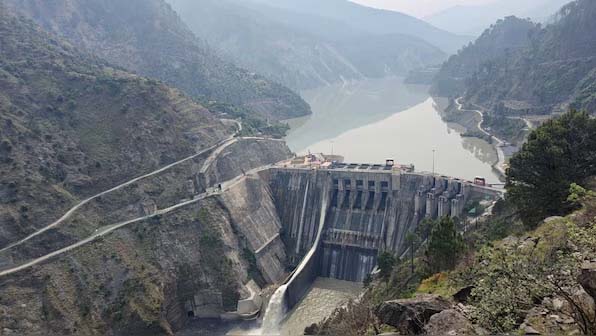
At the heart of this shift is the ambitious 113-kilometre canal, designed to divert water from the Indus River system into the Ravi-Beas-Sutlej network. If extended to the Yamuna, this canal could stretch up to 200 kilometres. Its construction, envisaged in a phased manner with 13 key junctions connecting to existing canal systems, could be a game changer. Not only would it prevent water wastage in Pakistan, but it would also redistribute this vital resource to drought-prone regions of Rajasthan, Haryana, and even parts of western Uttar Pradesh-regions perennially battling drinking water and irrigation crises. Moreover, the Government’s plan to double the capacity of the Ranbir canal and fully utilise the Partap Canal signifies a multi-pronged approach to maximise the utility of every drop sourced from the Chenab. Simultaneously, reservoirs like Baglihar and Salal are being desilted to enhance storage capacities-a quick-impact intervention to manage current water deficits.
India’s water woes extend far beyond J&K or even northern India. With failed or stalled water-sharing projects like the Sutlej-Yamuna Link canal-embroiled in decades-old disputes between Punjab and Haryana-and the slow progress of the Shahpur Kandi project, India has seen how interstate disagreements can sabotage national resource optimisation. The situation is no better in the south, where the perennial Cauvery river dispute continues to flare tensions between Tamil Nadu and Karnataka. All disputes arise due to water shortage. In this context, the proposed canal system from J&K offers not just a practical solution but a symbolic blueprint-one that demonstrates how federal cooperation and strategic vision can overcome entrenched gridlocks. If realised in full, the water transfer network could revive agricultural productivity across arid regions and resolve the drinking water shortages that plague cities and villages alike.
India’s renewed focus on fast-tracking hydroelectric and water storage projects like Pakal Dul, Kiru, Ratle, and Kwar in Kishtwar represents another significant layer in this strategy. These projects, when operational, will not only provide clean energy but also regulate river flows, offering India greater control over water management, flood mitigation, and seasonal irrigation demands. Combined with these, Operation Sindoor-targeting and destroying terror infrastructure along with military installations in PoJK-reaffirms that India’s strategic doctrine is now as much about security as it is about self-reliance in resources.
The feasibility study currently underway must not become another bureaucratic delay tactic. Instead, it should be followed by time-bound planning, environmental assessments, and above all, political consensus across States. The Centre must ensure equitable water-sharing arrangements so that recipient States do not fall into the same cycle of litigation that has paralysed other water projects. At the same time, maintenance of canal infrastructure, anti-seepage measures, and farmer sensitisation will be crucial for long-term success.
The abeyance of the IWT, though rooted in geopolitical tensions, may ultimately be a blessing in disguise. India now has an opening to recalibrate its entire water strategy-converting rivers of discord into channels of development. As climate change exacerbates water scarcity across the subcontinent, the 113-km canal and the broader push for river resource optimisation could ensure not just food security and drinking water access, but also a lasting legacy of water sovereignty for the nation.
 Follow our WhatsApp channel
