

Vijay K Arora
Jammu’s Water Lifeline on the Brink: In the last week of August 2025, Jammu came dangerously close to losing its water lifeline. Over five days of relentless downpour, the River Tawi swelled to 34 feet surpassing the 2014 peak of 33 feet and ripped through the city’s most critical infrastructure. Drinking water systems, already strained, buckled under the assault.
Treatment plants at Tawi, Boria, and Dhounthly were battered. Pump rooms, HT lines, and control panels lay in ruin. Long stretches of the 500 mm and 600 mm rising mains-notably the Sitlee-Lohar and Sitlee-Manda corridors were twisted, buried, or gone. At RD 1350, a 30-metre pipeline section was washed away in one violent surge; other portions dangled precariously over scoured embankments. Intakes clogged with silt and debris brought operations to a halt.
This was not just a natural disaster. Experts point to unchecked hill cutting, deforestation, blocked slope drainage, siltation, and floodplain encroachment-all amplifying the fury of the flood. The damage went beyond steel and concrete, exposing weaknesses in design, preparedness, and governance.
Yet amid the wreckage, there was grit. Jal Shakti (PHE), Jammu Municipal Corporation, and the district administration scrambled into action. Through sheer ingenuity-rerouting mains with MS casing pipes, deploying irrigation pumps, and mobilising tankers-they restored partial supply within days. These heroics kept the city functioning when collapse seemed inevitable.
But the lesson is clear: a city cannot rely on improvisation. Fire-fighting may save the day, but not the future. Jammu needs systematic resilience-mandatory audits, pre-funded corrective measures, slope protections, and institutionalised preparedness.
Two floods in a decade echo the same warning: without resilient lifelines, collapse will recur. By embedding resilience into existing works, repairs, and AMRUT 2.0, Jammu can turn crisis into reform and emerge safer, sustainable, and accountable.
Holding the City Together: Heroics Amidst Collapse: When Jammu’s water lifeline collapsed in the late-August floods, the city teetered on the edge of paralysis. Treatment plants were crippled, rising mains torn apart, and intakes clogged with debris. Yet within 24 hours, the first signs of recovery appeared-not because systems were resilient, but because teams on the ground refused to give up.
The Jal Shakti (PHE) and JMC mobilised men, machinery, and skilled labour from neighbouring states. Using MS casing pipes, they re-aligned broken stretches of the mains, improvising lifelines where original alignments had vanished.
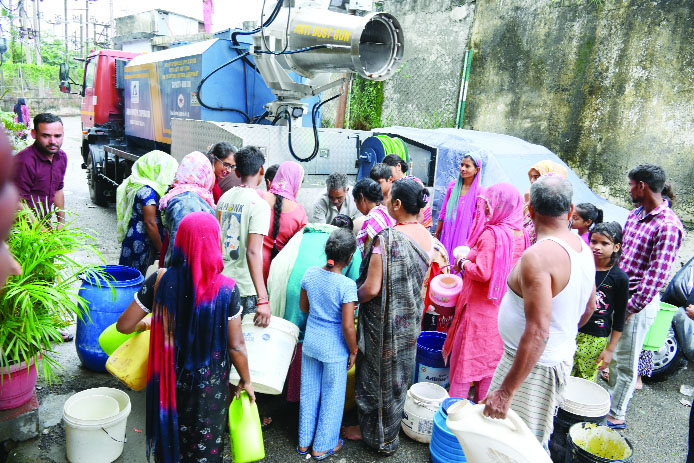
As power returned, water followed. Within 48 hours, 70% of tubewells were back in action, reaching full capacity in 72 hours. By 30 August, emergency interventions-ncluding irrigation pumps feeding Boria-lifted bulk supply from a crippled 39 MGD to 50 MGD, against the normal 62 MGD. Meanwhile, JMC sustained critical services with 5,000 tanker trips in six days, supported by 90 additional tankers under emergency orders. Hospitals, police lines, and old-age homes were prioritised.
These measures kept the city functioning under extraordinary strain. For citizens, they were lifelines. For administrators and engineers, they were also a warning: heroics inspire confidence, but survival cannot depend on improvisation. Jammu urgently needs an institutionalised framework for prevention, preparedness, and resilience-so next time, the system holds, not just the people.
Failure by Design: Cracks in the System: The floods did not just snap pipelines-they exposed design flaws and institutional gaps. Rising mains were laid on exposed shoulders without protective casings or engineered saddles. Thrust blocks were under-designed, unable to resist uplift or lateral loads. Rigid joints left no tolerance for shifting ground. At intakes, the absence of debris screens and raised heads made silt choke inevitable.
Governance amplified these failures. The 74th Constitutional Amendment split control-Jal Shakti handling production, JMC managing distribution. This divided mandate weakened unified emergency command; add procedural delays, lack of pre-sanctioned funds, and unfunded preventive works like slope stabilisation-and vulnerability was locked into the system.
Heroics on Borrowed Time: In the aftermath, institutions leaned on improvisation. The administration invoked Bharatiya Nyaya Sanhita Sec.163 to regulate tankers. Irrigation pumps were diverted to feed supply. Rising mains were patched with whatever pipes available in stores. These steps restored partial flow and saved lives.
Yet these “heroics” were reactive, not planned. Improvisation cannot remain default; it must be codified into protocols with pre-pooled resources, funded reserves, and SOPs. Without this, every flood will demand miracles instead of preparedness.
Disaster Made in the Hills: Rainfall alone did not cause collapse. Years of hill cutting, deforestation, poor slope drainage, and siltation had eroded natural buffers. Encroachments shrank floodplains, reducing absorption zones. The floods only triggered a man-made fragility.
Lesson learnt is that the Resilience lies not in patchwork repairs but in corridors reinforced by engineering and renewed by ecology. Only this dual pathway can shield Jammu from repeat collapse.
Corrective Pathways: When Jammu’s water system went dark in August 2025, the city discovered a hard truth: water is not just a utility; it is a lifeline. And lifelines cannot be left to habit or patchwork repairs. They demand foresight, resilient design, and vigilance.
The floodwaters made the lessons unmissable. What failed was not only steel and concrete, but the culture of treating water supply as ordinary infrastructure. The corrective pathways are clear-what remains is the will to translate lessons into practice before the next disaster arrives.
Pipelines as Independent Lifelines: In Jammu’s fragile hills, pipelines cannot remain afterthoughts. The August 2025 floods showed how easily shoulder-laid lines collapse. Resilience begins with dedicated corridors- engineered benches, backfill, and service routes-guided by slope stability mapping and cost-benefit studies that weigh encasement against rerouting.
The Protective Casing Principle: Where slopes slip or rivers scour, pipelines need protection beyond luck. Steel, RCC, or DI casings, designed with flex room, corrosion resistance, and structural strength, act as a first shield rather than an accessory.
Anchoring, Thrust, and Flexibility: Pipelines face hidden stresses from bends, surges, and shifting slopes. Failures highlight the need for thrust blocks sized for extremes, reliable anchoring, and flexible couplings that act as insurance at weak points. In landscapes that move, expansion joints and restrained couplers allow adaptation without rigidity.
Smarter Materials and Bedding: Field lessons show ductile iron and HDPE outperform brittle pipes in sliding corridors, while lined DI withstands abrasion. Even bedding matters-graded, geotextile-wrapped layers spread loads and prevent rupture.
Guarding Spans and Intakes: When pipelines must span, they must span safely: reinforced against bending, supported by riprap, gabions, or rock armour. Equally, intakes need screens, sediment basins, and raised heads to keep silt at bay.
Power Above the Flood Line: Floods remind us that pumps fail when electricity drowns. Raised, watertight pump rooms with generator hookups keep power flowing when water rises.
Redundancy and Decentralisation: No single pipeline should decide a city’s fate. Parallel rising mains, spaced apart, combined with neighbourhood reservoirs and mini-treatment units, can buy 24-72 hours of supply when one system falters.
Resilience is stocked, not improvised. Regional depots with spare pipes, couplers, casings, pumps, and PPE ensure continuity. Pre-awarded vendor contracts can turn days of waiting into hours of mobilization.
Eyes and Ears in the Ground: Pipelines need monitoring as much as maintenance. Inclinometers, strain gauges, and SCADA-linked alarms detect instability before humans’ notice, while automatic isolation valves contain threats in real time.
Taming Slopes Before They Fail: Landslides often follow poor drainage and neglect. Rock bolts, soil nails, drains, shotcrete, and diversion channels, applied systematically, can stabilize precarious hillsides before cracks widen into disasters.
Quality That Holds: Strong designs are wasted on weak execution. Contracts that mandate prudent third-party checks, milestone inspections, and penalties for poor joints ensure each coupler and saddle performs as intended.
The Silent Force of Surge: Hydraulic shocks are invisible but devastating. Detailed transient analyses, paired with surge tanks, air vessels, and controlled valve operations, give pumped systems resilience against pressure waves.
Healing the Catchment: Not all protection is mechanical. Reforestation, check-dams, and de-siltation soften flood peaks and reduce sediment load. The first line of defence often lies upstream, in restored forests and managed runoff.
Disasters cannot wait for files to move. A Pre-Sanctioned Resilience Fund with transparent, rapid procurement rules ensures both preventive works and emergency response do not stall in red tape.
Unified Command in Crises: Fragmented authority slows recovery. A Unified Water Security Command, merging Jal Shakti, JMC, PDD, and district administration with clear SOPs and GIS-linked asset maps, could turn confusion into coordination.
Logistics for the Last Mile: Tankers remain the fallback when pipelines fail. Pooling agreements, mapped delivery nodes, and regulated pricing make sure hospitals and vulnerable households are prioritized without chaos.
Training That Endures: Infrastructure is only as strong as the people behind it. Annual drills, refresher trainings, and after-action reviews ensure skills in welding, pump handling, and emergency deployment stay alive, even as personnel change.
Corrective Measures from Recent Failures: Pipelines in unstable corridors should be secured with protective casings and flexible couplings. Intakes need sediment basins with sluice flushing to prevent clogging. Pump rooms must be elevated above flood levels with watertight enclosures. These small but critical directives, backed by regular audits, could transform recurring vulnerabilities into preventable risks.
From Repair to Accountability: The twin floods of 2014 and 2025 prove: without regular audits and remediation, mistakes will repeat. Globally, bridges, dams, and airports undergo independent checks & Jammu’s pipelines and pump stations must too.
Experts suggest audits every 3-5 years by panels of structural, hydraulic, and geotechnical specialists. Assessments must cover stability, surge protection, flood-proofing, and redundancy and findings must be public, with clear remediation timelines.
To enable this, a Water Resilience Fund is essential, financing works before & not after disaster. Accountability must extend to contractors through defect liability clauses, officers through compliance duties, and departments through performance-linked incentives.
Finally, citizen oversight-dashboards, progress bulletins, ward consultations can embed trust. As planners note, transparency turns resilience from aspiration into obligation.
Beyond AMRUT 2.0: The Broader Imperative: The ongoing AMRUT 2.0 works in J&K offer a chance to embed resilience, but only if design omissions, lack of redundancy, weak preparedness, and fragmented mandates are addressed.
The August 2025 disaster proved resilience is not an add-on, it is the core of infrastructure. Strengthening existing assets, upgrading AMRUT 2.0 works, and enforcing preventive measures will secure uninterrupted drinking water supply-a lifeline equal to electricity and healthcare.
From Heroics to Resilience: The floods of 2014 and 2025 revealed a hard truth: Jammu’s water lifeline remains fragile, not solely because of nature’s fury, but because resilience was never embedded at its core. Twice in a decade, the city has endured systemic collapse; a third would erode public faith beyond repair.
Heroic improvisations by frontline teams proved the depth of human commitment, yet survival cannot be left to valour and chance. The future hinges on foresight, credible audits, timely remediation, and pre-financed resilience frameworks. Equally, it requires attention to the living landscape; restored catchments, renewed slope health, and ecological buffers that temper risk before it strikes.
If these lessons are gradually absorbed into governance, Jammu’s lifeline infrastructure could evolve from brittle repair cycles to enduring resilience-turning floods from recurring catastrophes into tests of strength the city is prepared to withstand.
Benchmarking Resilience: Lessons from Elsewhere: Across India and beyond, cities are embedding resilience into their core systems. Chennai has adopted flood-resilient pumping and stormwater infrastructure; Guwahati has begun slope stabilization along vulnerable riverbanks; Srinagar has integrated catchment restoration with flood defence. Internationally, the Netherlands and Japan treat water systems as non-negotiable lifelines, securing them with independent audits and long-term funding buffers. These precedents underline that Jammu is not without models, it is without adoption. The choice now is not between action and inaction, but between repeating collapse or learning from both local pain and global practice. With resolve, resilience can shift from aspiration to architecture, ensuring that the next flood finds Jammu not broken, but prepared.
(The author is an Engineer Consultant – Contract Management, Arbitration & Mediation)
 Follow our WhatsApp channel
